ear are still getting to know one another
A long talk with Jonah Paz and Yaelle Avtan about indulgence, ambiguity, manifesting, and 'Rumspringa.'

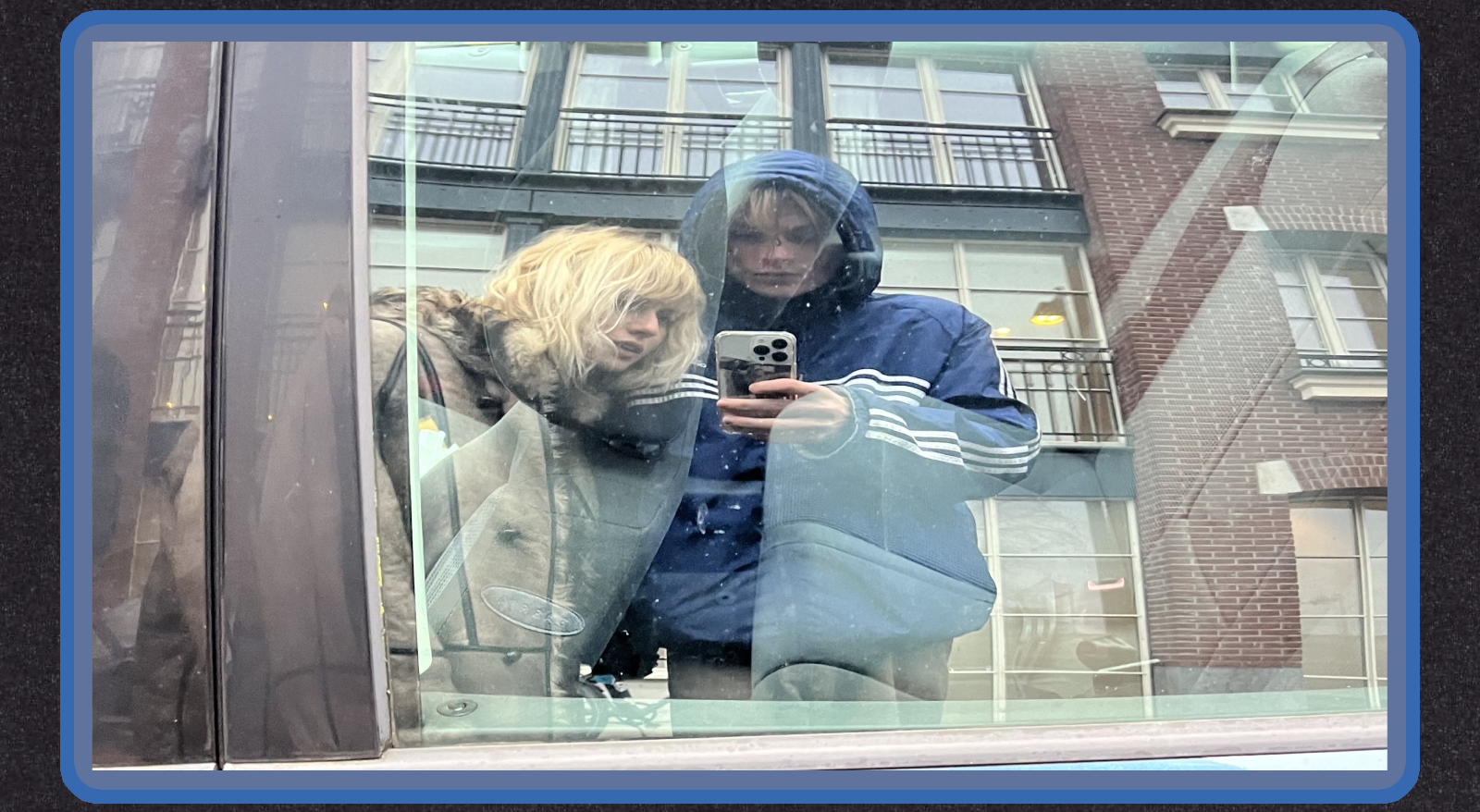
I've known about ear for nearly as long as the band's own members have known each other. My friend Madeline Frino sent me their EP Fetish / Valley Serpent last May, describing them as "art school kids who have played a single show." Six months prior to that, ear had dropped their first single, "Nerves," which they recorded on an iPhone in their university library. The duo of Jonah Paz and Yaelle Avtan made that song mere weeks after meeting, and they weren't even friends when it randomly started popping off online. They were basically just two acquaintances with a cosmically intuitive vision to start a band together, and by the following fall, ear were one of the hypest, coolest, most intriguing indie bands in the world.
ear's music is somewhat difficult to situate. At first, I lumped their soft yet slyly danceable indietronica in with the whole laptop twee movement, and basically conceived of them as an odd, deconstructionist indie band in the vein of Water From Your Eyes. However, since their 2025 debut album, The Most Dear and the Future, began taking off online, ear have become grouped in with indie-dance party groups like The Hellp and Bassvictim. Strangely, that association makes sense. Although ear's music is dramatically quiet, many of their songs, especially the ones on their fantastic new album, Rumspringa, are littered with unsuspectedly fat, squelchy, bass-rattling synths that could momentarily set a club alight.
The appeal of ear's music hinges on the extreme tension between their breathy murmurs and found-sound collaging, and the fleetingly ecstatic moments of sweet melody and throttling synths. Rumspringa executes that dynamic exceedingly well. Stereogum's Chris Deville accurately described the album as "the Postal Service’s indie synth-pop as reinterpreted by the earnest Icelandic minimalists múm," but I'd underscore that ear's production – fast, playful, highly emotive – is distinctly modern and directly in conversation with contemporary maestros like Alex G and Chanel Beads. Rumspringa songs like "Ne Plus Ultra" and "Will" simply wouldn't sound the same if ear existed in the 2000s. Their sound is indelibly molded by a musical zeitgeist where the distinctions between "digital" and "analog" sounds have completely melted away; where indie-rockers are raised on Soundcloud rap, and cloud-rap producers are driving indie-rock.
ear are forerunners within this new indietronic paradigm, and Rumspringa is a product of their members' tightening bond. Through touring and recording together since last summer's breakout, Paz and Avtan have naturally become closer compatriots, and the composition of their albums reflect their social arc. The Most Dear and the Future's compact songs were are like small talk you'd have with a new pal, whereas Rumspringa – twice the length and twice as dense – is a more nuanced musical conversation between the two singer-producers. It's some of the best songcraft I've heard all year, and it ensures that ear continue to be my favorite young band to think about.
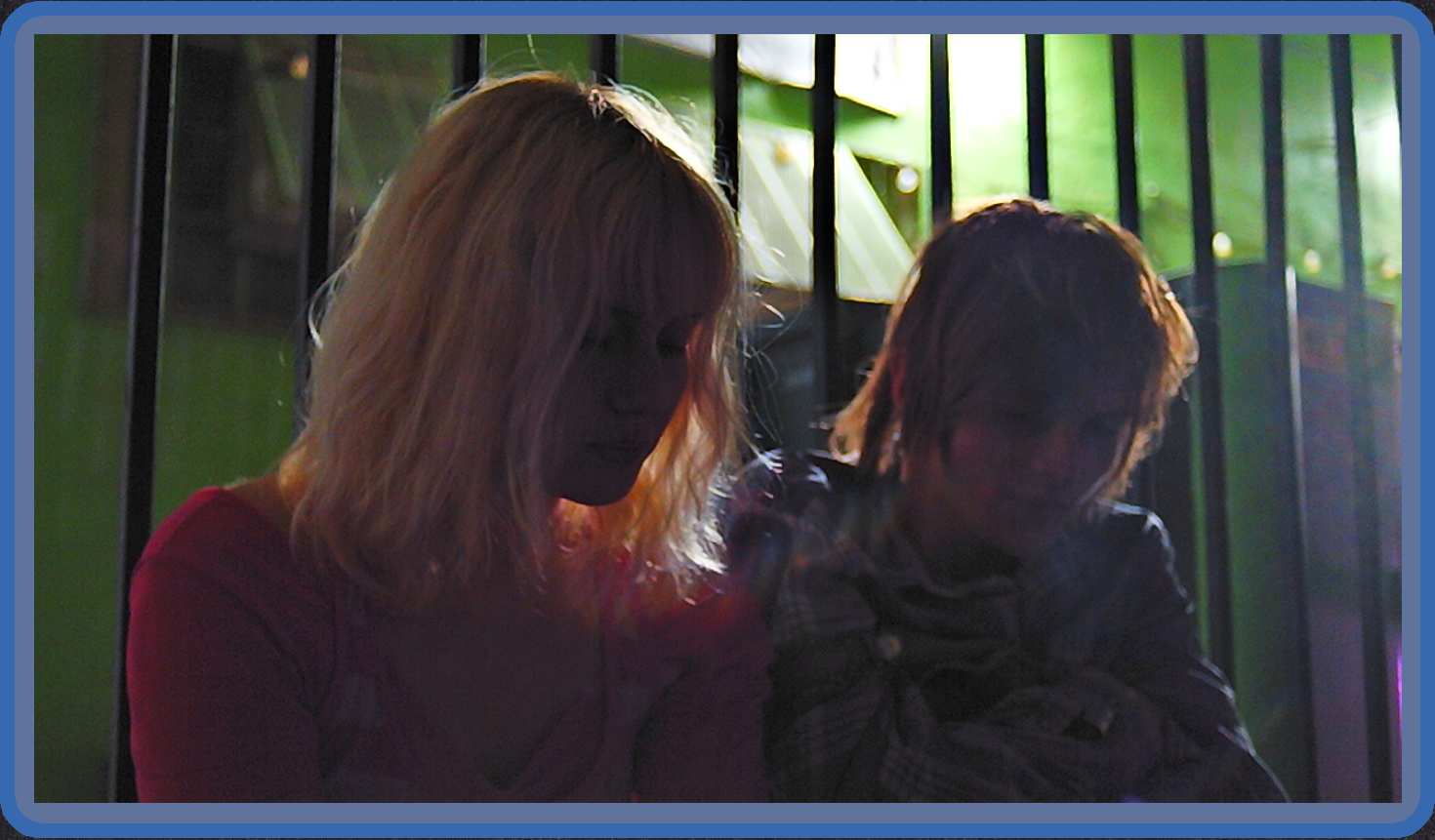
A few days after Rumspringa dropped on May 29th, I had a lengthy Zoom call with Paz and Avtan, who were both stationed on opposite coasts (Connecticut and California, respectively). We talked a lot about their unusual relationship as loose acquaintances-turned-career bandmates, the thought they put into their music, their very intentional public presentation, the big feelings that inspired Rumspringa, navigating the music industry with integrity, the way people perceive them, the tremendous value they place on being good people, and much more. It's the most in-depth interview they've ever done, and the whole conversation – lightly edited for clarity – is available to read down below.
What were you guys doing over the weekend to celebrate the album dropping?
Jonah: I was cat-sitting.
That was your big party?
Jonah: Yeah, basically.
Yaelle: My friend’s cat-sitting also, so I was hanging out with her because I hadn’t gotten to see her in a couple months. So I showed her album the day before, which was really important to me because I really wanted her to hear it. It kind of felt like I had to do it because I showed her The Most Dear before it came out, and that was a really special moment for me. So I got to show [Rumspringa] to her the day before it came out, and that was awesome.
Jonah: I was really anxious when it came out. I was with our friend who was also cat-sitting with me. I went and hit a phone listen when it came out to remember, basically, if I liked it or anything. We have this whole match ritual that we have going and I did that a couple times for good measure. Because I wanted to make sure it comes out…
Do you still like it?
Jonah: Yeah, I love it. A lot.
How tuned-in to the reception are you guys? Are you looking at the comments or not paying attention to what people are saying?
Jonah: Anxiously, yes. I’m not like honed or anything. When it first uploaded I was super nervous about reception and stuff, but then as the days go by I kind of tapped out of it. I feel like reading comments…that sort of thing is always a huge block for us. I just think I’m overly sensitive so I actually don’t really want to know. In real life, showing it to our friends and family, even though those are biased people, that's where the special reception really lies.
Were you as nervous to release older stuff, too, or was this just because there’s more eyes on you guys now compared to when, like, “Nerves” dropped?
Yaelle: I feel extremely nervous every time we drop anything. Like with The Most Dear it was really scary. And also there was this moment where we were going to drop it, and then we played that show at my friend's house, and it was the first time I'd sang anything in front of anybody ever. So that was really emotional and extremely scary.
And then seeing the way that I can get…I was lowkey crying the entire time. Like in a chill way, I guess. My sister was there and my closest friends, because that was basically the show. Between that and having to kind of dissociate from how deeply I feel about these things, that's really scary. It’s like derealization or something.
Do you think it’s so scary because the songs are so personal?
Yaelle: Yes.
Jonah: With this one, yes.
Yaelle: It’s also the feeling or something. I’m not even sure if the songs read as personal in terms of lyrics or even the way that they actually sound. The entire feeling of having that much of something from you in something is really scary.
Jonah: With The Most Dear I was less nervous about putting it out because I feel like The Most Dear had a very specific goal to it in general, even on a songwriting level. And then I thought that we fulfilled the goal.
What was the goal?
Jonah: I don’t know, it’s kind of abstract. Whatever it was, I thought that we had done a pretty good job. So I was less nervous. I feel like that whole album is very, like, “it is what it is” style thing. And then for this one I was extremely anxious for no reason. Maybe because we’ve never been guaranteed that somebody’s gonna hear it before.
With The Most Dear, a lot of the work of the songwriting was basically just making these very personal things kind of ambiguous for the purpose of them being in a song. I feel like we do that less on this album. There’s less ambiguity, so that's kind of nerve-wracking. Now that it’s out, I’m just like “it is what it is” style thinking again.
It’s interesting what you said about the ambiguity because I feel that way about the music itself in a sonic way. Something I felt was so attractive about your guys’ music was how much you held back. The restraint. You’d dangle this really great melody or a great drop and then kind of pull back before it goes all the way there. But there are a few tracks on this new record where you’re just rocking the beat for two minutes and the single was more openly melodic. Were you thinking about that as well?
Jonah: Yeah. Yaelle, you want to speak on that?
Yaelle: It’s funny because specifically with this album, we had the concept of the Rumspringa – getting to do bad things, or things that aren’t allowed. And for us we always have these rules about not being too indulgent in music making. It’s a big fear for us and I guess it always has been. So for “Ne Plus Ultra,” it made sense conceptually for us. We really had to look at each other and make sure it was OK to almost take it there [laughs].
Because it is, for us, greedy to rock out. Because then it’s kind of like, “Oh look at us, we went there.” I think it’s funny because even with “Ne Plus Ultra” we let ourselves do that under the guidelines of the concept, which is that you would let yourself do this kind of terrible thing [laughs].
Jonah: It makes me just think about accessibility or something. I feel like we’re always caught up in that because you don’t want to withhold so much that it’s impenetrable, otherwise it’s equally as fucked up as if you were just spamming satisfying moments. I feel like we’re always really conscious of trying to walk the line between articulating the idea just enough. I just feel like that's what formalism is.
With “Ne Plus Ultra” it’s just extremely obnoxious. That song is super obnoxious. Sometimes you have a song that basically requires the obnoxious treatment or else it won’t be getting articulated the right way. And it gets to a point where you’re making decisions for the song. We have a lot of songs like that where it’s stuff that we would not listen to, but you have to get the idea across so it requires it. All of the pop songs that we have, they wouldn’t really work if they weren’t pop songs.
Like “Theorem”?
Jonah: “Theorem” or “Real Life” where they have to be what they have to be in order to work.
But it feels greedy to give that?
Jonah: It’s greedy to withhold too much and it’s greedy to give too much. I don’t even know if “greedy” is the right word.
Yaelle: I just see it as indulgence. Even to allow the song to have what it requires, how do you know? Like even with a person, if you’re giving a person what they want, how do you know that they don’t want more or you didn’t give them too much?
Jonah: You need to give people room in music. Otherwise you get into this terrible territory where you’re telling people what to think about it. You have to give people room to sing.
The way you present yourselves on Instagram, for instance, has this sort of ambiguity. It feels a little esoteric and arm's length. How much of that is for the purposes of what you were saying about the art versus you guys just being introverted and not wanting to give that much of yourselves out there publicly?
Jonah: It’s both.
Yaelle: Yeah, we talk about it all the time. I don’t like when people know anything about me. And also in general you don’t want people to like the music for superficial reasons. And so I think this whole cult of personality thing that comes with music is something that I’m frankly not interested in. I like making music and I hope that the music connects with people. I don’t want any opinions on me or something to become a part of that.
I just use the Instagram to do fun stuff that I’ve always been interested in. I used to always make over my clothes and stuff, so I just thought it would be fun to do that. I guess the other stuff that we do is just stuff that we like, that we would do with our friends. And it’s cool because we get to do it with our friends and then just post about it.
Jonah: I second all of that, but I think we both definitely have the blogger urge or something. It’s not that we’re anti self-expression, I think we both have that need to decorate, to formalize ourselves or something, genuinely. But with the band stuff, I feel like you just have to be private because we don’t ever want a narrative about us to be involved. Because that kind of goes against the music. I don’t want people to be like, “Yeah, this is Massachusetts music,” because it’s not even about that.
And the price to pay for that is that people really cling to the details that are there. Like Bard College is brought up in the same sentence as the band. Which is what it is because obviously that's where we met, but who knows what it was actually like for us at that school and what we were actually doing and how much of a roll that played in our lives. We just have to be extremely grateful that people are hearing the songs and then hope that the speculation about us as people doesn’t get too interesting.
Hopefully the music is more interesting than trying to guess things about us. The idea with the Instagram, at least on my end, is that I hope it seems we’re representatives of the music instead of the auteurs behind it.
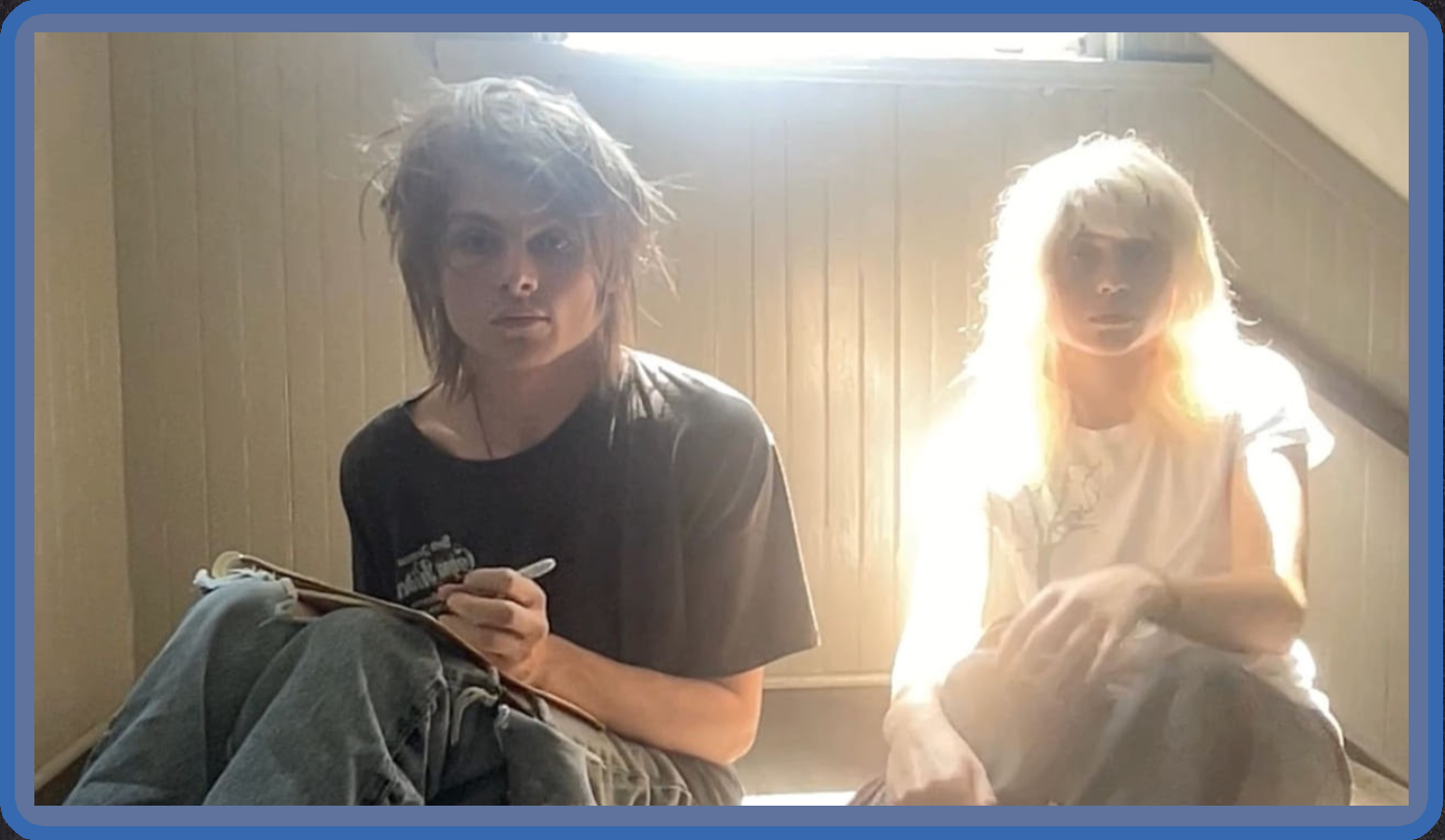
Yaelle: In the beginning we used to talk about the Instagram like, “the Instagram is the ear lifestyle.” We used to have story posts that were like, “When you realize you’re being a valley serpent right now” [laughs]. Shit like that where we’re just living the ear thing. But me, my life, is not ear, and Jonah has his own life. We just have the ear lifestyle sometimes, and we’re blogging that or whatever.
We both have our own blogs and we like that part of it. I guess it’s just really important with the stuff that you do in general. We’re not going to start selling water bottles or something like that. I feel like that can be taken there if you are a person that's interested in creating a thing that goes with the music.
You’re taking the salesmanship out of it. You’re not posting the Spotify playlist you’re in on your grid, like a lot of bands would.
Jonah: Well it’s funny, there’s just this autonomous music machine for electronic duos. I don’t know what it is. There’s this industrial complex that if you are making electronic music with another person, you have no chance of escaping it once you’re in it. Obviously the way we feel about the music is extremely different than several Instagram infographics would explain it to be.
But at the same time, it’s awesome that people want to talk about it. Hopefully as time goes by and people have more time to sit with the songs that are out, the stuff that's important will manage to stay important and the other stuff won’t. I don’t think it’ll happen but if in five years people are done with ear because it was an internet trend, that would be really upsetting. Because I bet five years from now we’d be able to make way better music.
Something that's so fascinating to me about you guys is where you are sitting audience-wise now. Because when I first heard you I was like, “Oh, this is a weird indie band,” and now there’s all these people who are into weird internet rap and dance music, and that seems to be the space you guys live in. Did you anticipate that at all?
Jonah: We didn’t anticipate having fans. It all happened really, really fast.
You dropped “Nerves” and then how did that song get as big as it did?
Jonah: I speculate on this often.
Yaelle: We think it was half the fact that Jonah has a lot of belief in this free distribution [software] that he was using for his music. And when he told me, “Oh, we’ll release this song,” I was like, “right, this guy’s super serious. He knows.” We also got put on my friend’s playlist, and she’s kind of known for music stuff. I think maybe that was that. We try to get reverse-engineer with it.
Jonah: It’s actually really hard to know. When the first couple of hits came within the first five months, I was like, “Yeah it’s just because it’s a cool song. So maybe this is just validating for that reason.” But then algorithmically, genuinely, it’s got to be complete 0’s and 1’s. Some kind of demonic entity that picks and chooses. I still see it as being really woo-woo or something.
Yaelle: I was just about to say, “Oh, because it’s the song.” I think I put a lot of my faith and everything at the time into the idea that this was the first serious thing I was doing in my life. I was like, “Well, I guess it doesn’t matter if nothing happens, but something might happen.” And that is such a woo-woo thing but you have to, like, believe.
And then it panned out, so it validated your mysticism, which is probably trippy.
Jonah: Yeah, now everybody thinks we’re music nepo people or something, which is really cool in a way. We willed it in a way or something. But that's such a silly thing to say. You can’t in good conscience be like, “I’m pretty sure we manifested that.”
You guys weren’t even really that close with one another when the band started, right?
Jonah: We’re still learning.
Yaelle: [Laughs]
What has it been like to get to know one another in tandem with your band becoming bigger?
Yaelle: I think it’s a truly singular experience. I think you always try to compare things to make yourself feel comfortable about them, especially if they're uncomfortable or completely new. But it is a singular kind of experience because I’ve always taken the music as being this thing that requires a lot of communication, requires a lot of trust and emotional vulnerability and all this stuff.
But then it was like, “Ok, so we started doing that, but how does this even apply?” I think in general it’s been a very slow process but probably in a good way. Because we just try to be really careful and gentle towards everything that's happening.
Jonah: I feel like it’s so weird, because obviously there’s things in my life I feel like only Yaelle would be able to clock. Which is really funny because we’ve known each other for probably under 15 months in total. We’ve spent so much time with each other, but you’re spending so much time with the other person because of this idea that you have.
I remember when we first met, I was very anxious and we were both journaling. I have journal entries where I’m like, “I really think Yaelle was cool but I don’t know if friendship would work. We need to have a thing. We need to have a transactional element in order to make this whole idea work.”
It’s funny when it gets to the point where the band forces you to have to be comforted by another person. Because you’re in a room where you’re tweaking and there’s only one guy on your team in the room, and then you’re forced to be vulnerable. It feels like a giant lesson about being good to other people. It has profoundly affected the way that I interact with other people.
How so?
Jonah: Having a goal-oriented connection with someone is extremely bizarre and forces you to have to go through the steps of what it would normally take to connect with someone but at an extremely accelerated pace. Because it’s like, if we don’t get our shit figured out right now, how are we going to be able to work together?
Yaelle: I know that there are people who just make music. Like, blah blah blah from the band wants to spend the advance on a gold chain, and that's his thing so we’re going to just let him do that. And blah blah blah is really interested in doing this fried thing, so I guess we’re gonna do that. I think it’s nice because Jonah and I kind of have the same goal of intuitive goodness.
Just being a good person is extremely important to me, so it’s nice to know that you can kind of team up on that and have somebody on your side with that, despite not really knowing their whole thing. I always tell Jonah that it just gives me so much hope in my life, that that can happen.
Jonah: Yeah, same. We used to keep everything extremely vague, like we didn’t know anything intentionally for so long. I feel like we’ve gone through the stages of needing to know about each other, because in order to attend to somebody else you have to know things about them. Like, when we first played shows in the EU. We were like, “Yeah, we have our whole thing where we make music together, but now we’re really, really in this.”
You’re doing it for the band but it requires a certain amount of hope to think that making music is worth it. To have somebody else who shares that, who thinks that despite it all, the music is worth it. That is an extremely awesome thing. Somebody else who sees the worth. I think even more than the songs, it’s about that. It’s about thinking it would be worth it to make a song.
A subscription also gives you access to weekly Q&A's, more longform interviews, subscriber-only playlists, semi-annual lists, and more. I rely on my paid subs to make Chasing Sundays possible, so your support is immensely appreciated. Tap in or die.