Chasing Fridays: First Day Back, Tommy Fleece, Worldpeace DMT Q&A, more
Attempting to surf emo's sixth wave, dousing my ears in neon, and interrogating some psych-pop peacemakers.

First, in case you're wondering why I'm not dissecting the new Charli XCX album in this week's newsletter, that's because I already did in a lengthy review of Music, Fashion, Film for the good folks at Pigeons and Planes. As always, Charli is a fascinating popstar to think and write about, and I'm pretty pleased with what I cooked up about her strangest album yet. Meanwhile, I dedicated the majority of this Chasing Fridays to analyzing a niche sub-genre development that's been piquing my interest lately: the ongoing progression of sixth-wave emo, which I researched by attending a sold-out First Day Back show in Pittsburgh last weekend.
I had a lot to say about that topic, and I'd be curious to hear from any emo-attuned readers about whether they agree or disagree with my takeaways. Additionally, I wrote about neon-pop that's actually good, a very cool new single from an artist who just landed on my radar, and then finally got the chance to interview Worldpeace DMT, who I wrote about in my frequently-referenced laptop twee primer last fall. Their forthcoming sophomore album is one of my most anticipated releases of the rest of 2026, and the mixtape they dropped just last week – which I asked them about below – is also very cool. Tap in.
Tommy Fleece - Ultrasonic
About 10 minutes after I jumped into my Uber from LAX a couple months back, a sporty coupe pulled up to the light beside me and was blasting music so loud that I was able Shazam the song they were playing. It sounded like an absurd neon pop-punk track from the late 2000s, which struck me as a funny thing for someone in 2026 to be proudly bumping as they cruised around L.A. I was wrong, but also right: it was Tommy Fleece. An artist I was vaguely familiar with from reading his coverage on Nina Protocol (RIP, kind of?), who raved last year that he's "making some of the most exciting electro-pop in the game right now." An experimental-savvy publication heralding a young singer who basically sounds like The Ready Set by way of Phoenix initially threw me for a loop, but now I'm beginning to see the vision.
Fleece's new album, Ultrasonic, is a riotous 19 minutes of sassy, lipstick-smeared, Smirnoff Ice-drenched scene-kid pop that dares to ask: what if The Hellp were more transparent about loving Breathing Carolina? What if COVID-era hyperpop ravers like Kid Trash and Alice Gas were on the Skullcandy stage at Warped Tour 2010? What if Frost Children were good? The highlight "Tune In" – and really the whole record – plays like a suburban teenager's fantasies about what life will be like after high school: cranking the car radio, staying up late, parties that end with puke on shoes. Fleece's music captures the magical essence of those brief years between 18 and 20 when even the dullest excursions feel romantically novel. That's what this type of music – high fructose sounds, low-brow subject matter, a parallel feeling of indecency and innocence – exists to document, but rarely are the songs this fucking good.
celebritysuicide - "The sacrament"
celebritysuicide is an artist from NYC who's recently played shows with Chasing Sundays favorites like cleo walks through glass and katmoji. His new song "The sacrament" doesn't sound anything like those acts, though. The single from an upcoming – and excellent – EP is a creepy, woozy, synth-wavey tune with a little more swing in its step than the staccato beats that are all the rage right now in celebritysuicide's coastal gestalt (ear, ideasforconversations). I like that his dead-eyed vocal affect contains flecks of an emo-rap quiver, much in the way deer park's music also does. It's a subtle reminder that this 80s-addled neo-noir glider is from the now. And aren't we lucky for that?
First Day Back live and witnessing the emo revival revival
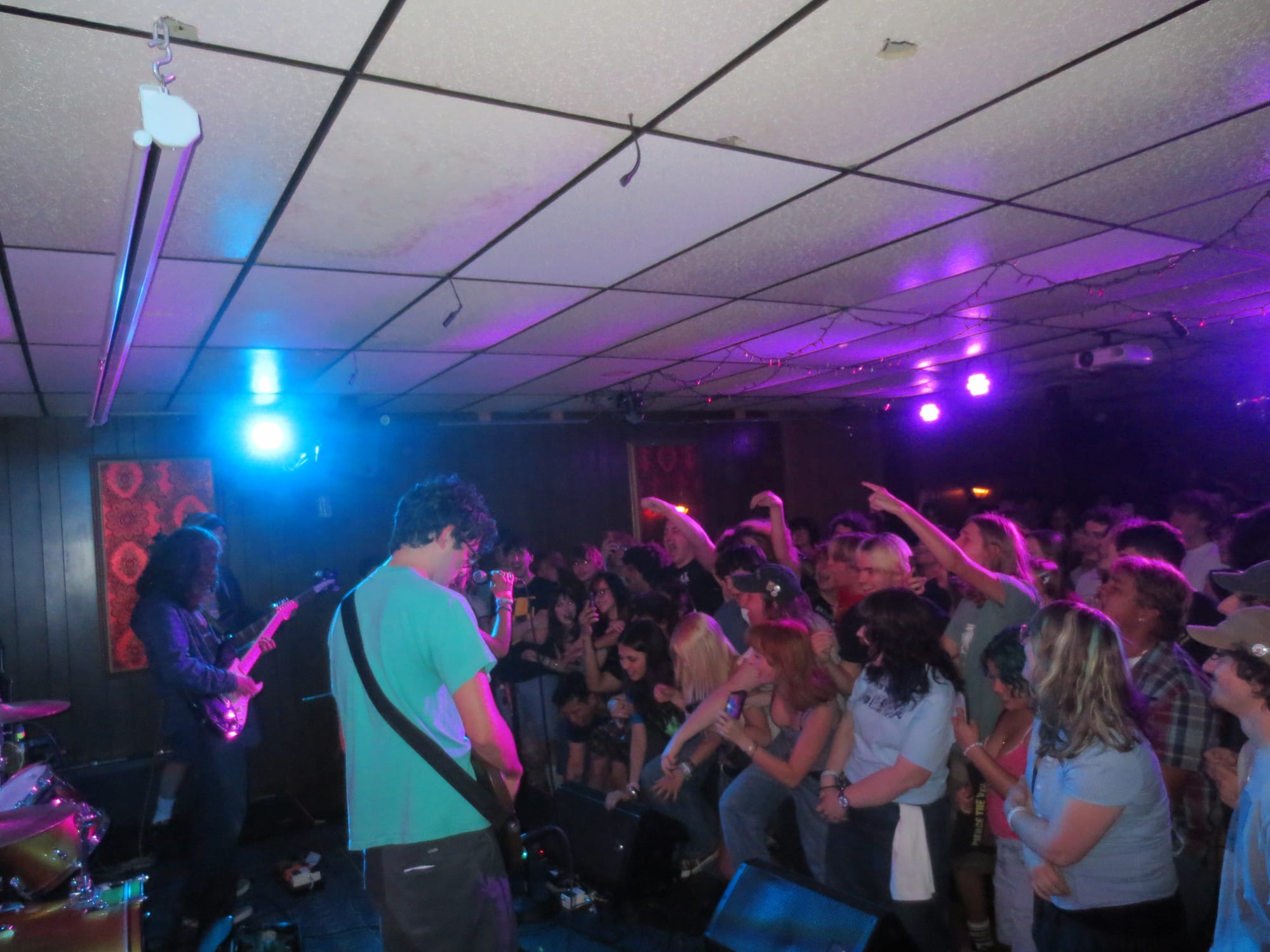
My 30-year-old friend and I were recently talking about how we don't feel old. I'm at the age where a lot of people around me are starting to repeat that refrain when they step into a room filled with folks in their early twenties. Either because their relationship with so-called youth culture is fading, or because their sensibilities have changed since entering their 30s, or because their lives are no longer very fun or interesting and seeing young people enjoy themselves is a bitter reminder of what no longer feels possible. I don't feel the same way that I did when I was 21 – and thankfully so – but since I've oriented my life around pursuing my own interests and staying connected with what brings me joy, I rarely feel washed, dusty, out of touch, or inappropriately aged within the music spaces I move in.
But when I saw First Day Back last weekend, I couldn't help but feel old. Not because I was surrounded by late teens and early twenty-somethings, or because I didn't understand the music's appeal, or because I wasn't able to connect emotionally with the Santa Cruz band in the way I probably would've 10 years ago. I'd like to think I'm quite good at curiously examining music I don't necessarily resonate with while still being able to glean some kind of value or meaning from it. That was my aim going into this First Day Back show. Although I've publicly approved of the young quintet's 2025 debut, Forward, I don't think I've listened to it in full more than once. I don't really listen to new emo music for pleasure anymore. I listen to it for science.
My scholarly goal with this show was to observe how First Day Back's music is connecting with their extremely passionate Gen-Z fanbase, and contrast those findings with how I experienced the very same genre of music in the 2010s. To try and determine what's changed, because surely something must have. But merely listening to First Day Back's record, which sounds virtually indistinguishable from how the 2010s emo revivalists were interpreting the same 90s source material, doesn't provide those answers. Unfortunately, my results from this outing weren't very revealing either, and that's what made me feel old. I realized that I'm missing something. There's some kind of sonic or cultural frequency that my ears, eyes, and pores aren't able to detect, because I still cannot pinpoint what makes this wave of emo markedly distinct from the one I lived through in my adolescence. It feels so uncannily similar.
Of course, there are minor differences to what I and others are cautiously calling sixth-wave emo: a return to 90s style (I.E. second wave) emo among people who weren't old enough to see Title Fight, and thus worship them in the same way Title Fight's own generation mythologized American Football. But most of these distinctions are purely cosmetic.
At First Day Back's sold-out show in Pittsburgh, a whole room of kids explosively sang along to songs that faithfully channeled the fundamentals of 90s emo (Braid and Sunny Day Real Estate, namely) all while dressing like they were at a Brand New show in 2003. They were listening to 90s throwback music while draped in 2000s throwback garb: studded belts, cadet caps, washed-out blue jeans with knee holes. The "era-appropriate" baggy flannels, tight pants, and t-shirts with traditional tattoo designs that were associated with the original emo revival (I.E. fourth-wave emo) weren't in the room, but little else about the music or energy – as lively as it was – struck me as being generationally novel.
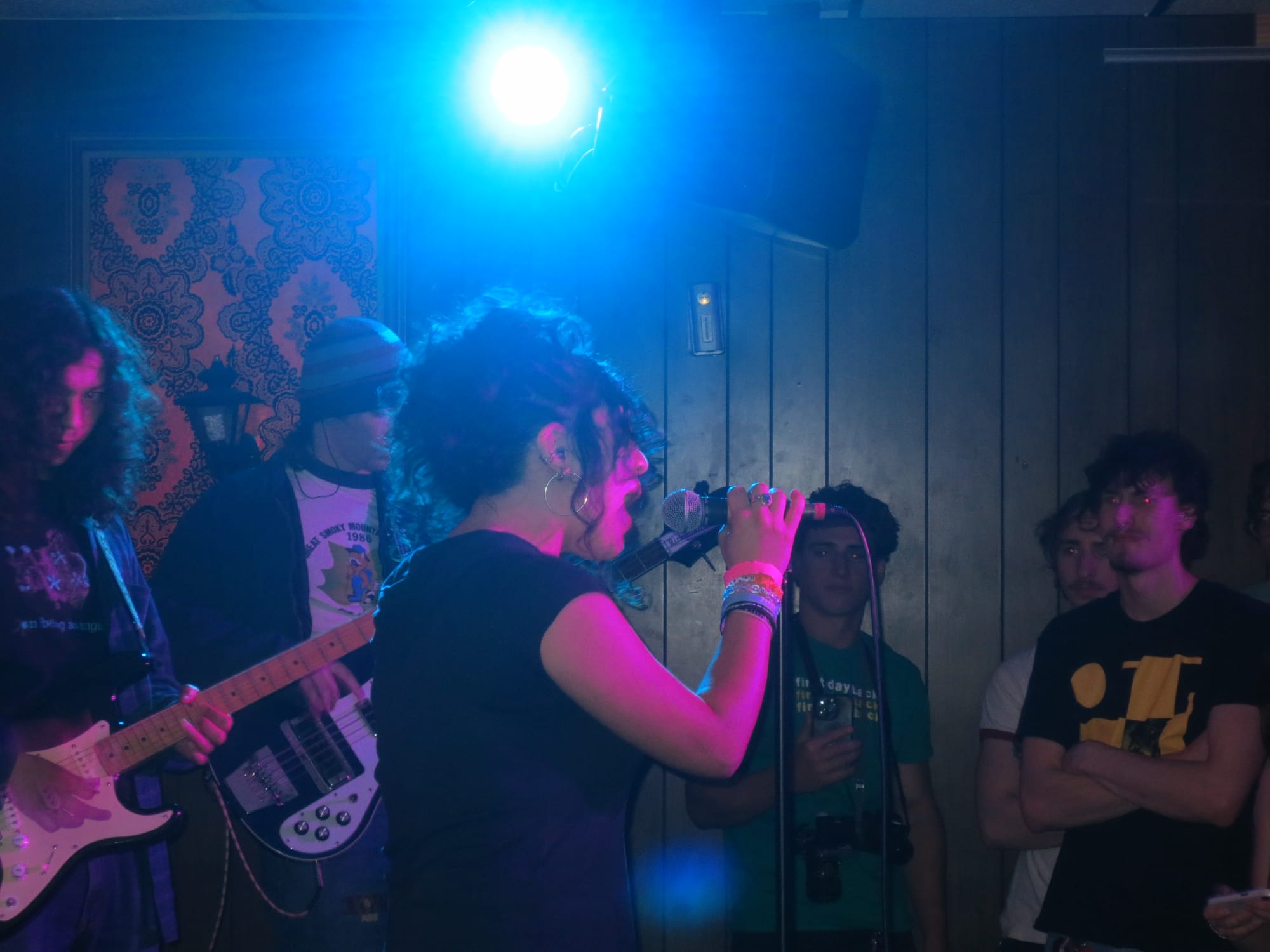
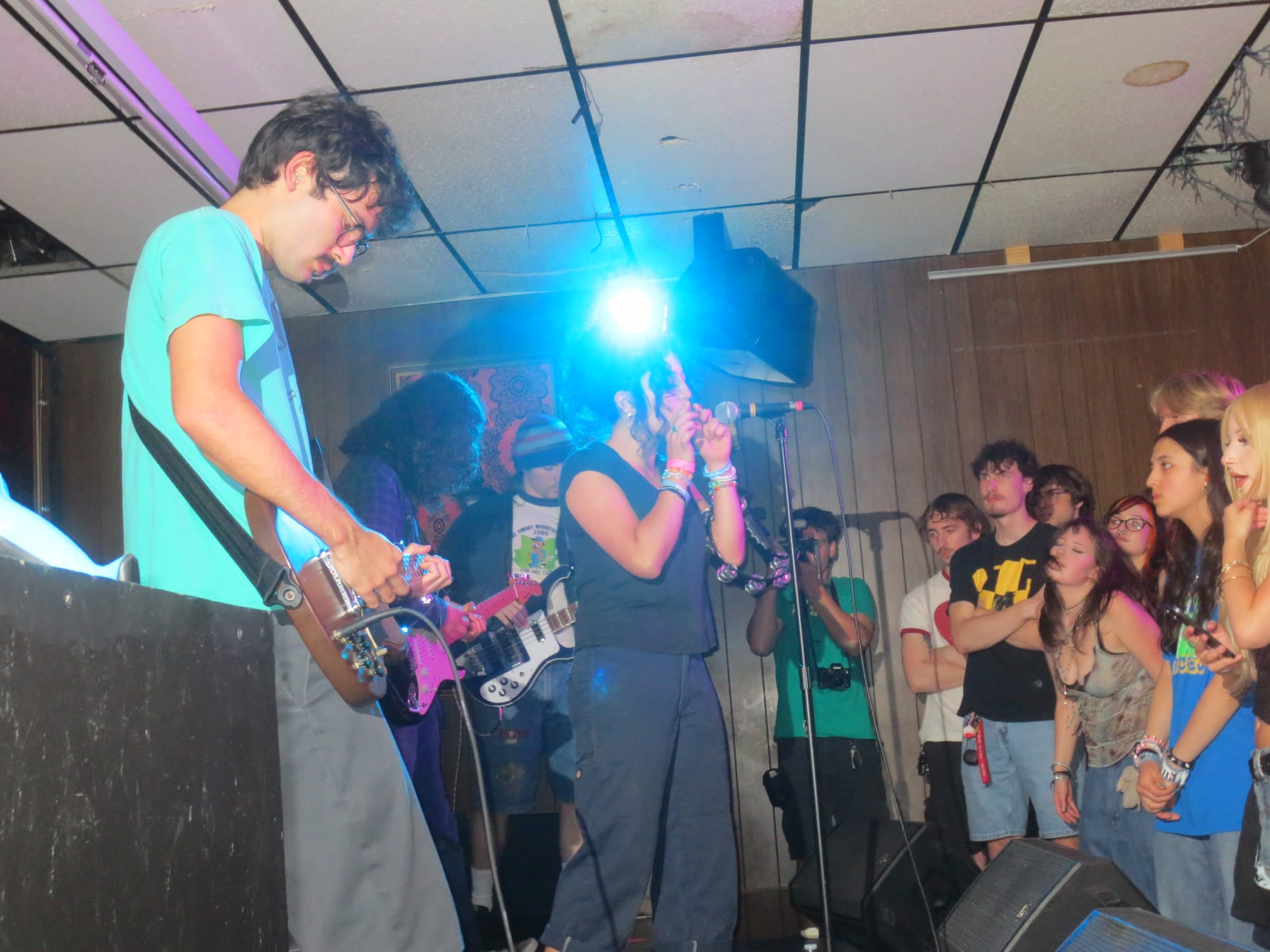
Anyone who reads my writing knows that I'm obsessed with how sounds and scenes progress over time. I've written endlessly about how subgenres and cultural signifiers from the 90s, 2000s, and even the 2010s are being reinterpreted during the 2020s, and thus causing subtle yet meaningful developments in the arcs of those respective sounds. I'm a big believer that rehash culture can still breed innovation. To be sure, there are certain segments of emo's sixth wave that feel artistically distinct to the 2020s. Namely the internet-native, slowcore-tinged, SoundCloud rap-inspired cluster of artists like Dead Calm and Sweet Boy, who are making sixth-wave emo that sounds ambiently reminiscent of the 90s, yet feels eerily detached from the genre's physical origins.
The segment of sixth-wave emo that First Day Back belong to, however, is something different. Their grouping of bands – gapyear, The Ritornello Form, Holidays In United States — are actually grounded in the same DIY touring circuit that emo initially spawned from, and where the fourth-wave revivalists returned it to after the third-wavers (Fall Out Boy, My Chemical Romance) ceded the culture to VH1. Therefore, First Day Back are connected to two epochs of back-to-basics emo: the actual pioneers of their sound, and then the generation of evangelists who reproduced it 15 years ago. And that genealogy – that awareness of and reverence toward their own genre's history – is explicitly reflected in the band's music. In a 2025 interview, they said their three biggest emo influences are Braid, Cap'n Jazz, and Title Fight.
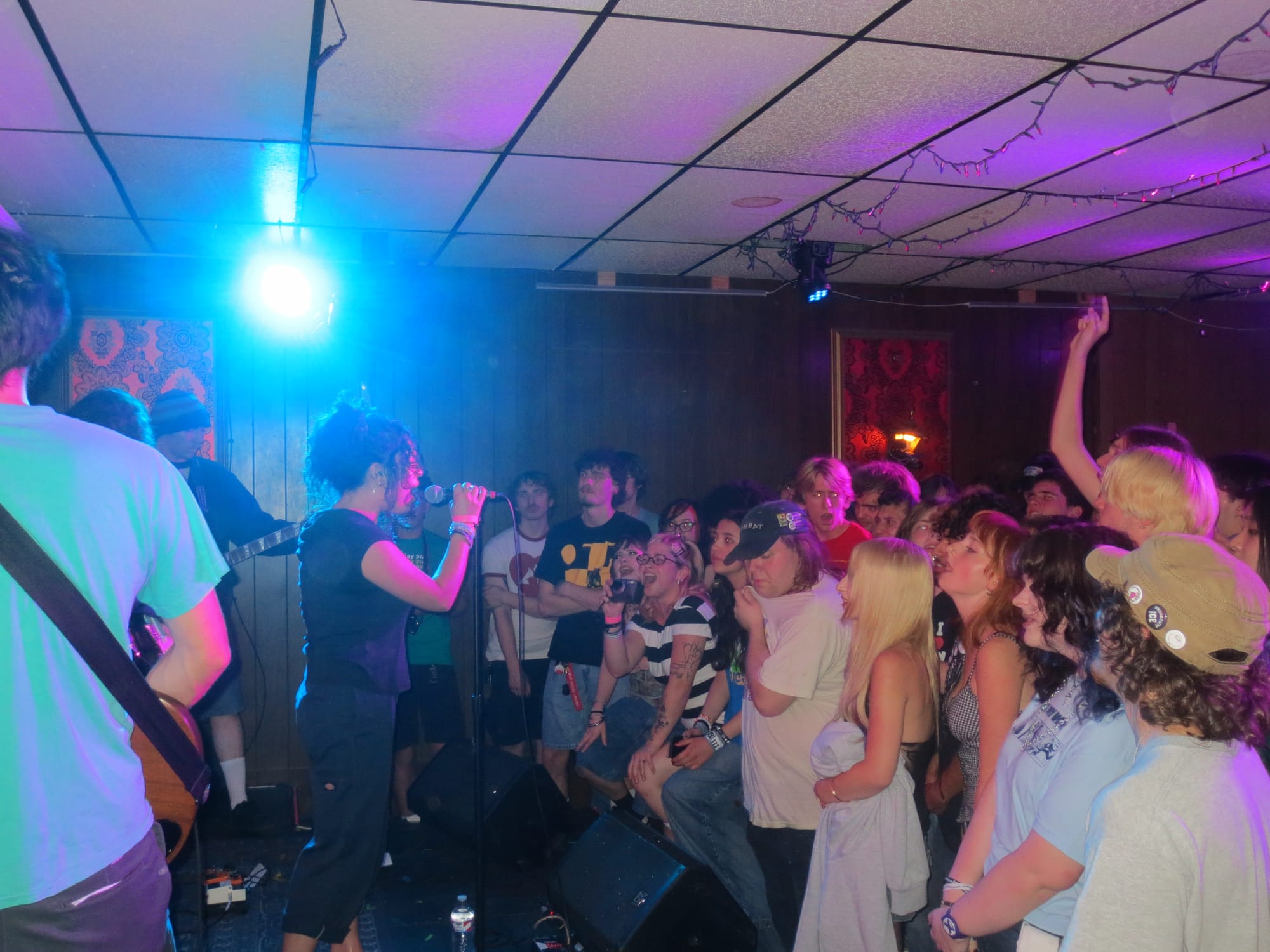
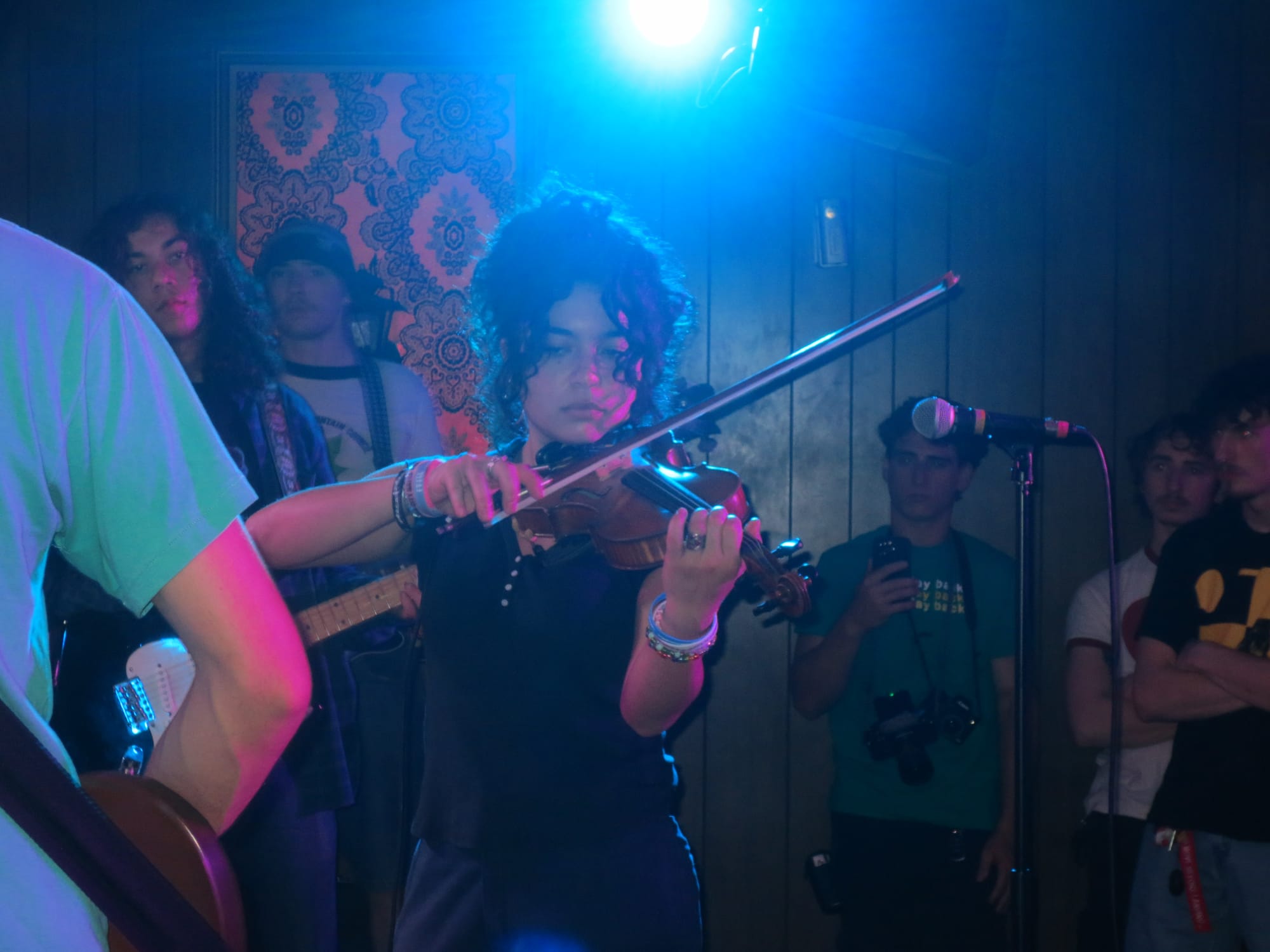
When I really focused on the songs they played last week, I could faintly hear that generational mish-mashing at work. They performed several new cuts from a forthcoming sophomore album, and one of them sounded a bit like early Turnover – brisk, driving, "softly grungy" à la Title Fight's Shed – but with dashes of violin and harmonica added overtop. Those instruments, both played by First Day Back's talented singer Maggie Masumi, are utilized by the band in a less orchestral way than how, say, The World Is a Beautiful Place & I Am No Longer Afraid to Die incorporated strings into their early-2010s material. Another new song they played had a gigantic riff and a steep dynamic climb that sounded like Hum via Jejune, two 90s bands who are more important to zoomers than they were to millennials.
Those are a couple small tweaks to First Day Back's pleasantly anachronistic sound, but they're not dramatic enough to scream 2026 in the same way concealer.'s genetic mutation on 2000s metalcore couldn't have existed in 2004. To be clear: I don't think First Day Back are cloyingly derivative, and I'm not arguing that their generation of emo will never obtain its own distinct features. That would be literally impossible, especially given the vastly different ways in which young people listen to and engage with emo music today vs. how I did as a teen in 2010. In truth, I simply think it's too early to tell how this wave will come into its own, much like how the tip of the fourth wave (Snowing, Algernon Cadwallader) was far closer to "traditional" second-wave emo than the bands who'd come along a few years later (Modern Baseball, The Hotelier, Title Fight) and really give that generation its own identity.
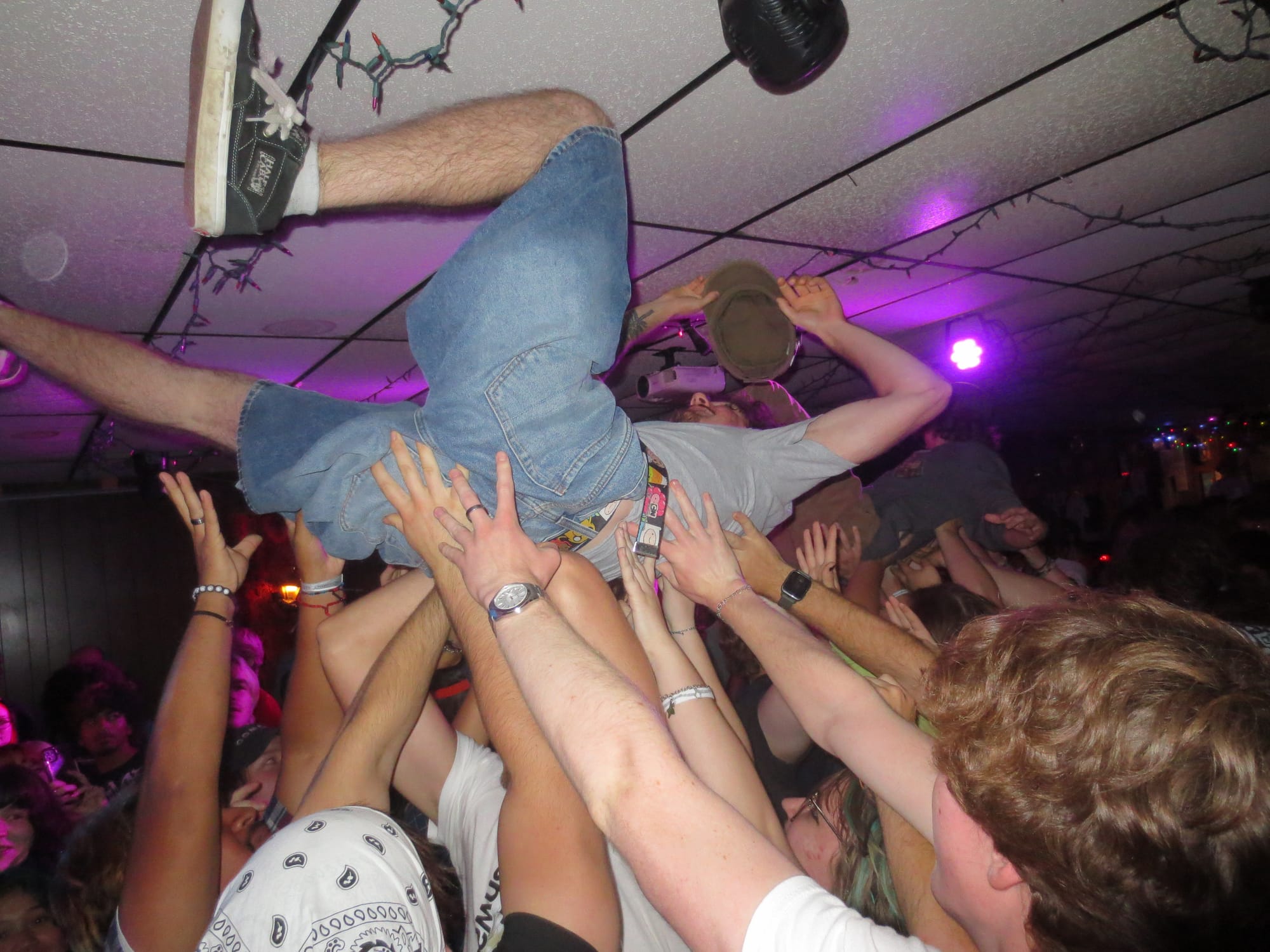
I think that time is coming for the sixth wave, and maybe the real difference will be the quickened pace of that evolution. Off the record information reviewed by Chasing Sundays indicates that First Day Back are on the precipice of a genuine breakout the likes of which the fourth wave didn't see until Modern Baseball's second album, which landed a full six years (2014) after the fourth wave technically began (2008). It's challenging at this present juncture, and perhaps not particularly useful, to denote when the sixth wave formally started, so I won't attempt to do so. But I think what's undeniably true – and anyone who's seen them on this tour can attest – is that First Day Back are ascending on an accelerated timeline. So go see them play that 200-cap room before they outgrow it for good. You might feel old, but at least you'll feel something.
-----------------------------------------------------------------------------------------
Charli XCX - Music, Fashion, Film
Sibil - "Rock"
Never Ending Game - Just Another Day

Chasing Down
Leo Fincham and Rowan Please
of
Worldpeace DMT
Chasing Down is a Q&A series with artists, friends, and others of good taste.
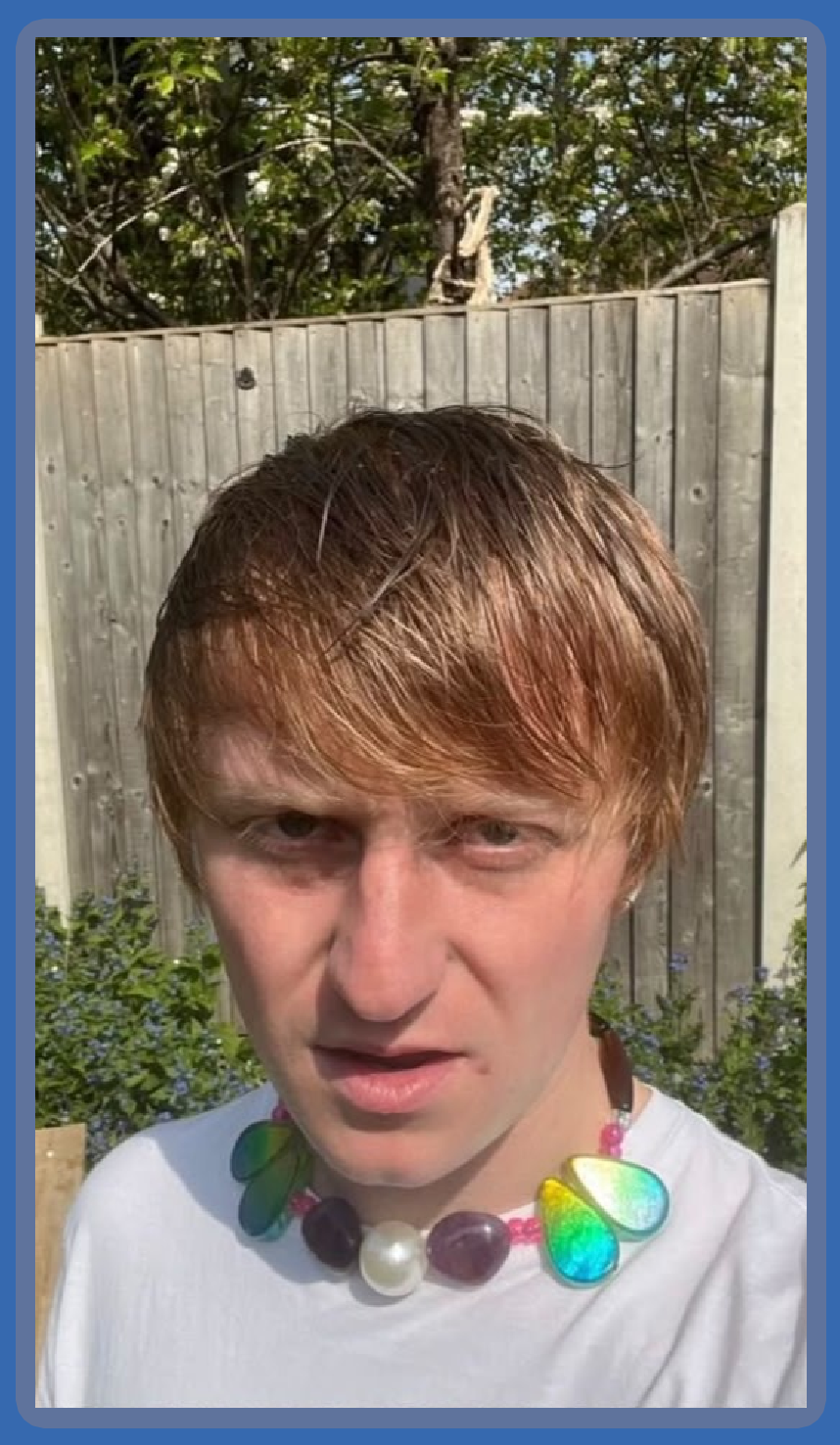
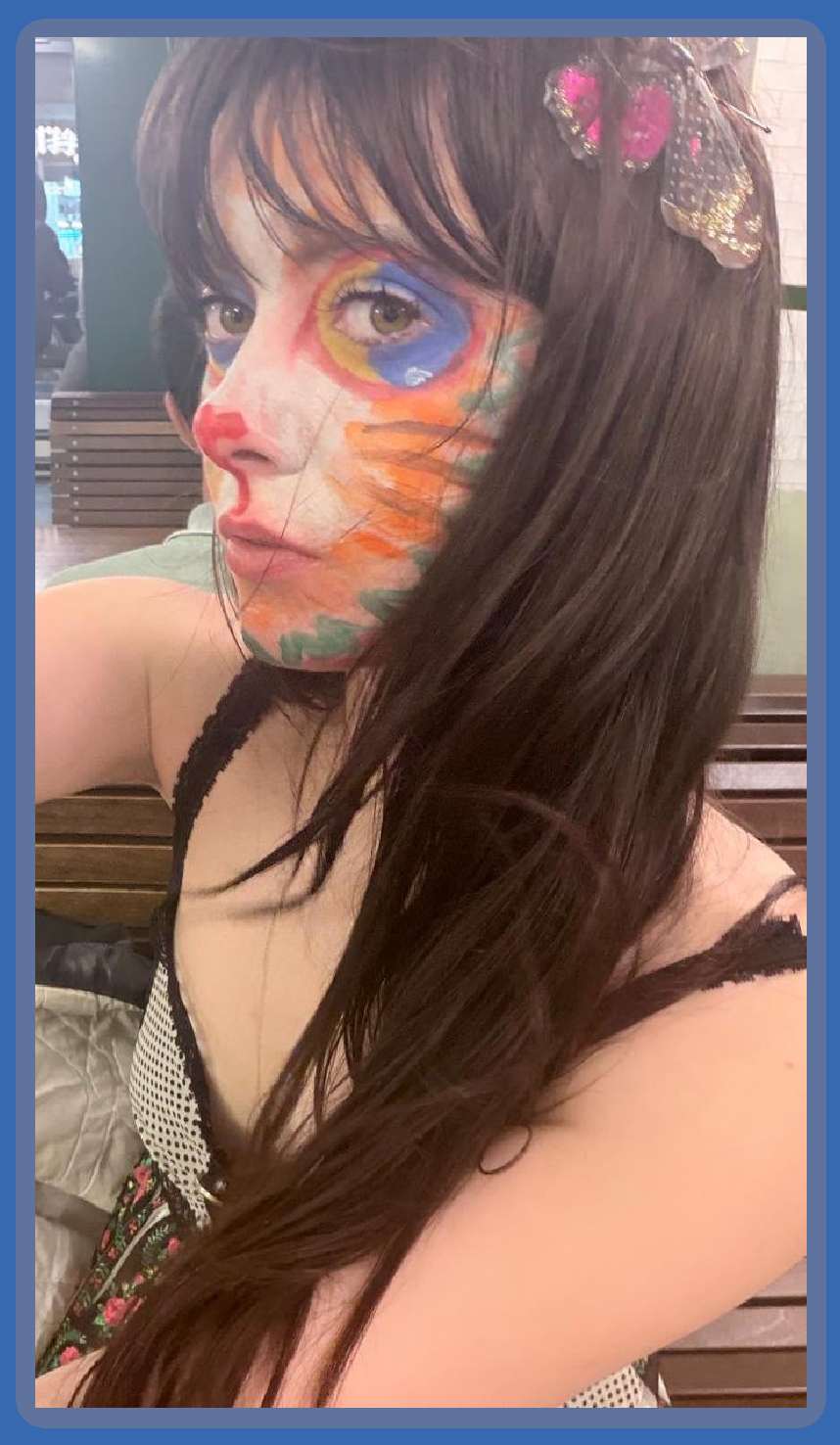
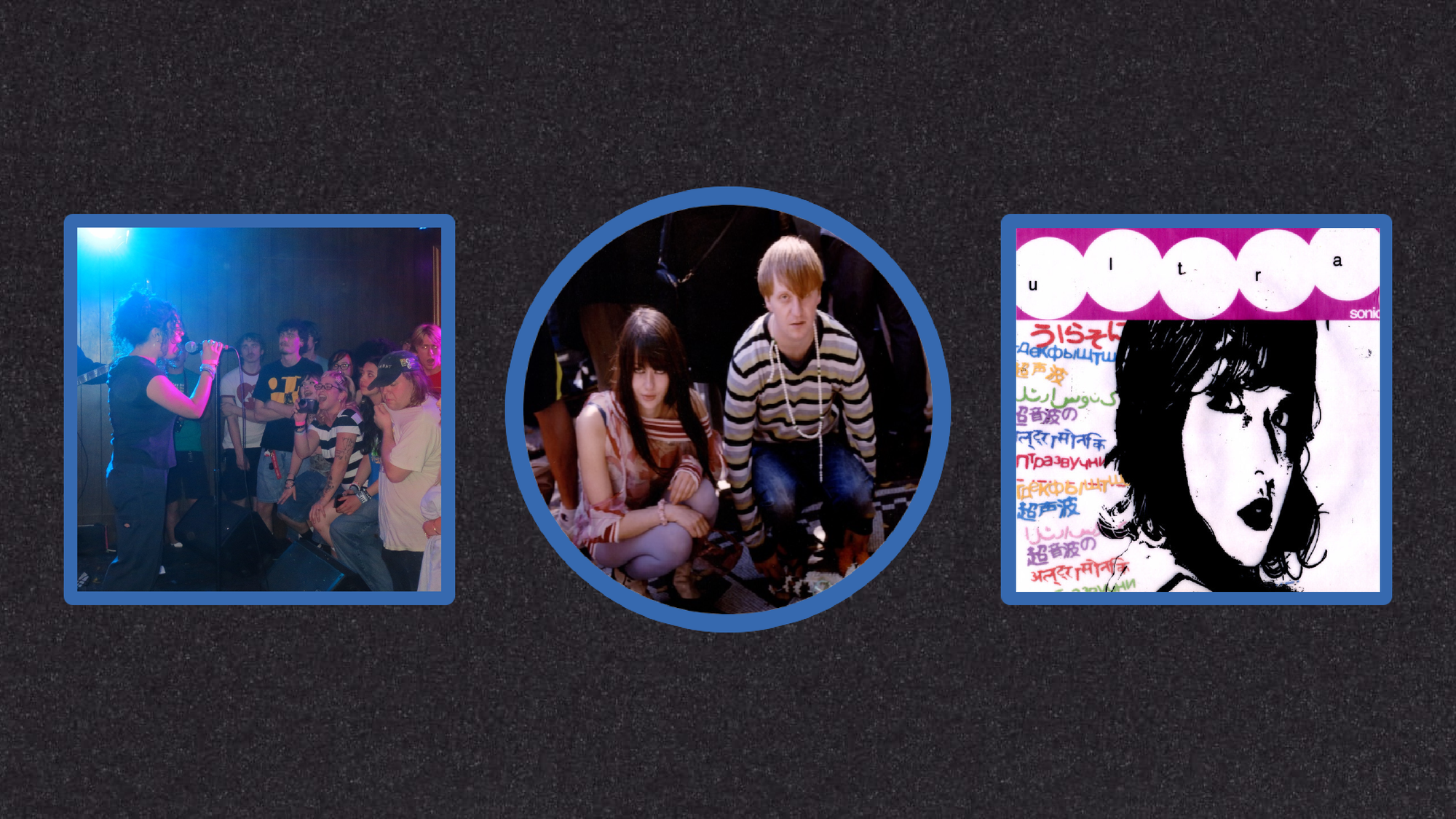
This one's been a long time coming, and I'm thrilled to say it was well worth the wait. Worldpeace DMT are the duo of Leo Fincham and Rowan Miles, aka Rowan Please of The Femcels, and I think they're one of the most interesting bands in the world right now. Their 2025 debut, The Velvet Underground & Rowan, is a sacred text of the much 'a-blogged laptop twee movement, and it includes the track "Love Yourself" – a mortal lock for one of the decade's best songs. Worldpeace DMT's kooky and chaotic reimagination of '60s pop still feels like it's building toward a true landmark album, but the Flowers Powers mixtape they dropped last week is a nice transitional appetizer before LP2 comes later this year.
The 23-minute jaunt tempers the whizz-bang absurdity of The Velvet Underground & Rowan as the band rummage through a wardrobe of different musical outfits: surf-rock, country, psych-pop, a surprisingly pretty Joni Mitchell cover, a totally unlistenable rap send-up. The songs themselves are generally more straightforward than their older work, but the record as a whole is leagues more unpredictable. For this week's Chasing Down Q&A, I asked the two of them about taking their sound to new places, loving god, choosing between The Beach Boys and The Beatles, whether or not they identify with twee, and much more.
Read the full interview below – and the 60-plus others in the archive, with a new one added each week.