Chasing Fridays: Losercore, Sophia Stel, Shaad D'Souza Q&A, more
Figuring out Alex G's new fanbase, finding good music, and interviewing one of music journalism's finest.

There've been a couple times throughout Chasing Sundays' history where I've vaguely alluded to publishing more articles at a more regular pace. From fall 2024 up through late spring 2026, I was writing my book about shoegaze (pre-order now), which required an enormous amount of time and focus that drew my attention away from this newsletter, and basically every other facet of my life. Now that the book is done, I'm back to being a full-time freelancer, and I've decided (or rather, the economy has decided..) that the bulk of my writing going forward will be published on Chasing Sundays.
From now until....indefinitely, I'll be publishing one longform piece each week in addition to my weekly Chasing Fridays newsletter. Most of these longform articles will be extremely in-depth interviews with prominent artists. Other times, they'll be a subscriber-only playlist, a guide to a band I love, or some other feature story. The bulk of these articles will be paywalled, and for $5/month you can read all of them – in addition to all 80-ish interviews I've already published on this site, and all the other paywalled writing I've published on this site. I've published a lot of writing on this site. I think most of it is pretty good.
This week, I kicked off this prolific new era of Chasing Sundays by publishing a lengthy interview with DIIV about their new album ZIRP!. You can read the first half for free, but the second (juicier) half is only available to paid subscribers, who are responsible for keeping this site going and my rent paid. Today, I'm back with another edition of Chasing Fridays, my weekly roundup of music criticism + a paywalled Q&A. This week, I wrote a small primer on the viral "losercore" playlist and some blurbs about some songs I like. Then, I interviewed vaunted music journalist Shaad D'Souza about his writing, his taste, his predictions, and much more.
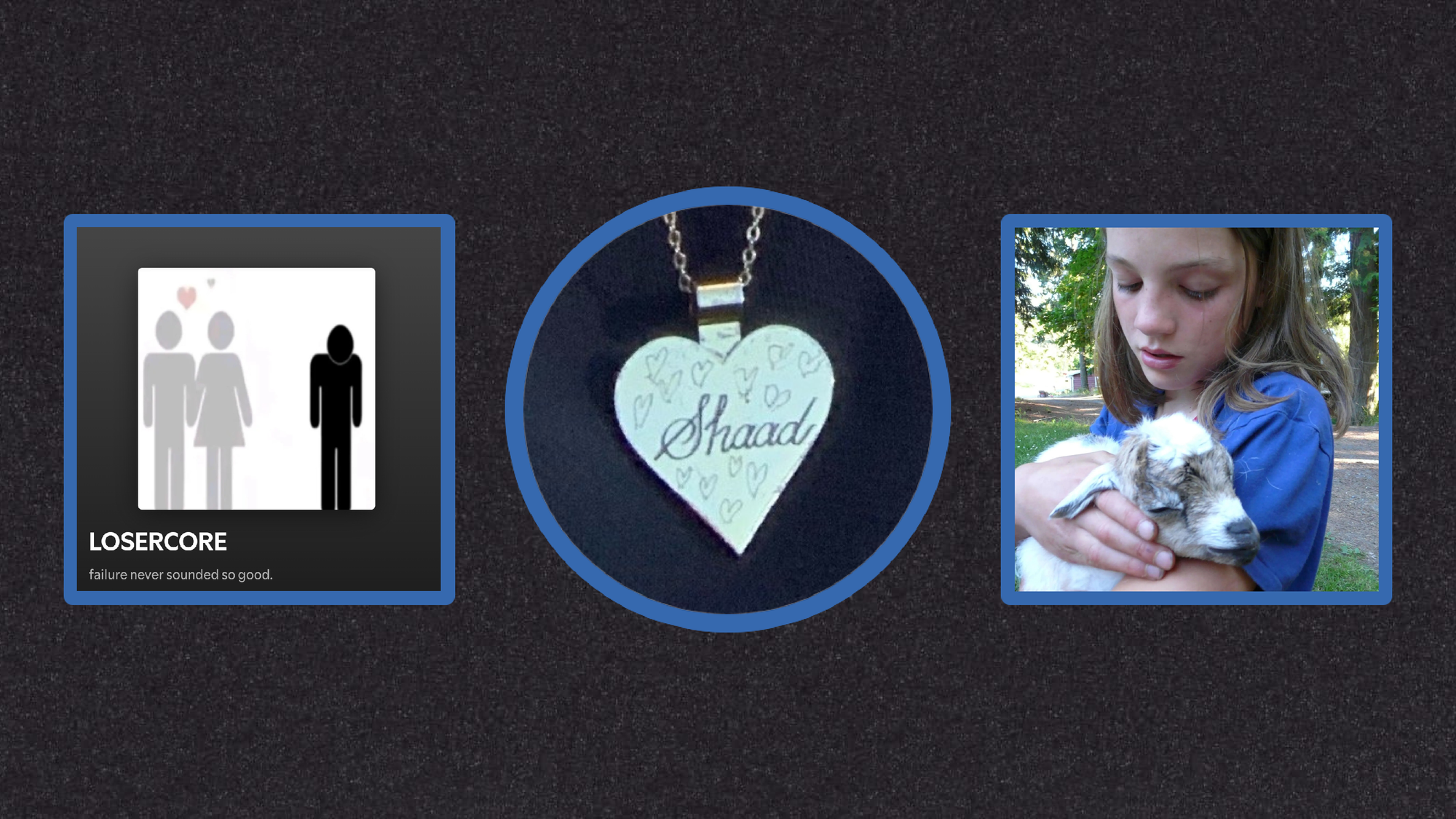
Trying to understand the viral "losercore" playlist that's filled with Alex G songs
My girlfriend sent me an IG reel earlier this week of a kid mockingly dressing up in "losercore" garb. The kid, a popular creator named Nathan Kwon, was humorously modeling the fashion items associated with a new aesthetic/meme/music "genre" that's been blowing up on TikTok lately. I, being a 31-year-old who rarely ever opens TikTok, hadn't heard of losercore, but after browsing the viral losercore Spotify playlist with ~328,000 saves that functions as the scaffolding for this meme, I became intrigued. Particularly upon noticing that the first track in the losercore playlist is an unofficially released Alex G song, and the second song in the playlist samples a different unreleased Alex G song.
Losercore, as I've come to understand it after watching a bunch of popular "losercore" TikToks, is a term for describing the archetypal teenage (male, usually) loner. A slight, friendless beta who can't talk to girls, is always tuning out the world with his wireless earbuds, and is constantly slouched over in dingey, 2000s indie-boy garb: striped longsleeves, greasy dark hair, maybe a Radiohead band tee. Like many contemporary memes, losercore is rooted in genuine and pervasive societal ailments – nihilistic male loneliness and world-weary social anxiety – that are then scrambled by post-irony and brainrot humor until it's difficult to discern where the joke ends and the cry for help begins.
@musicenjoyer178 #loser #lonley #fy ♬ Insomniac - Memo Boy
Someone could write a whole dissertation unpacking the social conditions that animate losercore and why it's so resonant with today's young people, but I'm more interested in the music that's baked into this trend. For example, in the above TikTok edit, a single guy reduced to third wheel status decides to accept his solitude by eating fries alone (no girlfriend means no sharing) and listening to his "losercore playlist," The soundtrack for that TikTok is "Insomniac" by memo boy, the infamously omnipresent Otto Benson song that's become something of a doomer anthem for terminally online Zoomers. (I spoke in-depth with Benson about this subject earlier this year).
@matthewaep_ #theperksofbeingawallflower #theperksofbeingawallfloweredit #losercore #mecore #mecoreedit ♬ chemical - Blood Nose
The main character in that edit is the paper-mache face that appears on memo boy's cover art, meaning that "Insomniac" – a drab indietronica song that sounds like a blend of Duster, Washed Out, and Aphex Twin – is the musical mascot, so to speak, of losercore. Benson made that memo boy song when he was in high-school, at a time when Alex G was becoming "very impactful" on his developing taste, as Benson told me earlier this year. Which further underscores why Alex G is seen as the signature composer of losercore; not so much a sound or style, but a mood of music that's depressive, frayed, tender, and often excessively self-loathing. Just like the dark, detached acoustic songs Alex G wrote in his teens and has never formally released ("Nintendo 64" and "not anywhere" both appear on the losercore playlist).
Many other songs on here are transparently modeled after Alex G or one of his generational peers. wifiskeleton and aeter's "loser club" samples the Alex G bootleg "Light," and both artists are G-man disciples whose popular songs traffic in the crude, desperate, sample-peppered "SoundCloud Indie" that Pitchfork's Kieran Press-Reynolds describes as "a particular strain of depressive droning over looped guitar beats" that's exploded online within the last year. "The Love I Lost," a losercore entry made by Fried By Fluoride – a solo rocker with 1.2 million monthly Spotify listeners who I've never heard of – sounds more like G's contemporary Teen Suicide by way of Prince Daddy & the Hyena. "I'm feelin' detached, there's no comin' back," Mr. Fluoride bleats with a Sam Ray quaver through clipping distortion.
Other songs on the definitive losercore playlist, like The Cure's new-wave staple "Boys Don't Cry" and Clarion's shoegaze punker "Hello Juliet," make it clear that losercore is defined more by vibes and lyrical content than sonic features. (Beck's "Loser" is, interestingly enough, not in the losercore playlist.) But a lot of the songs I heard while skipping through that playlist are indelibly shaped by Alex G. It's just absolutely fucking astounding to me how much influence he lords over the entire indie-rock landscape at this point; not just the cool, critically acclaimed artists, but also this whole sector of massively popular (online, at least) though not particularly good doomer-rock.
His music lives in a completely different context from the one I found it in 11 years ago. It means something entirely different to the generation of fans who've made him a rockstar. I guess that makes me a loser. Much to consider.
Sophia Stel - the greatest album of all time
This record is fun because I'm still not sure if I think it's good or not, but I can't stop listening to it. I had never heard of Sophia Stel until earlier this fall when suddenly all of the trendy IG blogs and tapped-in critics were treating the Canadian alt-pop singer as The Next Cool Thing. the greatest album of all time, her debut LP, arrived last week via A24 Music, making her labelmates with "it"-band ear and cloud-rock bard Mark William Lewis. Her music is different than those acts. Stel makes richly textured synth-pop that splits the difference between Addison Rae and 2hollis; the coolly aloof, child-of-Lana blueness of the former, and the rap-inflected, stay-at-home swagger of the latter.
It helps me to appreciate Stel's work by understanding who she's not. The juxtaposition between her high-gloss club beats and bored auto-tune trills recalls the master suite bedroom-pop of Charli XCX's how I'm feeling now, but Stel doesn't have Charli's sassy magnetism. That's not to say she's delicate and feathery like the whispery ice diva oklou. Her humor is saucier than it is sensual (hear: "On My Dick" and "Bitches Talk Shit"), but her record's best song is the pulsing "I Do," where she purrs slippery couplets over throbbing bass and staticky Euro synths. It's both low-energy and lasery, a glittery rapture that you could envision yourself either sweating out or falling asleep to.
That tension between Stel's tediously listless singing and her kinetic, P.C. Music-indebted production is both her signature asset and most cloying flaw. Some of these songs could absolutely benefit from a more animated vocal, but at the same time, it's Stel's understated wit and anaesthetized expression that make the greatest album of all time so irresistibly unsatisfying. Every relisten is another attempt at shattering Stel's glassy exterior, only to be reminded that that layer of indifference is precisely what makes her music so alluringly impenetrable.
Horse Vision - "Goblin's Head"
Earlier this year, I said that Horse Vision should write more bangers. I was referring to their song "You Could Have It," a casually infectious, exactingly arranged, unexpectedly explosive cloud-rock sizzler that's possibly the best song Horse Vision have ever made. The Stockholm duo's new song "Goblin's Head" isn't a banger. It's an ornately dreary piano ballad with a tepidly hopeful climax that has all the hallmarks of cloud-rock, the foggy breed of anatomically digital, psychologically "organic" indie-rock that's being made by artists whose musical foundations are in SoundCloud production rather than songwriterly prose.
Horse Vision are, along with Chanel Beads and ML Buch, one of the archetypal cloud-rock bands. They're also the most gifted melody-makers in the emerging genre, so although "Goblin's Head" isn't a banger in the way "You Could Have It" is, this song is deceptively catchy and deliriously engrossing. What makes this cloud-rock, you might ask? Lethargic vocals ridged with warbly auto-tune, snatches of violin that are audibly clicked and dragged into formation, baby-voiced "yeah!" samples that sporadically sound off like a motion-activated children's toy. The whole arrangement has a computational frigidness that's paradigmatically cloud-rock.
However, there's also a flash of warmth during the track's final swell – depicted by the first splash of red Horse Vision have ever used in their cover art – that conveys the hot-blooded human pathos that's also crucial to cloud-rock. Horse Vision are the maestros of hazy-eyed, skeletally synthetic songs that also make you feel.
Three other releases I've been enjoying...
...but that I only have a few thoughts on.
Félicette - "Strange Desire"
Félicette are a band from Brussels who I'd never heard until I was recently sent their upcoming album, Rope Cord Twine Thread String, which is a great title. The record includes several tracks with some glitchy, cloud-rocky production that I really love, but lead single "Strange Desire" will appeal to the dream-pop classicists in my readership. Elegant, chilly indie-pop that sits somewhere between Stereolab and Alvvays.
Pseud - Pseud
Ryan Walchonski of the great Maryland indie band Aunt Katrina (and formerly Feeble Little Horse) just launched a new record label called Formal Ritual, and the first non-Aunt Katrina release in their catalog is Pseud, the self-titled LP from the D.C. band Pseud. No matter how far I journey into the boonies of laptop twee and esoteric electronica, I'll never grow tired of hearing a tuneful indie-pop song with crushing, fuzzy guitars. And that's exactly what Pseud is full of, particularly my favorite cut, "Dressed to Kill."
Threshold - "Stillwater"
Threshold is the solo project of Isaac Eiger, the former singer-guitarist of Strange Ranger and the current bassist of Voyeur. I found Threshold's underrated 2024 debut, Thief, late last year and contextualized it within the broader cloud-rock paradigm. I don't think that was necessarily inaccurate, but when I asked Eiger about his influences he pointed me to Neil Young's "Philadelphia," an achingly sad piano ballad that's certainly a kindred spirit to "Stillwater," Threshold's achingly, cinematically, kneeling-in-the-rain-while-crying-out-to-god new piano ballad.
-----------------------------------------------------------------------------------------
I Love Girl - The Sound of Two Swords
The Crying Nudes - DJ
They Are Gutting a Body of Water - KOOL FAITH // LOOSIES II

Chasing Down
Shaad D'Souza
of
Shaad Magazine
Chasing Down is a Q&A series with artists, friends, and others of good taste.
The irony in the below interview isn't lost on me. Shaad D'Souza is a very popular music writer who pens sharp criticism and thoughtful profiles for Pitchfork, The Guardian, The New York Times, and elsewhere. He's one of the most prominent music journalists of my zillennial generation, and also one of the only working critics who covers the same indie-pop underground that I do with Chasing Sundays. D'Souza is, at this point, best known for running Shaad Magazine, an Instagram-native music publication that could otherwise be described as D'Souza posting – very good – writing on his personal IG page. For free.
The aforementioned irony relates to the first question I asked D'Souza in this week's Chasing Down Q&A: "Why post to your tens of thousands of IG followers for zero compensation instead of using your considerable audience to monetize a Substack?" D'Souza's answer was very interesting to me. You'll have to read his persuasive response below in order to see why, but it kind of caused me to have a minor existential crisis. In a good way, I think. I also asked him about his favorite music books, pop's future, London's present, his toughest writing assignments, and more. His answers, like all of his writing, were bold and colorful.
Read the full interview below – and the 70-plus others in the archive, with a new one added each week.