DIIV talk going corporate, rejecting shoegaze, "looking like shit," more
On their new album 'ZIRP!', the indie vets rediscovered fun by "rebelling against the history of the band."

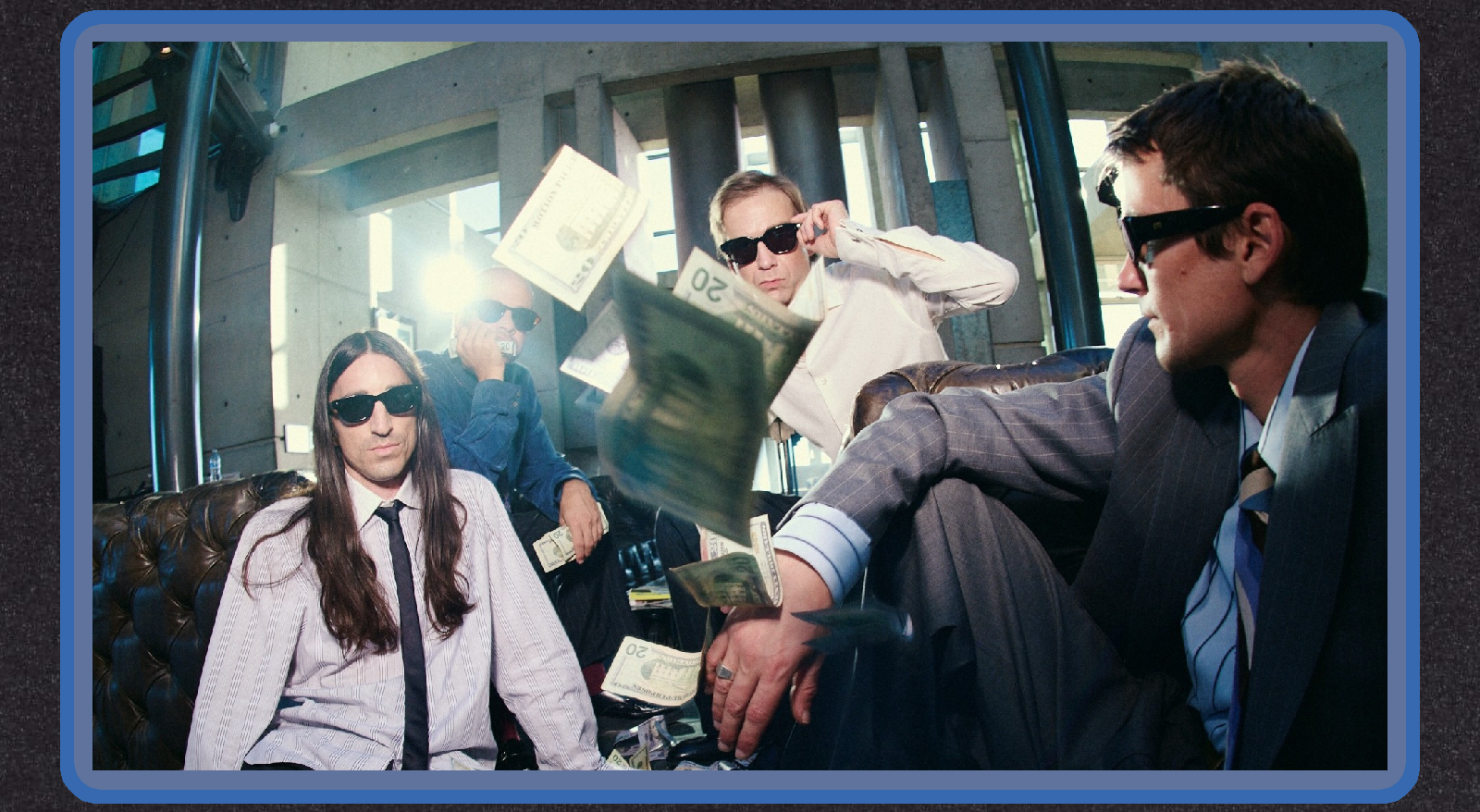
Last month, I thought that I was being ZIRP'd. DIIV had released a couple singles from their new album, ZIRP!, and those songs confused me. Well, not so much the content of the songs, but rather the disparity between how the songs sounded and how DIIV were presenting them. Their press releases and social media posts declared that DIIV – critical darlings of 2010s indie-rock, reluctant godfathers of 2020s shoegaze, serial committers to bits of all kinds – were reformatting. They were now wearing frumpy suits, spearheading a new genre dubbed The New Alternative, and situating their fifth record, produced by Charli XCX's go-to guy A.G. Cook, within that new, unrestrictive, and un-shoegazey paradigm.
I, like many longtime DIIV fans, was confused. And that was the point. In early October, DIIV released another ZIRP! single called "Trillions." In that one, singer Cole Smith bleated through auto-tune about wanting to earn a billion dollars and the ensuing emptiness of that frivolously wealthy lifestyle. In the "Trillions" music video, all four members of DIIV frolic awkwardly throughout a swanky L.A. mansion, trying to look cool and lavish and instead failing miserably. The song is puckish and sweet – my friend affectionately compared it to Owl City's "Fireflies" – but the band look ridiculous trying to sell it. You know they're joking, but a little part of you also wonders, wait...are they?
Since then, I've heard the entirety of ZIRP!, an album that'll be available to the public on October 30th. It's an album that's simultaneously more serious and more satirical than I thought it'd be. It's DIIV's catchiest set of songs yet. It's definitely better than their last album, Frog in Boiling Water, which was a good album – just not as good as this one. This one's darker and more apocalyptic in some ways and brighter and more hopeful in others. It's a pointed attempt at making their band bigger, but it doesn't necessarily sound like an album that was made in close collaboration with a future-facing popstar producer. I think it sounds like shoegaze. DIIV don't.
Before DIIV played an utterly spectacular show in Pittsburgh during their October run opening for Interpol, I stepped onto their tour bus and spoke with all four members – Cole Smith, Colin Caulfield, Ben Newman, and Andrew Bailey – to try and figure out if, and why, and how I was being ZIRP'd.
The conversation that followed touched on many DIIV-related subjects: coining a new genre, distancing themselves from shoegaze, appropriating corporate aesthetics, the blurry lines between sincerity and absurdity, pissing fans off, how A.G. Cook rejected their original album idea (and then made it better), embracing pop archetypes, Smith tragically losing his house in the L.A. wildfires, and how that terrible experience reaffirmed their personal and musical bond so that DIIV could be built back better than ever.
We talked about a whole lot of other things, too. DIIV are good at talking and I had a lot to ask. Read the entire convo – lightly edited for clarity – down below.
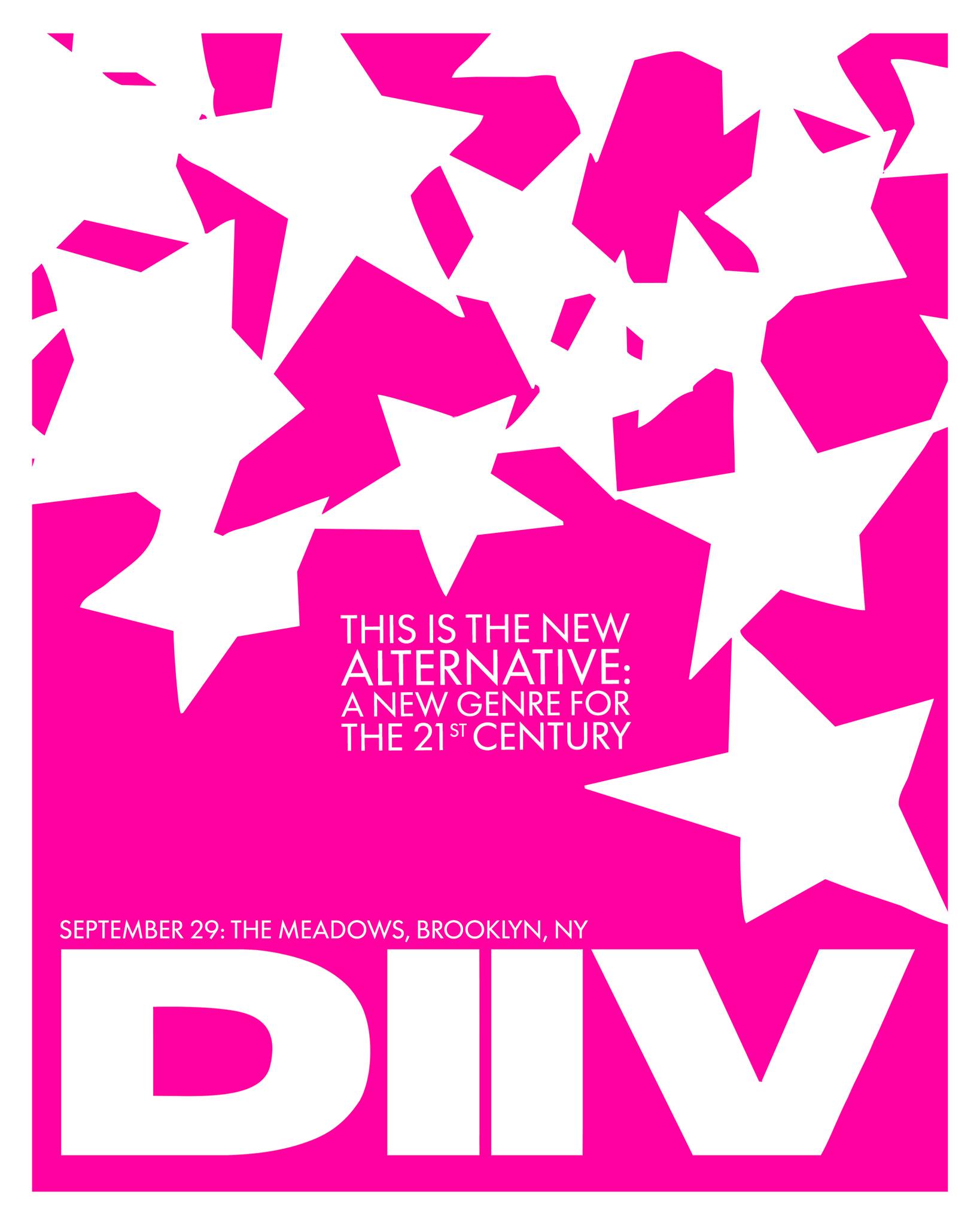
Let’s start with “The New Alternative: a new genre for the 21st century.” Which is where you guys are trying to situate this record. What’s your thesis there?
Ben: I feel like we originally just wanted to be an “alternative” band rather than shoegaze or some other micro-genre. And then we were like, “let's check out what's on the alternative charts,” and it was just the worst dogshit you could ever imagine. So we were kind of like, hmm, maybe “alternative” isn't really a good word anymore to describe rock music. Because it's not really “rock” anymore.
Cole: It’s very flat, corporatized slop. It’s supposed to be an alternative to pop. Just kind of auditing these terms a bit is fun because we kind of came to the conclusion that there is a necessary alternative to corporate alternative, and what do you call that?
Also, we’ve been such a genre band, pigeonholed by genre. So kind of playing with that a little bit or embracing it, or taking some kind of power back and leaning into something that's a much more accessible paradigm. But I also think the word “alternative” itself is so loaded and carries so much baggage that we want to play with across the board.
How does this "New Alternative" differentiate from the original conception of alternative? Is it a return to what “alternative” meant in the late 80s?
Cole: I don’t think it’s a return but I do think the connotations of the word…with like, “capitalism, there is no alternative,” Margaret Thatcher thing. I think there is a kind of anti-capitalist or anti-corporate sensibility that's I think of as kind of a defining piece of the New Alternative picture. But you’re the journalist…It’s always been journalists who’ve coined the genre thing, so we just wanted to give something to play with a bit and plant a flag. There’s tons of artists that I would consider to be New Alternative that fit under that umbrella, and it’s fun to imagine a world where that stuff is united.
Alternative being this alternative to pop is kind of silly now because pop is so forward-thinking and experimental and alternative feels so corporate. They’ve kind of flipped a little bit, so we wanted to create an alternative to “Alternative.” Alternative so thoroughly appropriated punk aesthetics, so kind of flipping that by stealing the corporate aesthetics. It’s supposed to be a subversion a bit of alternative.
I guess that's why I was wondering if it was sort of facetious in a way, because of the way you guys are dressed right now and in the whole cycle. But yeah, what feels so restrictive about being called “shoegaze” or “post-punk” or whatever? Do you think it actually prevented people from engaging with your music over time, or did it restrict how you were making it?
Cole: For me, the most exciting moments of modern shoegaze and a lot of the stuff that's been so exciting about it are the moments where people kind of break with genre convention. Instead of worshiping Slowdive and re-creating it, kind of breaking from convention in certain places and being like, “let's add breakcore drums,”or whatever kind of innovation there is. That's always where it's the most exciting.
Even though I think it's a very progressive genre musically, I think it still has connotations of being really, like, regressive and backwards-looking. We made the record to be kind of looking towards the future rather than the past, and I think that is the one thing with being called “shoegaze” that I think has misrepresented us to most people.
Andrew: We see it as like, there’s different colors you can paint with, and say shoegaze is using black paint. And there are some artists that just use black paint and that's shoegaze. But a lot of artists just use a little bit of black in their paintings, and especially DIIV when they first started calling us shoegaze, there was barely a little bit of black in our paint. And they were like, “oh, shoegaze.” And then our third album was like, “Alright fine, we’ll use black.” It’s a weird thing to define somebody by one of the little tools on their toolbelt.
I would say Frog In Boiling Water was almost misclassified as shoegaze. You guys got wrapped up in the shoegaze narrative, but that record itself was not that shoegaze. I would say ZIRP! is more shoegaze.
Cole: Cool.
You were saying the coolest shoegaze to you is the shit that's innovative, that's adding electronic flourishes, adding some new style to the shoegaze template. That's exactly what ZIRP! Is to me.
Cole: It more comes down to perception. Genre is such a useful shorthand when you’re talking about music to your friends but it’s difficult to use while describing your own music because it can be so limiting. The New Alternative thing is kind of a bit, but I do think at the core of it is kind of calling for a reappraisal of genre tags. Because it is useful as a way to talk about music.
It’s funny because I saw you guys are in some sort of Spotify playlist called “The New Alt,” and you’re in there with Olivia Rodrigo.
Colin: It’s funny that there’s almost a distinction between New Alternative and The New Alt. Because the New Alt is just one of the playlists where…not everyone in there, but there’s a lot of stuff we were referring to as being not exciting. I think for us, too, it feels more exciting or better to be trafficking a genre that isn’t so restrictive. Because certain genres are kind of restrictive, and I think shoegaze is one of them.
Like, the shoegaze subreddit. I lurk on it a lot, and it's so interesting because a lot of people have balanced, reasonable takes, and then other people are like, “this isn't shoegaze,” and they're really not even purists. It's some other standard that is being defined in real time. A lot of genres don't have that kind of micro-genre scene kind of fandom, and I think especially after we made Deceiver, which was just a straight up shoegaze record, there's still people who are like, “Well, DIIV isn't really shoegaze.”
I think genres are either buzzwords that mean nothing or they are something that has an identity and parameters. Like what is “post-rock”? It’s meant many different things over the years. What is grunge? That's just a marketing word. But hardcore has a real identity and I think it’s useful to create parameters to determine what is hardcore or not because there’s a culture that comes along with it, it’s not just sound. I think shoegaze has a more malleable definition than people give it credit for, but now we’re seeing “shoegaze” being used literally as a marketing term to be like, “this band sounds vaguely like Deftones.” And that's not what it is.
Colin: I think hardcore and shoegaze both represent more of an out group than post-rock does, so people are more protective of it. Obviously hardcore has a much more distinct real-world scene, but I think because shoegaze is kind of antisocial music or something, the people that really, really love it are more protective of it. Whereas post-rock, I can’t really conjure an idea of what a post-rock listener is.
But how does ZIRP! not sound shoegaze to you guys?
Cole: Well, I mean I feel like the response to “Trillions” as a song, which to me is very DIIV sounding. The exercise was to kind of make a classic wheelhouse, original-era DIIV thing. That feels like one that is decidedly not shoegaze according to our comment section.
Colin: It is definitely not.
Cole: Right...but it kind of is, too. But either way, I think shoegaze can feel so monolithic and a record that's intentionally a study in contrast kind of breaks from that monolithic thing. A lot of our records, we’ve tried to keep them really cohesive sonically, and this one we tried really hard to rebel against that.
Ben: “Trillions” also has intelligible vocals, which I feel is very not shoegaze.
Colin: Yeah, it's very vocal and melody forward. Things aren't hidden. A lot of times with shoegaze, things are hidden intentionally because that's part of the appeal of the genre. It's like there's some sort of mystery. And ZIRP! is, to me, not mysterious in a good way. You listen to it and the ideas confront you head-on. That's like a pop concept.
I feel like this is our “pop record” in my mind, partially because we made it with A.G., but that more speaks to some sort of philosophical approach to how the music was created and presented, rather than the genre of pop or the trappings of certain sounds.
It’s definitely your most melodic record, but it also sounds very much like DIIV. It doesn’t sound like you’re putting on a costume or something. How did you write or conceive of these songs or make these songs to sit in that more pop side of the spectrum?
Ben: I think simplifying things a lot of times. Not on every song. I think “Trillions” is the most different from the other songs and yeah it’s just super simple and not overthought. We kind of let A.G. be like, “alright, this song’s done.” And I think normally we’d be like, “well….” But I think we were just like, "OK, it’s done."
Cole: And there's confidence, too. Not wanting to hide behind gauzy cool or something like that, and just feeling confident in the songs and the ideas that we're expressing. And being completely comfortable with press photos that aren't blurry and cool, but are just pretty much as uncool as we possibly can be. And just having confidence in our songs and also in what A.G. would wind up doing with them. There was a lot of trust and confidence, I think, in the writing process.
Tell me what you mean about the photos being as uncool as possible.
[Laughs]
Cole: Well, look at us.
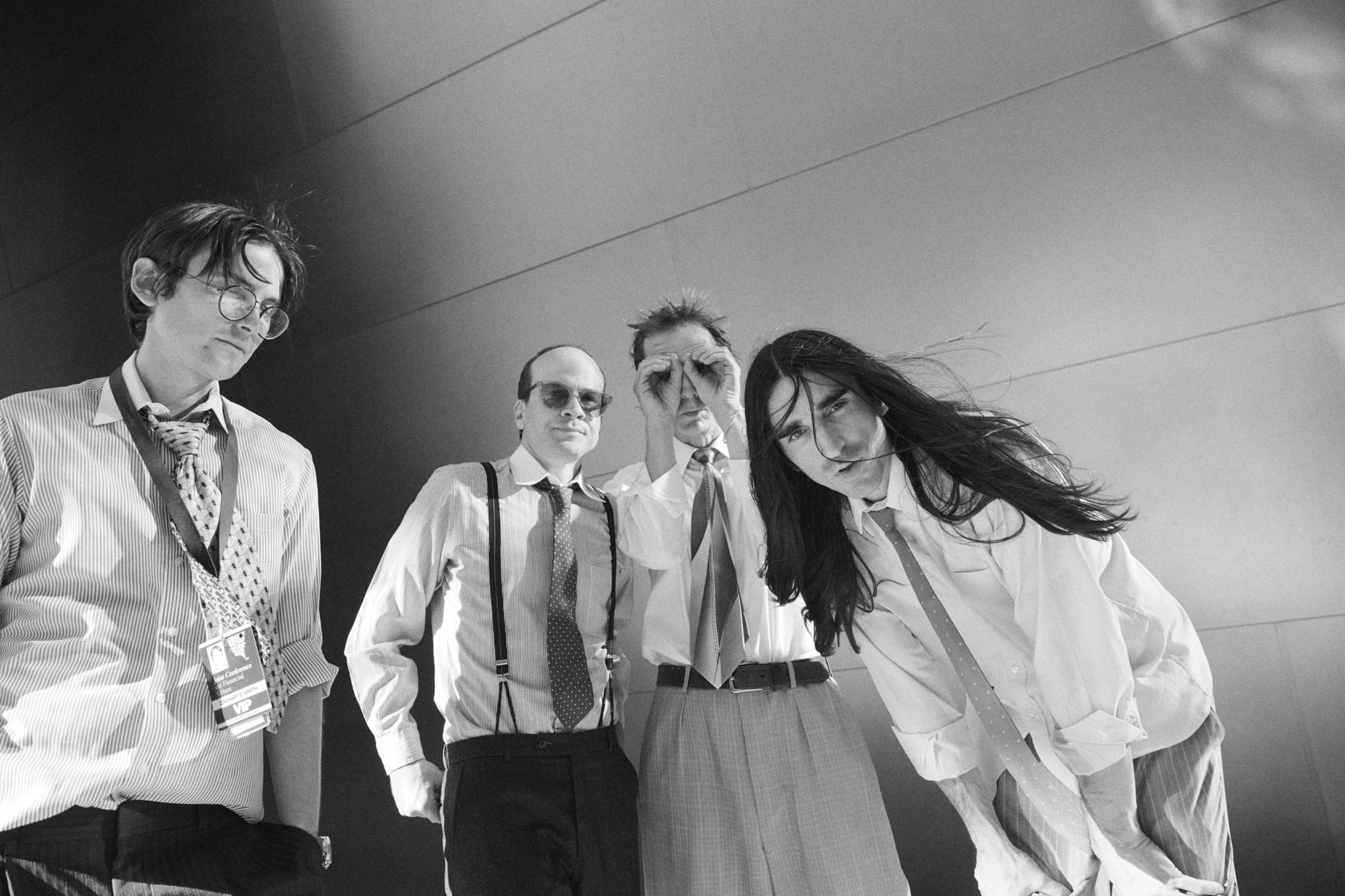
Colin: I feel like a lot of times when bands do suits they're manicured and matched. The point of these is for us to look kind of like shit, and also to kind of look like a type of person that is really definitively uncool. Like the trading room floor guy.
Cole: The just lost everything, recession-era stockbroker. Yeah, disheveled businessman who looks like shit.
Colin: An already uncool archetype who’s also a failure. Like, the worst of both worlds.
So are you appropriating that aesthetic as you were the pop aesthetic? Like how does that relate to the themes on the record or how you wanted to present it?
Cole: Well, a theme of the record is collapsing empire, number go down. And then the possibility of a new world being kind of created in its wake that's hopeful and optimistic. But I think number-go-down was our guiding thing, and so embodying the crash. When the stock market crashes, it’s not just money number-go-down, it’s also like society number-go-down. I feel like nobody embodies that better than that kind of Wall Street bozo.
And you’re obviously playing with that in the “Trillions” video. You’re playing with that, but there’re also magazine headlines like, “DIIV goes pop,” and you’re FaceTiming with A.G. in it, which is corny. You’re play-acting the absurdity of you guys going pop, but you’re also very much going pop sincerely in that song. Something about that tension is clearly interesting to you guys.
Cole: Yeah, that's kind of the contrast built into “Trillions,” where there is a degree of earnestness in it. Where like, we don’t want a billion dollars but we do want to be able to pay our rent, and we do want a larger audience. We do want to be popular. We do want to be able to make a living wage off our work, and that feels so kind of radical in a way. So there is a kind of earnestness in making a pop video that would be accessible to Joey Regular Guy, but there’s kind of a class critique element, too.
Colin: I think that's one distinction between ZIRP! and Frog. Frog was so steeped in internet irony and there was a lot of bits happening, but you could kind of interface with it that way. Where it kind of looks like old internet, and think, “it’s probably a joke.” But I think the bits on this record…the line between sincere and joke is very, very blurry. And so people either get into that tension or they get mad and confused by it. Like, “wait are they serious? I don’t get it.”
Because the “Trillions” video looks so good and the production video is so high. We successfully made it exactly the way that we want and I think people look at it and they're like, “This sucks, they sold out.” And it’s like yes, that is part of the point. But I think people just don’t know how to interface and don’t necessarily like that kind of ambiguity in the art that they consume.
Cole: Yeah, especially looking at the ZIRP-era corporate enshittification of everything, marketing was such a massive part of that. So playing with marketing as something that's built into pop music, it felt like there’s a lot of material to play with in terms of branding and visual identity and aesthetics and stuff. That's part of how we wound up in the world that we’re in right now. These corporations kind of destroying every institution that existed, including the music industry.

I like the fact that fans are getting upset about it. I was confused too at first because the first two singles were really good and seemed really sincere, but then the photos are just ridiculous. They're the stupidest fucking photos and they're on your Spotify header right now.
Cole: Yeah, being cool is kind of boring.
And it’s also funny because you guys were very cool for a long time. That was the perception of DIIV, that you’re these cool Brooklyn, fashion-adjacent, effortlessly cool band dudes. So now to make yourselves look as uncool as possible…you gotta be thinking about that too to a certain extent?
Ben: Yeah that's what’s weird about the rockstar archetype that we’re kind of poking fun at in that video. It’s so not cool, but everyone just kind of pretends that it is because...Aerosmith or whatever.
Cole: And it’s fun to reject your history and rebel against the history of the band. I think that's why we’ve been able to make such different records each time, you’re kind of reinventing all the time. So yeah throwing our cool in the trash can was pretty fun.
Colin: Also, early DIIV was a specific moment in time, and it was emblematic of that time and that type of cool. And cool now is so much different, and if we were trying to look like fucking Zoomers, like the new electro bands and stuff, it would look so whack. And I think that this partially ties into [why] some people really don't like “Kid” and are thrown off by the video.
Other people find it really sincere and nice, but I think that people that don't like it are people who are really uncomfortable with getting older, and they don't want to see us get older. And part of getting older is losing that kind of youthful, destructive cool. You know what I mean?
Cole: Not to mention that was the worst time of our lives. So fetishizing that just feels like that kind of classic discourse where people just want musicians to suffer. Like the Wednesday discourse of “just sleep in the fucking van, you idiot. Don’t get a hotel room.” They don’t want you to be happy. They want you to die.
Cole, last time I interviewed you for the previous record you were saying you guys made a point to remove the songwriting hierarchy and all contribute, and you were saying how that was ultimately successful, but really difficult to accomplish. There were a lot of creative impasses. Was ZIRP! also challenging or swifter?
Cole: Definitely swifter. The goal was to make a record much more quickly than we had before, and part of that was just kind of let go and let god kind of thing. But having A.G. driving the ship, we trusted him so much and any idea we might have been precious about, we just trusted his decisiveness. We really wanted to try and keep it fun and remember what brought us to music in the first place.
As we all get older, and for me after the fire, thinking, "what role does the band play in my life?" Just kind of remembering why we started doing this in the first place – because it was fun – was kind of a guiding light. So we had so much fun making the record. We were laughing the whole time.
Colin: There was an intentional reset, though, to have the writing process filter through Cole, as opposed to filtering through consensus. It’s cool that we did that for Frog, but I think the pain in that record is palpable, and I think that's partially why people like it and why it’ll kind of stand the test of time.
Cole: They love to see us suffer.
Colin: I enjoy that, too, in music. But I think there’s a misconception of creative processes that it’s some sort of progressive line towards an ideal. And really it’s just you try different things on different records. And I think we did the democratic thing with Frog, and partially because it was so difficult and tense, there was a spoken aloud intention to reset so that ideas filter through Cole.
Cole: And then filter through A.G., and then filter back through us as a group, but with a lot more behind it.
It’s interesting that the democracy almost caused more issues.
Cole: It teaches you something.
Colin: It’s unfortunately not how, at least creatively speaking, stuff gets made.
Ben: Which isn’t to say it was super easy to make this record. It presented new challenges.
What were some of those?
Ben: Writing as a group, in a weird way. We would sit together in the studio and write together, but it wasn’t live, it was through the computer. So we kind of learned a new way to write. There’s making music and then there’s songwriting. Making music is really easy and fun and songwriting can be pretty heard. And I think we’ve always made an effort to have songs and not just jams.
Colin: Making an album is tough. There’s no way around it being tough, because it requires a lot of ego death at multiple different stages, and all the little deaths are totally distinct from each other. With Frog, before we made that record I remember Chris Coady being like, “you guys ready to climb the mountain?” And I think we almost willed the difficulty of that record into existence.
Ben: We were like, “we’re gonna lose our minds.” Then we were losing our minds and we were like, “no! Not like this.”
A subscription also gives you access to weekly Q&A's, more longform interviews, subscriber-only playlists, semi-annual lists, and more. I rely on my paid subs to make Chasing Sundays possible, so your support is immensely appreciated. Tap in or die.