
Chasing Fridays: Alex G, Audrey Hobert, Peaer Q&A, more
Reckoning with my GOAT letting me down, finding a new pop fave, wading through the underground, and interviewing an indie-rock technician.

It's been a fantastic year for Chasing Sundays. My number of paid subscribers more than doubled, and my overall number of free subs increased immensely as well. I want to extend my deep gratitude to all of you who subscribe and read what I write on this site. I have a lot of big plans in store for 2026, and am feeling incredibly energized to make Chasing Sundays as much a fixture of the music journalism landscape as I can. If you appreciate my work and have the means for a paid subscription, I can assure you that your money is directly supporting real, independent music criticism. Subscriptions are just $5/month, and you get access to paywalled writing every week. A great deal, in my humble opinion.
With that said, this is my last Chasing Fridays of 2025. I'll be publishing my list of the 120 best albums/EPs/mixtapes of the year next week, as well as one other big interview before the year closes out. But I'll be taking the remainder of December off to celebrate the holidays, and then returning full-swing in the new year. This issue is mostly centered on me coming to terms with the fact that my favorite artist ever made an album that I like-don't-love. I also wrote about a bunch of new stuff I've been wading through over the last week, and interviewed Peter Katz of the great Brooklyn indie band Peaer. It's a packed Chasing Fridays to end the year with. Dig in, and happy holidays.
Reckoning with not loving Alex G's Headlights
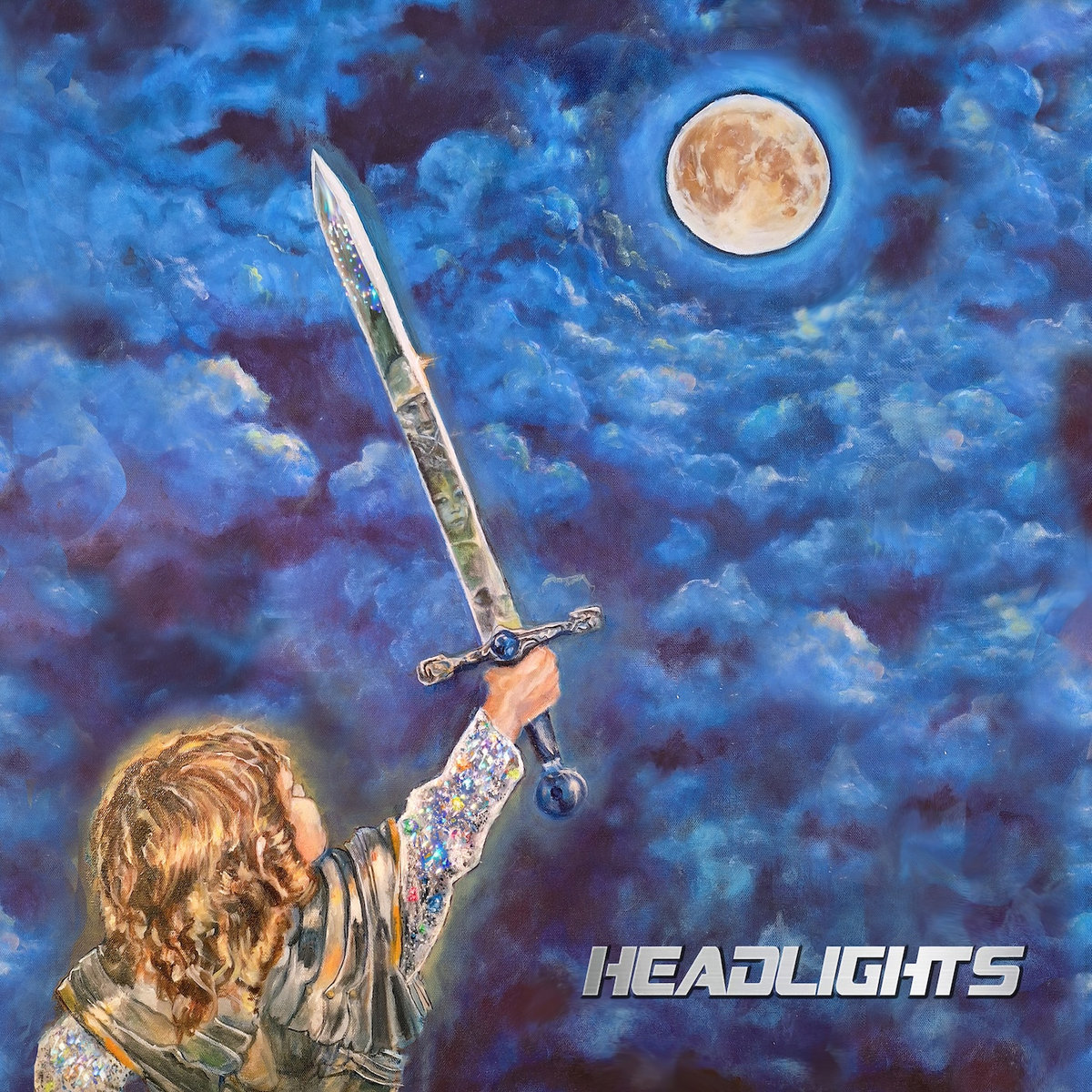
I've spent the last six months trying to figure out why I don't love the new Alex G album. Alex G is my favorite artist ever. He was my gateway into indie-rock and every album he's released since 2015's Beach Music (my Alex G entry point) has ranked among my 10 favorite albums of their respective years – except this year's Headlights. The previous two Alex G albums, 2019's House of Sugar and 2022's God Save the Animals, are two of his most polarizing. A lot of people who got into Alex G when I did (or well before), back when he was mostly making guitar-centric indie-rock, didn't appreciate where he went on those records. He started writing a lot more with synths, relied more heavily on auto-tune, and really embraced the limitless powers of the DAW to make his production a lot more digitally animated.
On House of Sugar and God Save the Animals, Alex G's music began to resemble contemporary electronic, rap, and left-field pop music as much as it did indie-rock. Alex G's records had always been eclectic, but he split into two separate identities on those albums: Alex G the increasingly sharp, accessible indie-rock auteur ("Hope Street," "Gretel," "Runner") and Alex G the increasingly avant-garde electro-pop experimentalist ("Project 2," "Sugar," "S.D.O.S."). The crude juxtaposition and jarring cohesion of those personalities became the central conceit of his music. Sounds that shouldn't have worked together somehow did – and even when they didn't, the friction was part of a greater vision of artful disorder.
Headlights doesn't possess the same degree of electro-acoustic chaos. In fact, it's a very pleasant album to listen to. Easily the most luscious and luxurious sounding record he's ever made. There are plenty of great songs on Headlights. "Afterlife" is one of the best he's written. "Beam Me Up" is in the same tier. "Real Thing," "Spinning," and "Oranges" are gorgeous. I think it's a very good album, and it feels dishonest to say that I'm disappointed by it. However, Headlights does feel like a deceleration of the creative momentum that Alex G has been picking up for over a decade straight. Since 2014's DSU (some would argue earlier, but I think DSU is undeniable) his music has been on the cutting edge of indie music.
The pitched-up slowcore of "Icehead" presaged a whole generation of glum, 90s-gazing indie-rock with a digitized twist. "Brite Boy," from 2015's Beach Music, even moreso. Rocket booted the urban country movement into overdrive. House of Sugar co-invented cloud-rock. God Save the Animals spawned several fresh sounds that Alex G's many followers haven't even caught up to yet. Headlights is just a nice record. It's not a total retread of what he's already done; the lavish and sophisticated string arrangements are a welcome change, and there's a warm sheen to the production that distinguishes it from his prior LPs. But with only one electronic-forward song in the tracklist ("Bounce Boy"), Headlights feels like it's missing the daring leaps that made his last three records so thrilling.
Alex G had been releasing outsider electronic music as far back as 2013, and his hefty catalog of formally unreleased demos and rarities is filled with wonky electronic music that proves he was toying with that sound palette well before his official discography veered in that direction. Although there were speckles of his new sound on DSU (probably the most pivotal indie-rock album of the 2010s), he really began wading into the – forgive me – "indietronic" version of his songwriting identity with the 2017 Rocket songs "Sportstar," "Brick," and "Horse," three wildly different yet equally visionary compositions. "Sportstar," a dreamily auto-tuned piano ballad with very few drums guiding its dubby pulse, sounds like Alex G's response to Frank Ocean's Blonde (a record he strummed a few chords on), meaning that this indie-rock oddball was suddenly playing in the same musical sandbox as the most forward-thinking pop artist in the world.
Rocket was a fascinating and important record for Alex G because his songwriting was becoming more traditional ("Bobby," "Powerful Man") and more futuristic at the same time. That dichotomy is what's made his last several albums so revelatory. He didn't just become a full-on electronic producer and leave guitar music behind. He became a gifted electronic producer who was still working within the context of indie-rock. House of Sugar took things further in that direction. A song like "Project 2" consists of tubular synths squeaking and moaning over a chittering drum break. It sounds a little bit like Oneohtrix Point Never, an artist Alex G collaborated with the year prior. All the human signifiers of Alex G's music– his voice, his wobbly guitar chords, his cryptic lyrics – are stripped away on "Project 2," and what's left sounds alien, yet also aching in a way that's quintessentially him.
In my mind, there're three movements in House of Sugar. The first, "Walk Away" through "Gretel," represents the "control" – the baseline Alex G sound – for the album's later experiments. The second movement, "Taking" through "Sugar," inverts the first movement in almost every way. If there are vocals, they're either pitched-up ("Taking"), mangled ("Sugar"), or sung with a bizarre accent ("Bad Man") that's pointedly un-"indie." If there are guitars, they're sidelined by computerized percussion, exotic synths, and surgical post-production that renders the studio versions completely unplayable with his live rock ensemble. The final movement begins when the acoustic strums of "In My Arms" snap the album out of its surrealist dream and bring it back down to earth with several of the most conventional, Americana-tinged songs he's ever written.
The way House of Sugar drifts between those movements while still cohering into a digestible artistic statement is what makes the album so exciting. God Save the Animals is even bolder. Nearly every crevice of the album is routed with songs that fuse Alex G's rustic indie-rock with new mutations on cybernetic pop. On tracks like "S.D.O.S." and "No Bitterness," auto-tuned emo-rap flows, pulsating hyperpop beats, and tweaked synths are folded in with acoustic guitars and plunky piano leads. The production on "Cross the Sea" makes "Sportstar" sound positively spartan. The auto-tuned bleats on "Immunity" sound like NBA YoungBoy scatting over a Dean Blunt instrumental. I don't even have references to describe the garbled vocal manipulations on "S.D.O.S." and "Headroom Piano." They sound like transmissions from whatever micro-genre Alex G's music will ignite in 2028.
All of this is to say that Alex G was making some of the most adventurous music in indie music for the last decade, and Headlights ends his remarkable streak of being ahead of the curve. There are still twinges of weirdness on here: the unusual volume swell in the center of "Headlights," the echoing wood block clucks throughout "Spinning," the fried jerk beat in the chorus of "Bounce Boy." However, as the lone "electronic" song in the tracklist, "Bounce Boy" feels more like a novelty track – a concession to the portion of his fanbase who yearn for another "Bad Man" or "No Bitterness" – than a stable fulcrum sitting at Headlights' center. I like "Bounce Boy," but over time, it's become a reminder of what's missing on Headlights. A testament to Alex G's kookiness that the majority of Headlights fails to muster.
There's nothing on Headlights that sounds like it will spur a new genre. Nothing that really challenges the state of indie-rock, much of which is shaped in Alex G's own image, or subverts whatever his audiences became accustomed to on his past records. "Afterlife," as amazing as it is, is a refinement of a singer-songwriter mold that he's been working in for nearly a decade now. "Louisiana" is a song that wowed me the first few times I heard it, but after a while, its premise – Codeine and the Chipmunks, basically – began to have diminishing returns compared to prior Alex G songs that work in a similar mode ("Icehead," "Immunity"). The strangest song on Headlights is "Far and Wide," where the G-man adopts a vintage crooner persona that recalls some of my least favorite Alex G songs ("In Love," "County") until the utterly magnificent string arrangement sweeps him off the track. Its gallantness is unique within his catalog, but it doesn't have the inspired charm of his DAW-spawned fare.
Alex G's innovative consistency isn't the only positive quality of his music. He's a terrific songwriter who's capable of writing highly affecting, superbly gratifying rock songs that pluck from a bevy of common influences while still sounding like no one other than himself. I don't think weird-ass songs like "Project 2" and "S.D.O.S." are necessarily better than "normal"-ass Alex G songs like "Gretel" and "Ain't It Easy." However, what makes Alex G such a generational musician is that he's been honing his classic songwriting craft in tandem with his experimental chops. Headlights works toward enhancing the former, but it comes at the expense of continuing to build out the latter. It's a very good rock record by a guy who's become accustomed to delivering so much more than that.
Sadness - shimmer
Sadness is one of a gazillion projects helmed by multi-instrumentalist Damián Antón Ojeda. Earlier this year, I saw his screamo band life – who've released eight demos in 2025 alone – play a DIY venue, and I was pretty impressed by the breadth of ground they covered (skramz to post-metal to Midwest emo and back). Ojeda's long-running blackgaze band Sadness have released 51 albums (!) since 2014, and if you spend any amount of time sifting through the "shoegaze" tag on Bandcamp or scrolling Rate Your Music, then you'll surely recognize the cover art for 2019's beloved I Want to Be There. The new Sadness record, shimmer, also has a lot of hype around it, and I finally got around to listening last week.
shimmer is a two-song, half-hour affair that moves between transcendent screamo, moody ambient, and high-altitude post-metal. Blackgaze (or more specifically in Sadness's case, post-rocky screamo) is a style of music that, despite my love of shoegaze and metal, has never been my favorite. Deafheaven and Alcest's catalogs alone satiate my appetite for that sort of thing, and the sheer amount of music in this vein feels impenetrable to me. While I find the second track on shimmer to be pretty run of the mill, "midnight june room" stands out with its high-pitched androgynous vocals and a climax that's jauntily uplifting, reminding me of late-era Foxing or even a band like Club Night. The breakdown-riddled screamo of life's demo eleven is more gratifying to my ears, but "midnight june room" is worth ascending to.
Touching Ice - I Just Remembered Everything Always Works Out for Me
Chasing Sundays consultant Madeline Frino interviewed this band for Nina earlier this week, and I was intrigued by the cover art that looks kind of like Live. Love. ASAP at a glance. Last week, I wrote about seeing electro-pop singer Cowgirl Clue play with a couple shoegaze bands. Touching Ice essentially rounded up all the sounds I heard at that odd yet oddly fitting mixed bill and made an album out of them. The song "Skullcandyheadphones" is a straight-up shoegaze song, whereas the title track is the sort of witch house-addled Big Pop heard on the The Hellp's new record. Most of this album sounds like Water From Your Eyes if they were from L.A.: dumber, more desperately sexy, better equipped at making people dance all night.
I think The Hellp's older records are actually a pretty good comparison for what Touching Ice are going for here, considering how they fearlessly flit from rock to electro-pop and back again without worrying about how the pieces fit together. And they often don't. The lyrics of "Heart like a dog" read like bad Substack poetry ("Bent down on my knees at your altar/my effing American dream") and the dimly lit industrial techno drop is unconvincingly tortured. "Wish it (bite it)" is much savvier, a custard-smooth Oklou-ish anthem suited for an ice palace dancefloor. The rest of the album continues at that pace: good song, blagh song, great song, meh song. But in the end, everything works out just fine for Touching Ice. Apparently, it always does...
Audrey Hobert - Who's the Clown?
Who's the clown? Me, I'm the clown – for not listening to this album earlier. I didn't like or listen to very much pop music this year. I liked the Addison Rae and Oklou albums quite a bit, adored the Sudan Archives record, and really enjoyed the hits on that Amaarae LP. "Illegal" is the only track on Pinkpantheress's Fancy That that really wows me. And that's about it. Never made it through the Lorde album, don't listen to Taylor Swift, thought the JADE record was a letdown, still haven't heard the Rosalía album (I just don't think it's for me, dog), and thought Gaga's return to form was solid yet forgettable. But this Audrey Hobert record...ohhhh this Audrey Hobert record.
I'd been seeing chatter about this album all year, mostly from my Endless Scroll co-hosts Eric and Miranda, who seemed to speak of it in the derisive yet curious tone that pop fans like them speak of lovable flopstars. At first, nothing they said about Who's the Clown? made it seem worthwhile for me to peep, but then it appeared very high up on both of their year-end lists, and they each confessed that they'd been pulled back again and again by the album's standout singles ("Sue me," "Thirst Trap") until their skepticism toward some of the records shoddier tracks melted away. The way they gradually fell in love with this charmingly imperfect record over repeated listens made me think I had to give it a go. That was a week ago, and I've listened to it every day since.
Eric described this album's sound as "if Sidney Gish was a popstar," and I really can't think of a better way to articulate what's going on here. The album begins with the hook, "I like to touch people," and I still can't tell if it's the most moronic or the most ingeniously silly lyric of the year. I'm singing along either way, though. "Sue me," the record's runaway single, is a bona fide hit. The catchiest radio-ready pop song of 2025, and one I hope to hear in Uber rides for years to come. "Sue me" is the best song on Who's the Clown?, but the record's quirky personality really comes from a clutch of tracks ("Wet Hair," "Bowling Alley," "Thirst Traps") where Hobert hitches tasteful pop-rock craftsmanship to lyrics about being an anxious loner with waning self-confidence. The everywoman themes on these songs work so well because I actually believe that Hobert is as awkward and afflicted as she presents herself to be here.
She doesn't fall into the trap of being a perfectly manicured, trained-to-be-a-star since birth talent trying to be relatable to regular humans. No one who writes a song like "Bowling alley" – a tale about coming home after a bad day at work, settling down for a night in, and then being drawn back out to attend a bowling party that may or may not be a convoluted metaphor about her proximity to the music business, but is nonetheless such an oddly specific setting to write about – is insulated by fame. This is some real weird-girl-with-a-vivid-imagination pop songwriting, and I can't get enough of it. Especially the song "Chateau," a crunchy rocker that gives every Olivia Rodrigo banger a run for its money and somehow fits the line "are we legally bound to stand in this circle looking around?" into its hook. It's settled: Chasing Sundays is Hobert-pilled.
Boy Wonders - Character Study
I've been listening to the Raspberries' self-titled album a lot lately, which is to say that I'm in the right mood for a record like Character Study. Boy Wonders are a Pittsburgh trio helmed by singer-songwriter Derek January, and their new LP is a helping of ramshackle power-pop that fans of melodies, jangly guitars, and brokenhearted lyrics will want to sink their teeth into. "Little Black Shadow" is the kind of song you'd think was already written 50 years ago, and "Nervous" sounds like a tune that The Magnetic Fields might've penned in the late 90s. These are the kind of compliments that guys who make power-pop want to hear. Ergo, Character Study is the kind of album that people who listen to power-pop need to hear.
-----------------------------------------------------------------------------------------
Ancient Death - Ego Dissolution
Olivia O. - Telescope
Heinali & Andriana-Yaroslava Saienko - Гільдеґарда (Hildegard)

Chasing Down
Peter Katz
of
Peaer
Chasing Down is a Q&A series with artists, friends, and others of good taste.
I can't write about Peaer without mentioning what this band meant to people in my orbit in 2016. They were the cool, sophisticated band's band for 20-somethings who were exiting emo and delving into indie-rock. They were so tight live that every scrappy indie band in the Northeast who fancied themselves shredders looked up to Peter Katz's knotty, intuitive guitarwork. "Sick" was the bop for depressed college kids who'd die for at least one Exploding In Sound band. Their two Tiny Engines records, 2016's Peaer and 2019's A Healthy Earth, were never going to make Peaer huge, but their appeals were obvious. Noodly without being math-rock, bummed-out without being emo, slow but not quite lumbering enough to be straight slowcore. Peaer were their own thing, and they still are.
The band haven't done much in the six-year gap since their last record, and I frankly assumed that they were never going to release another album again. They dropped the great single "Just Because" back in 2024, and then nothing for another year until they announced Doppelgänger last month, a new Peaer record arriving January 16th via Danger Collective. The first few singles more or less pick up right where Peaer left off. The trio still have a knack for finding a cool, loping groove, and Katz's guitarwork still hinges on severe dynamics that are both playful and studied. He'll play curlicued licks so quietly that you're inclined to lean into the speakers to enjoy them – at which point he'll suddenly kick on the distortion and melt your ear off. In a fun way.
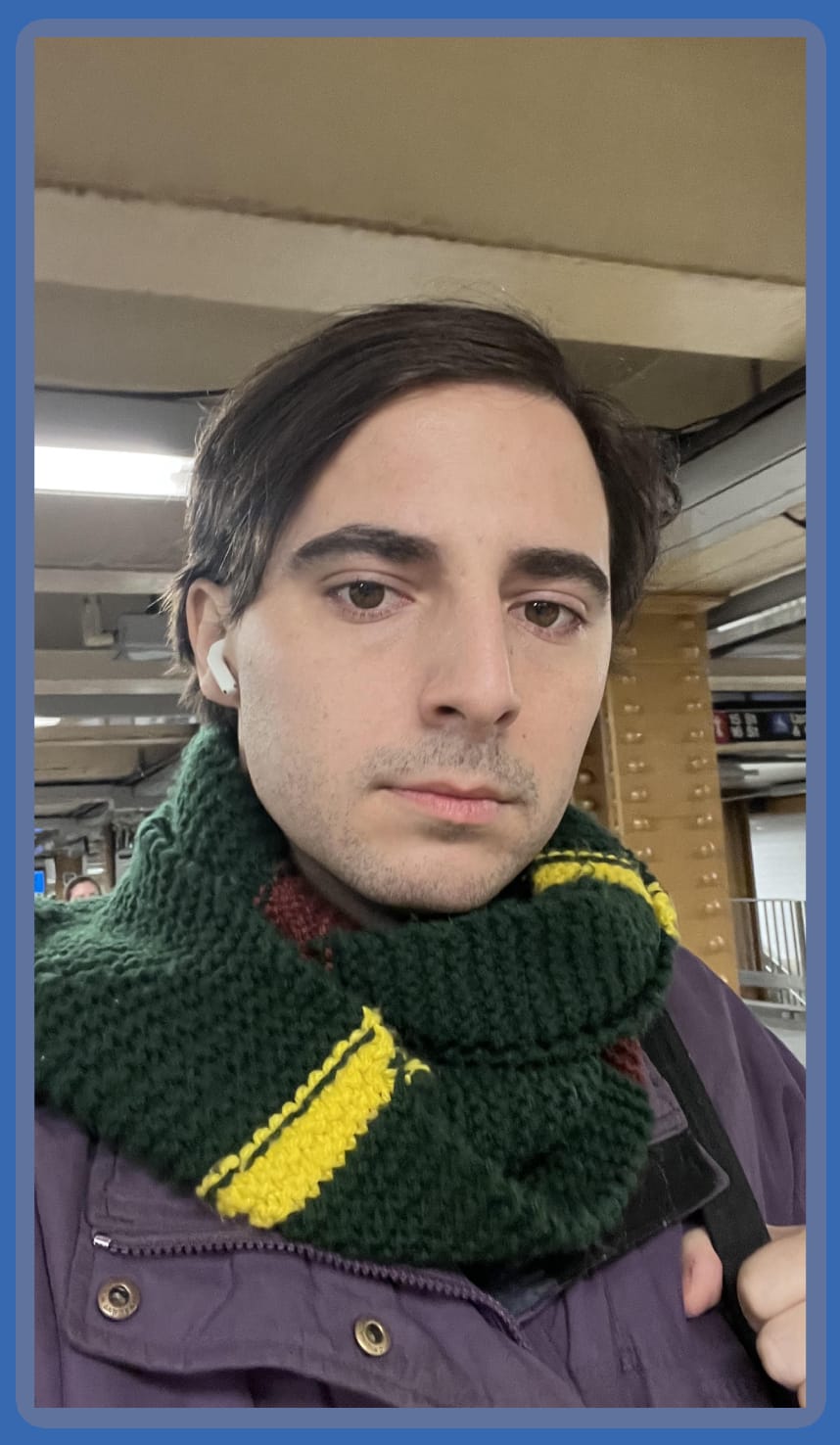
For this week's Chasing Down Q&A, I asked Katz about Peaer's happy return, where the band went on Doppelgänger, the music Katz has and hasn't been enjoying in recent years, and more. Read the full interview below.
I was stoked to see that Peaer's coming back with a new record because I think I and a lot of other fans just assumed that the band was done. Tell me about what happened to Peaer in the six years since A Healthy Earth and what led to this record coming to fruition after such a long break.
Did people think we were done? That's kind of funny. I didn't do much to quell that at all. Honestly, I thought I was done for a bit there, too. Right as 2020 was starting we had big tour plans for Earth which were all very exciting, but also very volatile. I couldn't help but feel like we were taking a huge financial and personal risk with the tour we had planned due to multiple logistical and other challenges. These nerves combined with a growing frustration with the band's station and trajectory (we left our previous label and were dropped by our booking agency), led me to feel very frustrated and almost resentful of my choices in making music such a central part of my life.
Then the pandemic hit and everything shut down and we turned around home. I took this time to step back from music a bit, but we still met up semi-regularly to work on some songs, which eventually turned into Doppelgänger. The break continued, even though we did play a few shows in NYC and even did a short west coast tour with Pinegrove in 2022, but we never really got back to the same touring schedule as we had pre-pandemic.
On top of that, Jeremy (drums) found an amazing career doing front-of-house for some amazing (and big) bands, Thom (bass) has started a family with his wife, and I found a full-time job tour managing orchestras and choirs. It didn't make sense to go back to the way it was before, but I never truly "stopped." I almost didn't put the album out, but Thom and Jeremy really pushed for it to happen. We really owe it to them. I'm super grateful to Danger Collective who has been helping us with distribution and press.
Doppelganger ends with a song called "Future Me" where you ask your future self the question, "have you given up on everything?" I'm not sure when you wrote this song, but how would you currently answer the question being posed?
I'll have to check exactly when that song was done, pretty close to the actual recording in 2023. To answer, I would say ABSOLUTELY NOT and instead, I feel more invigorated than ever. But the song needed to happen, it really felt like I needed to own up to my emotions and sing them rather than try to make some cryptic riddle about it.