
Otto Benson talks Memo Boy, TikTok trauma, and healing by singing to strangers
"This machine kind of plucked my music, without my knowing, and used it to create these weird pockets that I feel feed on depressed youth."

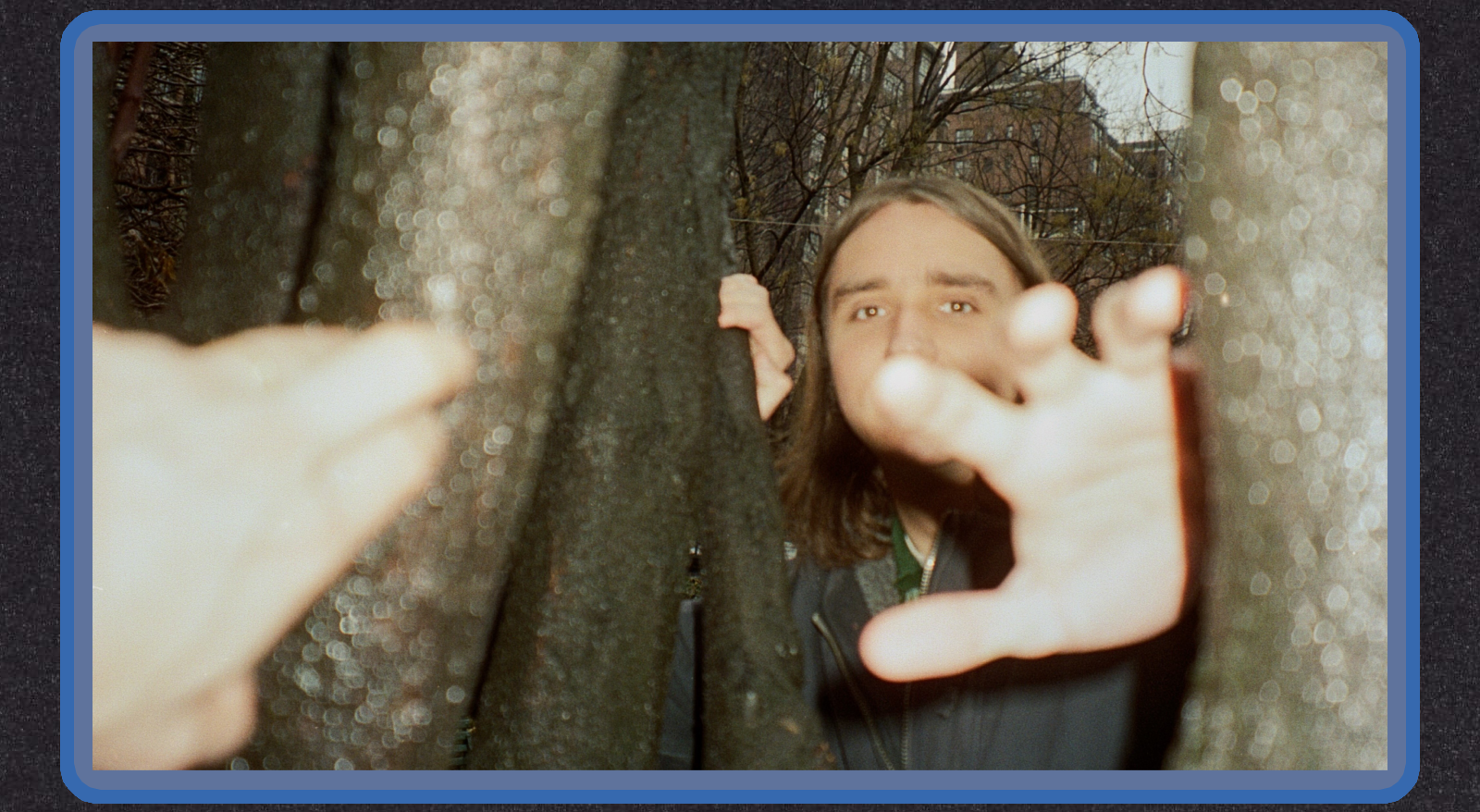
Otto Benson is just a regular guy. A 26-year-old New York native with an engineering degree who now lives in Los Angeles, where he writes drowsy indie-pop songs imbued with the subtle sweetness and soothing symptoms of honeyed chamomile tea. In conversation, Benson is quietly reserved, speaking slowly and methodically yet with a sincerity that can be intense, often referencing spiritual connections and slipping into bouts of deep introspection. The personality of someone who thinks a lot and speaks a little. Still, nothing about Benson's demeanor is indicative of his big, open secret.
Unless you knew otherwise, you'd never guess that Benson – who just released a cozily addicting new album called Peanut, recently collabed with Lowertown singer Olivia O., and played bass in Porches a couple years back – has produced the soundtrack for a generation of suicidally depressed, internet-damaged youth. He's the musician behind Memo Boy, Benson's high-school Soundcloud alias that's evolved into so much more: a sustainable income, a "tumor-esque" trauma, and what Benson describes as the indie music equivalent of Pepe the Frog, the cartoon amphibian that originated in a small indie comic years before it improbably earned a new, meme-driven life online, where it's calcified into an infamous hate symbol among right-wing trolls.
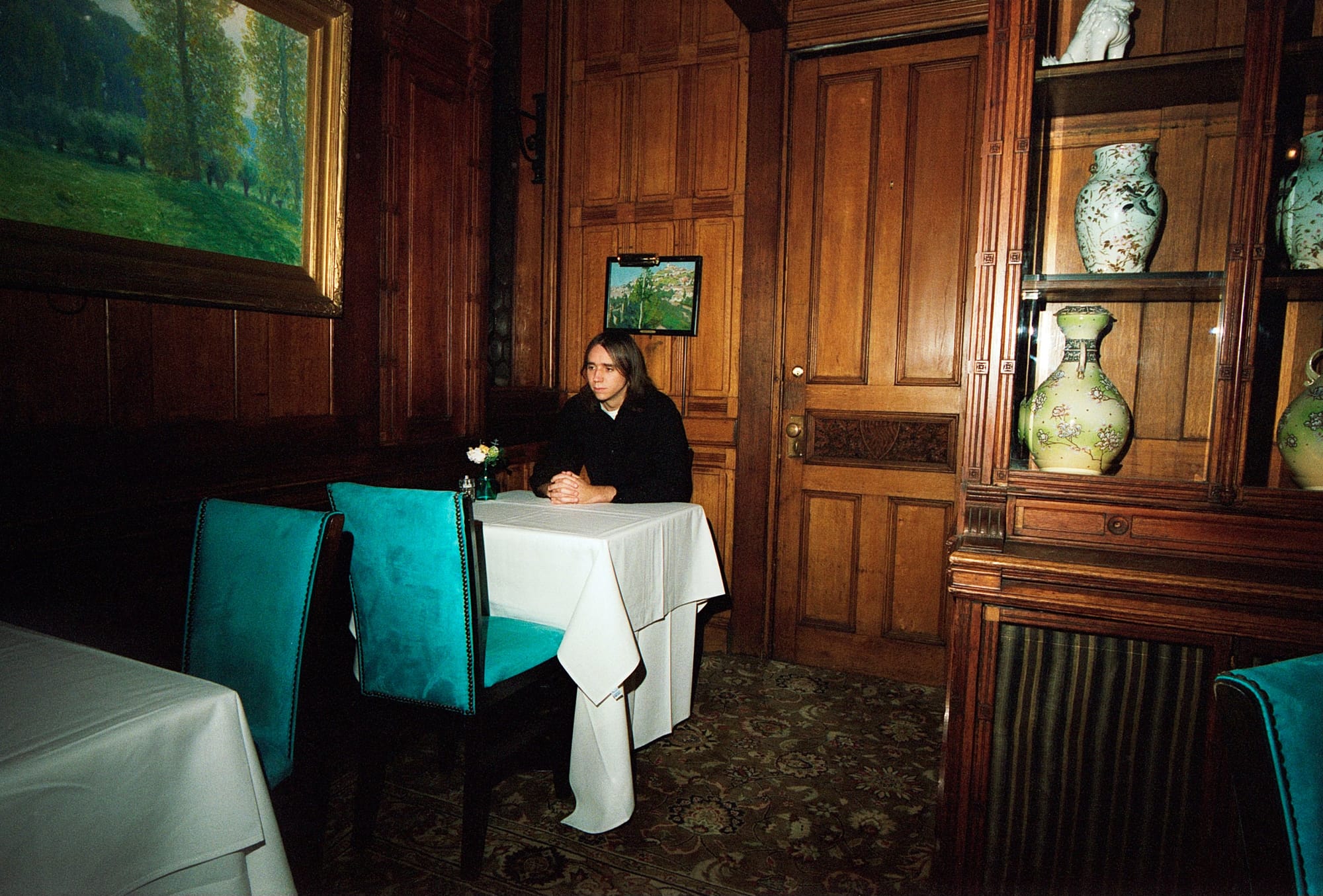
Memo Boy's music doesn't bear the same ideological weight as Pepe, but the songs Benson innocently uploaded to Soundcloud in the late 2010s were similarly co-opted by internet forces way beyond his control. Benson feels his music was specifically "exploited" by TikTok, where fan-made edits of Memo Boy's songs proliferated to such a degree that one of them was banned from the platform for its attachment to a viral "headshot" trend. Memo Boy songs that a teenage Benson made in his childhood bedroom have come to represent something vastly larger, darker, and more confusing than Benson ever could've imagined. They've amassed hundreds of millions of streams on Spotify alone, been featured in hundreds of thousands of TikToks (with untold millions of views), and have even turned up in places that Benson can still barely wrap his head around – in corporate shoe advertisements, in videos of teens pretending to blow their brains out, and even on the floor of the U.S. Congress.
A fan-made edit of Memo Boy's song "Insomniac" is played in a 2023 Congressional hearing to ban TikTok in the U.S.
"This machine kind of plucked my music, without my knowing, and used it to create these weird pockets that I feel feed on depressed youth," Benson tells Chasing Sundays in a rare interview. "And often in ways where I feel it’s feeding on their more negative emotions and not really providing a helpful way out."
"Algorithms," he continues, "are indiscriminately learning and clumping things together, and creating suggestions and bubbles that are learned from people’s behaviors. But there’s no emotional sensitivity. There’s often a lack of moral or ethical judgement in these pockets, and I feel like my music wound up [in there]. I think it’s kind of a musical equivalent to Pepe [the Frog], where a lot of really bizarre, memey, toxic thoughts and emotional headspaces were able to thrive through the music – without any input from me. It’s beyond anything I had intended."
Before speaking with Benson for this interview, I knew Memo Boy's music was hugely popular on TikTok, but not to this degree. I mostly wanted to interview him to unwrap the self-imposed mystery surrounding an important figure in the ongoing convergence of indie-rock and electronica. I first discovered Benson's work when he was briefly signed to Vegyn's label Plz Make It Ruins, where he released two cult-adored projects, World Greetings and Clam Day, under the name OTTO in 2020. Since then, Benson has gone fully independent and continued dribbling out yearly releases under his government name. Peanut, his latest and greatest under his current moniker, conveys a mystical warmth and an achey sadness that permeates all of his work. Benson emphasizes how much the album's inspired by communing with nature, but his soft, lo-fi production style grants his songs a waterlogged uncanniness, an otherworldly consistency that's become his music's distinguishing feature.
As opposed to the moody instrumentals of Memo Boy and the pattering, pitch-shifting IDM/bedroom-pop fusions of OTTO, the Otto Benson catalog that began with 2022's Songs Before Bed is premised on hushed, acoustic, guitar-based songs, with Benson introducing his own un-processed vocals to the mix on Peanut. For Benson, that sharp musical shift is about more than just following his creative whims. Making quiet guitar songs are his way of processing the trauma of Memo Boy, and to provide a restorative balm to the doomer chaos that his high-school discography has inflicted upon the internet. He feels he has a responsibility, a purpose far bigger than himself, to bring music into this world, and he's spent the last few years reorienting his entire life – quitting his job, changing his sound, and moving across the country – to help facilitate this campaign of peace, community, and offline connection.
During a phone call in early January, Benson and I spoke for nearly two hours about his whole music career, from high-school to now, with a degree of detail that's never previously been documented. We discussed all the Memo Boy craziness, how he unintentionally became a full-time musician, every phase in his episodic career, his unique creative philosophy, his personal taste, and much, much more.
Explain to me where you’re seeing your music on TikTok and how exactly it was co-opted within those spaces.
I had refused to touch TikTok through most of high-school and college, and by the end of college my friend and manager at the time, Jake, was in touch with this boom of TikTok content basically fueling a lot of artist’s music careers. Like, if you went viral on TikTok then hopefully you would carry over that viewership into streams and be able to make a living off of your song or whatever. At this time, I hadn't monetized any of the Memo Boy stuff, by design.
But we were digging around and see an uncountable amount of people would take my song and slow it down, speed it up, make an edit, add a Patrick Bateman [visual], add a Batman audio voice over or something. And then they would name it like, “I am the darkness” or “sigma mindset.” Things like that. Weird fonts. And these unique sounds would have hundreds of thousands of videos, often with millions of plays.
And this was based on Memo Boy songs that you hadn’t officially uploaded, but that people had just ripped off of Soundcloud or something?
This was just on Soundcloud at the time, yeah. And I noticed an uptick in my Soundcloud streams and I was like, “Oh, what’s going on here?” And I would be looking through all the comments and they're all either, “I came here from blah blah blah, this sound” or “this Call of Duty edit,” and then the other comments would be like, “I’m gonna kill myself, this is it.” So I was wading through all of this stuff trying to understand why it was getting the momentum it was getting. why it was connecting with the internet in this way.
So your music was taking off in a serious way for the first time, but it was out of your control and it was in these spaces that were pretty negative, it seems.
I don’t know if I would call it “negative,” but it was more that it was striking a nerve with people who were having a really hard time. That's kind of how I saw it. There was this very dark, sort of deprived energy. In a lot of the U.S., there’re a lot of towns where there isn’t really an underground music scene or underground music, and if you go on Soundcloud you can kind of tap into a lot more angsty music. This was Soundcloud at this time, 2017 through 2021. It’s a very different scene these days.
When was the Memo Boy stuff blowing up on TikTok specifically?
2021 is when I put everything on streaming, and then it kind of went really crazy.
Because people could more accessibly find the source of these sounds.
Yeah, then it became a very concrete, “oh, this is this specific sound.” It had an anchor in TikTok. But even despite that, there’s a giant proliferation of slowed and reverbed [versions], the different modifications, on TikTok or elsewhere. Which in a lot of ways I find really beautiful. I think there’s a lot to be said, though, about when these sounds get used by more commercial interests and they get kind of exploited to make money, and I’m not getting a check from that. That makes me sad. But just individuals, kids, making stuff with it, is really an incredible thing and I want more of that to happen.
What are some examples of commercial interests using your music unauthorized?
I’ve seen Doc Martin ads with the slowed and reverbed [version]. I’m forgetting, I may have flagged that one with the label I was with.
Is this mostly for the song “Insomniac” or were there other Memo Boy songs being used like that?
There was also the song “Brian Is the Most Beautiful,” which got taken off of TikTok because there was a viral trend – that I had nothing to do with – of kids pretending to shoot themselves in the head in real life versus in video games. And they were calling it the “headshot challenge song.”
Oh my god, dude.
This is what I’m talking about. This is what I’m dealing with here. [Laughs].
So the headshot challenge stuff was in 2021 or 2022?
Yeah, this was either late 2021 or early 2022. And because of that trend, TikTok removed that sound from the platform entirely. But that was the biggest Memo Boy song for a little while, and then “Insomniac,” because it’s the only one left, has kind of eclipsed it. Also, there’s a crazy story [about] a Guardian article about the congressional hearings to ban TikTok. During one of those hearings, they played a Tiktok in the hearing as evidence against Tiktok censorship policies, and it was a video of a gun, and it was a death threat to the chairwoman of the Congress. And that TikTok has “Insomniac” [in it], but slowed down, so my name isn't on the thing. It’s just some random “the darkness within” type of beat.
I don’t know, the scale of this feels like it’s intertwined in geopolitics in some ways. It's been exploited in many different ways, but it feels by and large like the troubled youth soundtrack, for people living in my generation, the Gen-Z. I'm not claiming to be the only artist doing that, but it’s just a specific realm of it. It was crazy and kind of potent for a time. There's a lot of big artists like Lil Peep who have a similar resonance. It’s just kind of bizarre.
Do you think there’s a certain ideology attached to the way people are gravitating to Memo Boy?
I've given up on assigning it any specific ideology. It’s an unknowably vast sea of interpretations and uses. Like, in that TikTok hearing, it’s being used to serve a very specific agenda by both the person who made that TikTok and then the person who played that TikTok. It’s just sad music. It’s depressing indie music that I made in my bedroom, and so it has maybe like a school shooter aesthetic, or something. It's like the dark, introspective, inner-world kind of leaking out into the internet, and this music feeds that energy, or it resonates with that.
A lot of it is introversion and loneliness, as far as I'm concerned. We’re all on our phones too much. I made Songs Before Bed in response to this, because I was like, “we need to just, get off the phone, breathe, go to sleep, and then have a new day tomorrow.”
Do you think people have resonated with that?
Yeah, definitely. I think so. I think there’s a different audience that that work has connected with. I’m not sure if the Memo Boy fans are totally into that album. It’s been a lot more of a positive connection and one that I’ve felt a lot better intertwining my personal identity in. Memo Boy was [made when] I was really confused, angsty, twisted, and feeling much more lost. I’d argue I’m still lost, but just the level of angst was beyond…
So there is a true feeling that the people who’ve latched onto Memo Boy are relating to. It is, like, tortured in a way, or really angsty. People are picking up on something you were putting down, it’s not a total misinterpretation.
How I feel about it is on a more spiritual level: there’s a shared consciousness in – I can only speak to the American youth. I think it’s globally, but in this case it’s specifically American youth that are really coming into contact with this stuff. And I think it strikes some kind of nerve in that collective consciousness and there’s sort of an undeniability in relating to these feelings. And they're beyond me. I was just kind of a vessel for this much deeper angst and discomfort with the conditions of growing up with the internet around, with cellphones, with Facebook.
I have a song called “Facebook.com.” When I first got Facebook it was the craziest thing. It kind of blew up my mind and my anxieties and made me into a much more insecure, weird person. I think that angst is shared and I think I was making music about it and comforting myself from it. And that process has carried over into the listenership and how people are experiencing it.
Let’s go back to that time. When you were making that music, you had no artistic profile, really. What was your experience as a music maker and someone putting this stuff online during the early days of Memo Boy in the mid-2010s?
A lot of it was me making demos for my band in high-school called Foam, which was a bunch of friends of mine and we would play shows around the city where we could. We would play shows at museums at teen nights, like at the Intrepid and at the Transit Museum. And I would make songs at home. I had a ton of creative energy at this time and I would kind of procrastinate on my school work and come up with things on Ableton, or just by playing guitar in my room, and I would post them on Soundcloud. On one level to share it with…you know, you kind of want your high-school crush to see it, maybe. Or for somebody to be like, “wow, that's really cool. We should be friends.”
But also, functionally just to share it with my band. It was online and in an easily accessible place and they could listen and practice to the demo and learn it from there. I put a lot of things up in that way and I got a little bit of listenership. It was a motivating amount where I was like, oh this is connecting with people who are strangers. I’d get accounts that I didn’t recognize commenting on it. And then I kept feeding that machine and that high of experiencing some online popularity.
And also I feel like Soundcloud worked in a very beautifully simplistic way. If you uploaded something it would chronologically go to the top of somebody’s feed, and then you could either “like” or repost that thing. And reposting it would keep it circulating within people’s feeds and then “liking” it would add it to your library of likes, and you could also playlist it and comment and those would also add to libraries.
So you could lurk around and stalk people’s profiles and learn about a lot of music on there in a very social way. It felt very utopian to me. Because of that, I think Memo Boy was able to take off a lot more organically without any kind of algorithm. I never paid for an ad or tried to push it artificially in this weird algorithmic determination of how people are experiencing art these days. I think I was just tailoring it to, “what’s the best little song I can make? This little ditty, how can I make it catchy and re-listenable and make it so people want to share it genuinely with the people they follow?” So there was a deep, loving energy in that, too, and it felt good. It wasn’t meeting people in a way where it was getting shoved down people’s throats. It felt justified in how popular it was. I can’t really say the same for how popular it is on TikTok.
And then I just got tired of the name Memo Boy and uploading in that way. And the specific body of work that I had produced there was a certain sound, and I wanted to grow out of that. And so I killed it at the end of high-school and was gonna stop making music. I had some aliases. I was gonna only release on Linkedin as this guy Ivan Felofilakt. I was thinking about the corporate life and trying to make fun of it.
Why did you want to stop making music, though?
I don’t know. My life up until then, everybody had been really pessimistic about the path of a musician. I thought if I wanted to achieve some “stability” in my life, I had to pursue a more industrial [path]. I was going to get an engineering degree and just become an engineer and then have a slight association with music, but just for passion. A lot of it was maybe fear and caution instead of just plunging into it. And then it kind of just grabbed me back with the TikTok stuff. I got a record deal from Vegyn to put out that OTTO stuff in 2020 or so. It kept pulling me back.
Oh, one thing that was really important for this path was that most of the time if I hadn’t seen somebody in a while they’d be like, “Oh, how’s the music going? Are you still making music?” And that really stuck out to me. Because when you’re in college you’re like, “what am I doing on this earth? Where do my talents lie? What am I actually? How am I gonna make a living?” And knowing that a lot of people who I really valued were coming up to me in that way, it made me focus on it and feel a conviction. It’s not about me, even, there just needs to be music and I seem to be doing it in a way that there needs to be more of. A lot of it is a dissolving of ego and doing it for the collective consciousness or something. Helping to support people.
How did the Vegyn record deal come about?
I was visiting a friend of mine named Lena who’s in a band called blix. When I was 19, she was living in Berlin and I went out to visit her and Vegyn offered to come out and meet me and we were hanging out with him and his friend Phillip Budny and it solidified a personal relationship, and then I signed a deal for just that [OTTO] record and an EP.
So he knew your music as Memo Boy at this point? Like, it had enough buzz to where someone like Vegyn would be aware of it?
I’m not sure what he was looking at exactly. At the time I was posting really weird art on my Instagram. I was starting to put different electronic tracks on Soundcloud that I think Sachi from Joy Again may have showed him. Tracks like the “About You Now” cover I did with my friend Max. I had new Soundcloud accounts at this point and I was just putting things out there, and I think he was listening to that and then asked for more music. And I had songs that I was kind of holding onto and developing that ended up becoming Clam Day.
How do you think Clam Day and the other OTTO music feels different influence-wise from what you were doing with Memo Boy? Like, describe the evolution in your terms.
I went to the University of Massachusetts for undergrad and that area is really beautiful and rural. For me, a lot of it was channeling a deeper connection to nature. For me, Memo Boy was about feeling really fed-up with being a city kid and feeling really constrained by the city. I would walk around and just feel bad for myself and look at giant buildings and be like, “it’s blocking the sun.” A lot of it’s environmental. I have a very spatial relationship with the music I make. So Memo Boy was much darker and in a state of captivity.
And then Clam Day, I was really elated to be in this more rural space where I had a lot of freedom and agency and was making really beautiful new friends and being really silly and taking care of each other and [being] compassionate. I also had a week-long vacation with my parents in Delaware kind of by the beach, and I retreated into myself and made a lot of music. I just had my acoustic guitar and my laptop, and the landscape of the beach was really inspiring to me.
Do you think you found a way to blend the electronic and acoustic sounds more effectively with OTTO?
Maybe. If anything, I kind of went full electronic in college because I was studying electronics and I was obsessed with building little weird devices, plugins, Max/MSP pure data kind of stuff. So I was making a lot of really weird, like, purely laptop electronic music. And having the mobility of the laptop was another big part of my creative process. I didn’t just have to be in my lonely bedroom anymore, I could post up anywhere and make a beat. There’s a lot of liberation in that, too, sonically. I’m not really confronting my adolescence every time I sit down to make music. I was just out in the world, doing stuff, becoming more of an adult. It was interesting because I ended up retreating back to that space for Songs Before Bed because that's when I moved back with my parents after the pandemic.
Did you finish undergrad?
Yeah, but the latter couple of semesters were remote.
Which took away everything you liked about college.
Yeah, it was a tough time. I just got through it and knew I needed to get out and move forward with my life.
Move forward with music?
Well, it became music. When I first graduated from college I was going to become an engineer of some kind. I was working for a synth company called Landscape, which was kind of my dream job until that point. I really loved working there, but this was around the time that the Memo Boy stuff started to really explode with that Guardian video I talked about and the headshot challenge stuff. I got really claustrophobic and had an anxiety attack where I quit my job at Landscape just, like, overnight. I really feel bad for doing that.
Why did you feel the need to leave your job that was completely removed from Memo Boy?
I felt like I was over capacity in being able to deal with and confront everything going on with Memo Boy. I was making sure that I was OK. I don’t know, there was a lot of trauma in that experience. I’d say I put my whole life into my music. Without really trying to or not it just kind of happens that a lot of this stuff just represents me in really crazy, deep ways. And it had blown up into something beyond my control in very viscerally upsetting ways. I needed to go full-on and just focus on it and see how I could dig myself out of that hole, to not be pigeon-holed.
I put out Songs Before Bed and then it was the following spring that I quit my job really suddenly and decided that I needed to dedicate all my energy to moving back to Western Mass or somewhere more rural. I wanted to have a much deeper relationship with nature and agriculture, ultimately to put that into my music and create paths out of…I feel like the Memo Boy content feels more cancerous or something to me. It doesn’t feel like it leads anywhere good and I feel a personal responsibility to push outward into something beyond that condition.
Does the song “Tumor” on the new record have anything to do with that?
Yeah, probably. Yeah. That's also about cleansing. I’m still figuring out what that song means.
You don’t literally have a tumor, though? I was a little concerned.
Yeah, I don’t have a tumor, but I do think my point of that song is more that music and a lot of emotional connection for me comes from my stomach and my gut. And I have to kind of take care of that part of myself and listen to that part of myself. In the case of Memo Boy, it was an unwieldy, out-of-control, tumor-esque feeling that I was carrying around with me. Things like that, emotions and different traumas, can eat you alive, and I’m figuring out ways to cleanse them in different ways, and music is a part of that for me.
I think it’s interesting that when the Memo Boy stuff was really blowing up, it was so stressful for you, but ultimately you decided that the only way out is through, and then started releasing music under your own name. I feel like so many people in your position would have been like, “Memo Boy is this alter ego of mine, I don’t want anything to do with it, I’m just going to recede entirely from this world as best I can and just remove myself.” But instead you were almost leaning into it in a way by taking ownership of yourself and putting your government name onto the new music you were creating, in order to rectify some of this in a way.
Yeah, that's a good point. I think I tried to run away from it and it was making it worse, it would yank me back in more volatile and misled ways. It’s like how Aphex Twin has a pretty anonymous [identity], but then people go crazy with finding out really minuscule details about his life. But if he was anybody else and he had a more forward identity…
No one would care as much.
Yeah, exactly. Or people chill out and he’s humanized. I think I was trying to humanize myself. I’m also singing, and trying to get as close as I can to quell…it can be a really destructive force. It’s like you’re fighting the imaginations of hundreds of thousands of people, or millions, and they're filled with expectations and illusions about you, or presumptions. And that's a beautiful thing, I think that's also why this stuff can connect with so many people. But it also creates a lot of weird tension and false expectations and pain for the artist, in my case I guess.
I decided, yeah, I have to live with this, how can I make peace with it? How can I own it and turn it into something that embellishes the world around me and not just have it be a trauma that I’m running away from? That song “Drive Away,” that's like me trying to run away from Memo Boy. It’s a big song for me, my life’s a lot more complex than just making music, but that's kind of the core of it.
With the Memo Boy stuff, you were seeing your music in such bizarre places, but were people trying to form some kind of parasocial relationship with you? Or find personal information about you, sending you crazy messages or anything like that?
I think a lot of people were just kind of confused. There’s a video of me that my friend Xander made, it’s a very simple video interview of me and there were a lot of montage edits [of it]. That was the only video that existed of me at that time and so people were really stretching that out. They would also go on Instagram – this kind of freaked me out. You know when you’re just hanging with friends and somebody takes a candid photo of you and tags you? Or family tags you in something? People were digging into the depths of my tagged photos and then sharing these photos of me. There was this freaky feeling of being surveilled a little bit.
Also, with the label, I had a bunch of press photos that I had put out that are more cheeky pictures of me in my friend’s suit, standing in front of a shed. Just things that I thought were funny at the time, but for some reason, people wanted to dig up the less curated stuff. Some kind of parasocial drive of wanting to have a more authentic connection with me as a person. But I don’t know, I don’t blame them. You get curious about an artist and you look them up.
It was a freaky process at first. It got a little invasive. I try to have fun with it, too. I like to post weird, fucked up selfies and stuff. I try not to overthink it. I think people know that I’m trying to keep a pretty low profile. I’m a shy person, relatively, and I have a lot of insecurities and I think people understand that about me and aren’t trying to dig too deep. There’s a general level of respect that I’ve received from people that I’m really grateful for. And usually, if somebody’s being weird to me I’ll message them directly and try to talk to them.
I really don’t know what any of these people are going through and I’ve tried to make a point of enduring a wide spectrum of people’s behaviors and ways that they treat me. Because I know [my music’s] meeting people in really crazy situations and I’m glad it’s helping them in that way and I want to try to expand myself for them as well.