
Ned Russin talks Glitterer, Title Fight, individualism, ripoff hardcore fests, more
"I think if I thought about myself the way that people talk to me sometimes, I'd be insufferable."

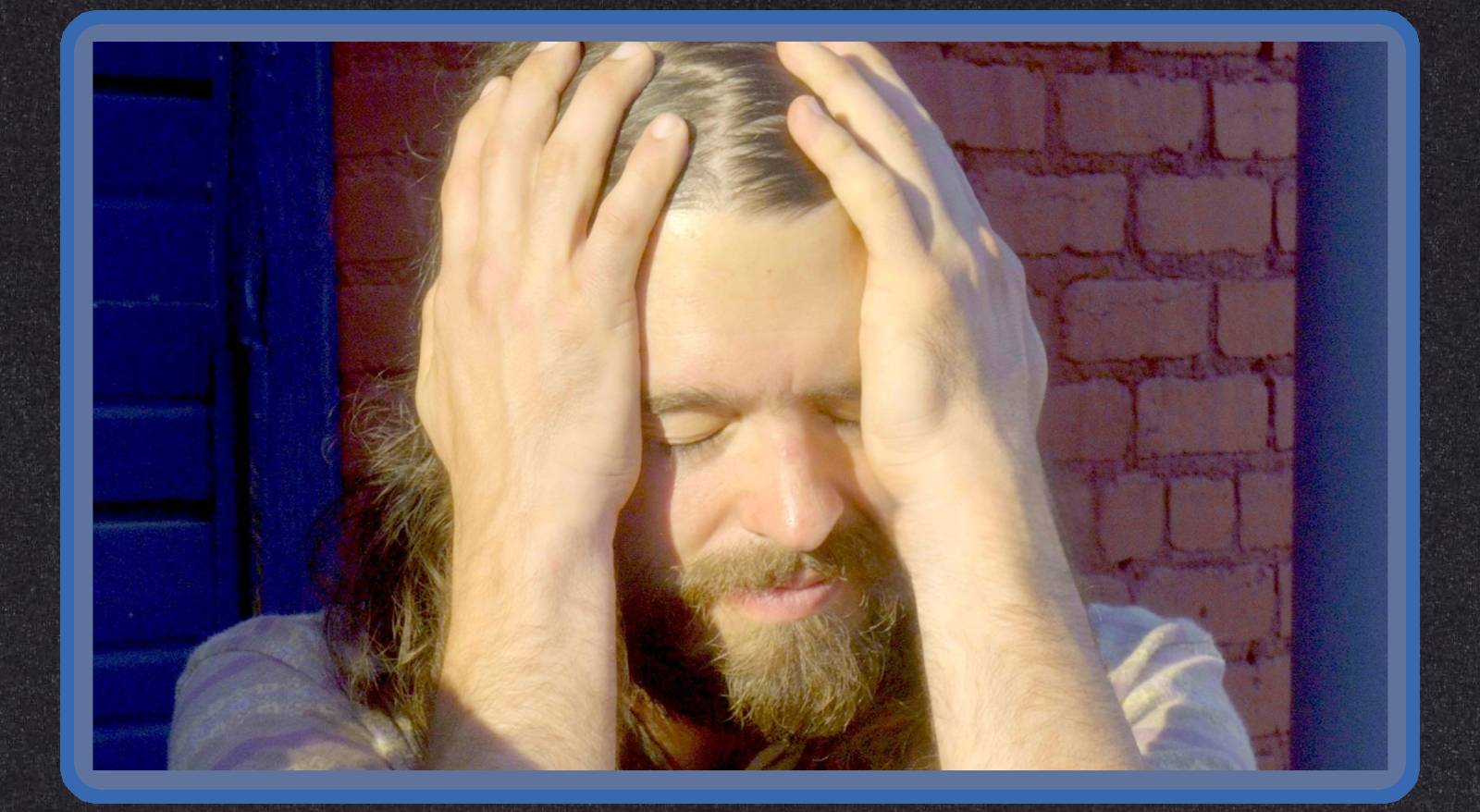
I finally saw Glitterer for the first time a couple months back. I entered the venue when they were already chugging through their set, sifted through the politely nodding crowd (who were all there for La Dispute), and stationed myself back by the sound board where I could get a proper view of the stage. Ned Russin was up there tunefully groaning into the microphone and casually thrashing his long locks around while his three bandmates nodded with intuitive focus. I couldn't find the words to explain it to my friend after their set, and I'm still struggling to articulate it now, but Glitterer just looked and sounded like a band up there.
The platonic ideal of what four people playing punk-influenced rock music should be. The way a director would imagine a fictional band in a movie or TV show – and I say "imagine" because said fictional band would never end up looking and sounding half as cool once the characters were casted and the cameras were rolling. But in theory, the archetype of "great indie band" would be how Glitterer sounded that night I saw them. Powerful. Confident. Workmanlike. Running through a set where every song makes you go, "Damn, that's a good one." And then the next song makes you go, "Wow, that's an even better one." You know, like a band.
Glitterer weren't always a band. The last time I interviewed Russin way back in 2019, Glitterer was still his solo project. At that time, his previous band Title Fight were just a year-and-a-half out from their final show, and Glitterer had just signed to the respected indie-rock label Anti- Records. The headline for that interview was, "Glitterer steps out on his own." Glitterer is no longer a "he," nor is Glitterer on their lonesome. With 2024's Rationale, Glitterer expanded into a quartet and began operating as a democratic unit. A band. Rationale was a good record – not as good as 2021's Life Is Not a Lesson, but a good record – though it was also Glitterer's last for Anti-.
Last month, Glitterer released their second full-band record called erer, and this one came out on Purple Circle, the 100% DIY label that Russin co-owns with his brother Ben. erer is a better album than Rationale, and it might even be the best Glitterer record yet. I think part of what made that Glitterer show so moving to me is realizing just how consistent their discography is. Glitterer have never had an internet "hit" that dominates playlists or goes viral on TikTok, they've never garnered the same critical attention Title Fight did, and they don't have one LP in their catalog that fans agree towers above the rest.
Glitterer have dependably churned out great songs with their own sound for nearly a decade, and erer tosses 10 more bangers atop the pile. That reliability might make them the best "hardcore-adjace" band of the 2020s, even though I never really consider them in that context because to me, Glitterer have always been so resolutely themselves, and they don't feel connected to any broader musical trends in the way many of their peers do. Some of that is due to how Glitterer carry themselves as a working band, and some of that is because Glitterer's music is a little more inward and heady, a little less musically grabby and lyrically quotable, than fellow "hardcore-adjace" bands like Militarie Gun, Angel Du$t, and Drug Church.
All of this makes Glitterer an interesting band to think about, and since Russin is a thoughtful guy, I wanted to pick his brain about all those topics and then some. Over a Zoom call in mid November, we spent an hour talking about Glitterer's ethos, the personal weirdness of Title Fight's posthumous popularity, and how Russin navigates the music industry with a set of rigorous DIY ethics that've become rarer in the world Glitterer belong to since the post-COVID "hardcore boom." Russin graciously entertained every multi-layered question I chucked his way, including queries about money and career decisions that most artists shy away from discussing with this degree of candor.
I want to begin by quoting something you wrote about Tigers Jaw’s self-titled that was published yesterday (Nov. 11) in the Joint Custody newsletter. “While 2018 feels infinitely far away, 2008, if my memory serves, felt somehow closer than not at that moment. Maybe it’s that those two times were part of the same general moment and now we have very much entered another one, but I could still trace things back to their origins then. The world felt like it was still connected to its previous self for some reason, which now does not feel like it's the case.” Tell me what you mean by the world’s connection to its previous self, and why that no longer feels like it’s the case?
Part of that I feel like is just COVID. I feel like that was a pretty stark beginning of a new era. For me, there was a time in my life where I felt like I was doing the same thing, everybody I knew was continuing to do the same thing, and it just felt like one long continuum of everybody being involved in the same stuff, having the same interests, generally continuing on the same path that they were on when we were younger. Even though, obviously, that's not entirely true. Obviously, people were deviating and doing different things, myself included.
In 2018 I was living a very different life than I was living in 2008, but it just felt like I could, as I said, kind of trace it back. It felt like everyone was still kind of close, both geographically and spiritually. And then, for some reason now, it feels like 2018 is such a separate place. I think a lot of that has to do with COVID and the way the world shifted, but also just the way in which I feel like culture at large has shifted. Honestly, I trace a lot of that back to the first Trump presidency. Just the way in which I view the world changing. It just feels so different.
I agree with you, but how exactly does it feel different? How do you think the Trump presidency and the way culture changed trickled down to the world of music that you exist in?
I think in large part, the “project” of Glitterer is attempting to assess the current moment and find a solution for it. And for me, one of the biggest things that came out of the Trump presidency, and this is culture at large and maybe not entirely reflected in underground music, is this ability to accept selfishness as normal. Which really, really bothered me. Early Glitterer was very focused on trying to find the cause of that. And at the beginning, I was like, "I think this is some weird problem of solipsism." And granted, I was having these thoughts while finishing school and reading heady books and trying to probably have heady thoughts. But it just felt like this thing where it was okay to just be involved in yourself, which I didn't really feel was the case before.
And I feel like the manifestation of that within music has been this acceptance of hustler culture, and the ability to accept and normalize influencer culture as well, which I think are maybe one in the same. This idea of people being okay with things that I thought were slightly problematic, or that underground music posed to me as problematic before. From being okay with things being more expensive, people being not entirely independent, and all these things. And that was an issue for me, and honestly it kind of still is.
Glitterer has always been focused on the world at large. But obviously, it is coming from the perspective of somebody involved in a very specific scene that is a weird microcosm, that I thought was supposed to be in opposition to that mainstream ideology, but has really assumed a lot of those positions. And so it's trying to find a better way for this underground world that we exist in, and also an attempt to remedy culture at large. Which is probably an impossible and grand goal, but it's a goal nonetheless.
Do you feel like you’re trying to carry on the spirit of that old world, so to speak, with Glitterer? Or are you feeling like you want to create a new paradigm within the one that we’re currently in? I guess do you feel like you’re trying to bring something back or create something new?
I mean, it's really tough, because I don't think you could bring back what's already gone. Just in simple logistical terms, the world is so completely different. But I definitely heavily draw inspiration from the people that came before me, from the people in the bands and the labels and the whole scene. And I'm ideally trying to find a way to adapt those things to whatever era we exist in now. Honestly, that's the kind of thing where I don't know really know what to do, because I also don’t really engage in that part of the world maybe as much as I should. Like, I'm not really online. I'm not really well-versed in the internet and the culture around the internet, and so maybe I'm not the one to be taking on that huge task. But I'm just trying to do things in the way that I want to do them, which, again, is influenced by those people who came before.
How much do you think your disillusionment with the industry, the scene, the culture, comes from your age, given that you’re not 20 years old anymore? Versus how much the nature of the scene and the industry itself has changed? Do you ever reckon with that?
No, I’ve never thought about that, and it’s also because it seems like the two contexts are too intertwined, honestly. Like, I can't help being how old I am, and I can't help how my ideas have changed as I've gotten older. I feel like, for me, more important than maybe age has been my actual geographical context. I think starting the band in New York and then coming to DC and involving myself in the scene here has kind of changed my perspective more than other things.
How so?
New York is an amazing, beautiful city, but I think the scene in New York is really tough because it's so hard to have anything actually counter-cultural there, mainly just due to the sheer cost of things. There’re some great independent venues, and there's been some great alternative spaces, but it's really hard to have something that lasts there because of the economics of the whole thing. Coming to DC, it's really cool because it obviously has this important historical scene, but it’s not ingrained in things in the same way that they are in New York.
I think New York, just for whatever reason, has this kind of attitude of maybe “going for it,” because I think there has always been the opportunity there to have some sort of career out of music, or whatever kind of field you're in. DC is not like that. And yet, people here are making art, making music, making anything, with no career aspirations. And I think that really resonated with me, and was something I was really looking for. It’s based on a long running scene, and so many little scenes here trace their origins back to other things and scenes and whatever. But it just feels like it's something that is interested in creating music and art and booking shows and putting out records, just because it's something that should be done, not something that could make you a bunch of money or make you famous or something.
What you said about hustle culture and how that's poisoned so much of the independent music scene and community is something I absolutely agree with. But it’s kind of funny to me in some ways because so many bands are striving to get to a level of success that your previous band got to. And yet, here’s you, you got there, and you decided for the time being at least that you don’t want that anymore. You gave that up in a sense, and you’re working within a different context now, which I do find very cool and inspiring.
Yeah, well thanks, I guess. I feel like it's a lot more complicated than that. Because, to be frank with you, there are things that Title Fight did that I'm not entirely…I don't really like the word “pride,” because I don't really give a shit about it and I think it's an unhealthy word, but it's not stuff that I'm particularly proud of.
In terms of certain shows or?
I think we were just sold on certain things. Like, when we were 18 and we started to tour pretty seriously, and we started being courted by labels and all this stuff, at that time, we were told “you have to get a manager because you don't know what you're doing and people are going to take advantage of you.” I wish, rather than people saying that, they would have said, “Hey, you don't have to go that route. You can go this other route.” And so we were kind of led to believe that we had to do these certain things. It's hard to pinpoint, like, exact, specific things, but there are just certain things that…I don't regret them. We did them, and that's fine, we learned from them. But if I were to do them now, I would do them differently.
And with all that being said, the whole time we were doing the band, obviously I was still involved and active in our local hardcore scene, regional hardcore scenes, national hardcore scenes, and just a part of that thing. And so I think when I had the opportunity to do the band that turned into Glitterer, I wanted to do it the way I wish I had done it before. I don't think that Title Fight was able to do the things that we were able to do because of the push of whatever labels that we were on, or because we had worked with certain people. I think it's because we toured a lot, and I think it's because we did things in a certain way.
It's weird because a lot of stuff gets put on that band that is funny to me. But the thing is, in my mind, I'm doing things exactly the same with Glitterer. We're not touring as much, and maybe that has something to do with it. Or maybe it's because the start of the band was really antagonistic and weird, and that was also intentional. Maybe it's just because people don't like the music as much, it's not as good. I don't know. I don't really care. Playing music is something that is – beyond the ethics of all the stuff, which I find extremely, extremely important and life-affirming – beyond all that, I think I need music in my life, and I need to be a part of it. So I'm just going to continue to play music no matter what, because I think if I didn't, I don't know if I'd be able to live the life I want to live. And I don't mean in any sort of career sense. I just mean, in terms of my own personal well-being.
I don't know if I could be content if I weren't attempting to play music. Even if it was just something that nobody heard, and it was something fun I did with a group of people. I just need to do that. And so the realization that I had is that I want to continue to play music, and I want to just try to do this, and I don't really care. So Glitterer tours as much as we can, and we do things in the way that we can do them, and that's it. And I kind of think that's the same attitude that I've always had. Obviously, it's changed in ways that I can't fully perceive, just because, again, I'm too close to it. But yeah, we've always had the same goals, I think, among all the people that I've played music with, and I think I've always had the same goal, and that's just to play music the best that we can.
When you started Glitterer you had done a number of bands by that point, and many of them were short-lived. Were you thinking of Glitterer as a full-time band akin to what you were doing with Title Fight?
At the beginning, I didn't really think anything, because I was in school and I had a lot of other things I was focusing on. When I had the opportunity to commit myself more to the band, it came at a point where I was applying for jobs. I had finished school, and I was living in New York still, and I was kind of like, Yeah, I think I'll just get a job and become a normal person and just play in bands on the weekend or something, like many people do. It’s a totally reasonable thing that you could still do. And then I had a conversation with a friend who was just like, “why don't you just try and do what you can?” And at that point, I had started not even receiving rejection letters, but just not getting any responses from any applications that I sent out. Granted, it wasn't that many. I'm not a complete failure, but I'm an utter failure, you know. I got denied from every single job that I applied for, and didn't even get an interview.
And so I was just like, yeah, I have the opportunity to work jobs that I like that give me the opportunity to tour, and if I can make it work, then I'll just do that. Why do I need to get a job and settle down or something like that? I don't really want to do that stuff. And I think it's just because I was in a more traditional part of my life and around a more traditional thing, I was like, oh, maybe this is just what I'm supposed to do. Taking a step back I was just like, maybe I'll just try to tour more. But even then, it was never like, “this is my career.” It was just, "I just want to set myself up so I can play music as much as I want." And that's the opportunity that I took and it's worked out so far, and I’m perfectly content with how everything has been able to go.
You were on Anti- for a while and this is your first Glitterer record not on Anti- in a while. Did that contract just end after Rationale?
Yeah.
What led you to put this one out on Purple Circle and go a more DIY route?
Purple Circle is something that I wanted to do for a really long time, and I think it was just something I felt like if I don't do it now, I'm just never going to do it. It was just as simple as that. This is something I want to do, so I'm just going to figure out how to do it. The other thing is, the figuring out thing was not as difficult as I thought it would be, which was nice. But I just think a lot of people try to make this seem like a big, confusing, difficult process that you need to have some level of professionalism and intelligence to accomplish, and I don't really think that's the case.
Like, yeah, there are certain things like you need to be able to do, like stay on top of emails and coordinate with a couple different people. I wanted to continue to attempt to create the world that I want to see. And to me, that is a more independent world where bands are treated fairly, and bands are put first. Not that Anti- didn't put bands first or something. That's not what I'm trying to infer. I just wanted to be able to do a record in the way that I wanted to do and support the systems that I care about and the communities that made all these things possible.
You’re also doing your own PR for this record. Upon having that goal of wanting to do these things, how does it feel to take control of the band in a more formal way?
I'm doing everything, which is kind of cool. We're packing records right now and so we're handling fulfillment, distribution, PR, all the aspects of the label. It doesn't feel like anything special, to be honest with you. Because it's just a thing that you could do, and I'm just investing my time and doing the thing that I want to do. It’s exciting in that way, because it's like, this is a record that we're putting out that we did everything ourselves. And that's cool to see that happen and to see a press thing work out, it feels a little more personal, because I'm the one who contacted that person who then wrote an article. Like, that's really cool to meet those people and to have those more personal relationships and just see that.
It just feels like something that we're doing. And I try not to be too egotistical about it and involved in myself, because sometimes it does feel like it's easy to try and create this hierarchy that I don't want to be a part of. Some sort of DIY Olympics. It's like, “oh, we are more DIY than you because we fulfill records ourselves.” I think there are a lot of independent labels that are not fully independent, and it's this easy kind of trap you can fall into. Especially now where anybody can essentially pay somebody else to do all the work for them, and they just put their logo on it. But that being said, I don't want to make it like we are better than those people, or that we’re more DIY or something.
Are we working in opposition to that idea? Yeah, slightly. Because I think a lot of that is the music business bullshit that I don't want to be a part of. That's like, sure, you're independent, but somebody's still making money off you for no fucking reason. Maybe it's just because people are lazy and they don't want to answer emails. And if that's the thing, sure, whatever, there's nothing wrong with that. I guess that's what this all comes down to: I'm not doing this to make myself feel better about myself, or to make it like I'm a better person than anybody. I'm just doing these things because I find it important to do and I want to do it, and I think it's a very doable thing.
And also all that being said, the failures suck. The records are cut at 33 [rpm], but the labels say 45. That's embarrassing to me, I feel really shitty about that. It’s a mistake that wasn't made by me, but I have to own that. And I have to look at the record and be like, "Fuck, this thing is not how I envisioned it." Those things are more difficult, but whatever. I'll get over that. Who cares?
You were saying earlier that there were some decisions made in Title Fight that you weren’t “proud of.” Do you feel like you’ve made the right decisions with Glitterer thus far?
I feel like I'm content with the decisions that we've made. A conversation that we have in the band from time to time is that it's really tough to have public ethics. Just because it kind of becomes this DIY Olympics, which I don't really want to be involved in, and I don't want to compare myself to other people. But when we go on tour, we try to print our shirts on union made blanks. Stuff like that. I don't want to make a big deal of it, because we’re able to do that when we go on tour and we can order enough of them, and the price becomes a little more affordable. Because also, I want the price to be affordable for people coming to shows. We're not able to do that when we don’t go on as long of a tour and we'll print on Gildan. And Gildan is not a very ethical company.
And when you make these big statements, then someone's going to potentially point out these hypocrisies. Well, number one, I think hypocrisy is the most boring kind of accusation you can put out there, because everyone's a hypocrite, who fucking cares? We all make excuses for ourselves and those around us when it's easy because we have to. That's not very interesting to me. But that being said, we are trying to do everything as best as we can, to treat people as fairly as we can, and that's all dependent on context. And so the context may change, but our role to treat everybody and everything as well as you possibly can, does not change.
erer is the second Glitterer record as a full band. It’s been a couple years since the band became a full unit. How’s it felt to relinquish control of your “solo project” and operate as a full band again?
It just feels good. Doing the band by myself was something that I think I felt like I had to do to prove something to myself. Just in that time, and it's funny to look at it now, because it wasn't really that far removed from when Title Fight stopped working on new music. But I think I was like, Yeah, I have to prove that I can write music still. I was able to kind of prove to myself that I was capable of writing music, you know, six months after the fact, or whatever. And it became a thing where I was interested in the challenge of it. Like, how can I create a record by myself that feels like it has some sort of push and pull to it? That has something that feels consistent, but also feels like it's growing and changing? I liked trying to do that on my own for a little bit, and then I realized this is not what I really want to do.
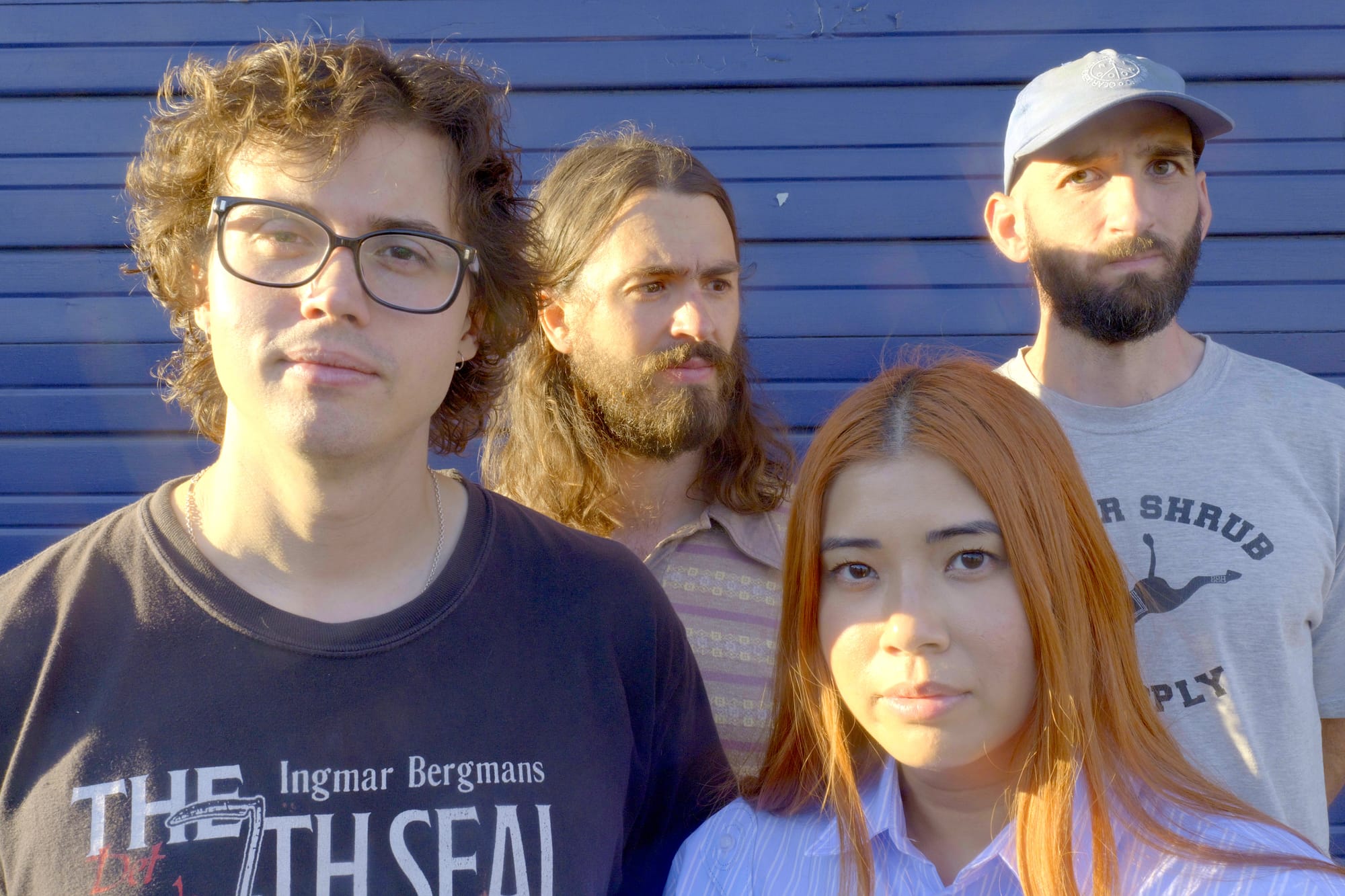
Being in a band, to me, is one of the most important things about music. The collaborative process that you enter with other people, and the relationships that you form, and the kind of ability that you learn to communicate with people without words. It's something that I really value, and it's something that's really hard to come across. When we started playing with more people, I was happy to give over control to everybody. I think part of me did find certain things tougher to let go of. Like, how do we word something that will be seen by the public? How do we present ourselves online? How do we want our shirts to look and what do we want them to be? I think making those decisions by myself kind of made me forget how sometimes dealing with those decisions in a group becomes so impossible.
And when you're in a band and you have to decide on a shirt for tour, sometimes those things become week-long arguments. It’s like, “I don't like that thing. I want this to be different. I want it to be this color. I'd like it to be this small on the print. I'd want to be this blank.” Like, those things are really tedious and obviously annoying, and when you can do them all by yourself, you don't have to deal with those conversations. Because it's just like, I want the shirt to look like this, and I want it to be printed like this, and I order them, and it's done. And so just in those terms, that was really easy, but I want to invite the chaos into my life because I want the band to be truly equal. I want everyone to feel like they are just as much of a member as I am. Have just as much say, that their opinion is just as valid as anybody else's. I was happy to let go of that control. I was happy to allow myself to be annoyed, because I think the greater good is more important than my comfort.
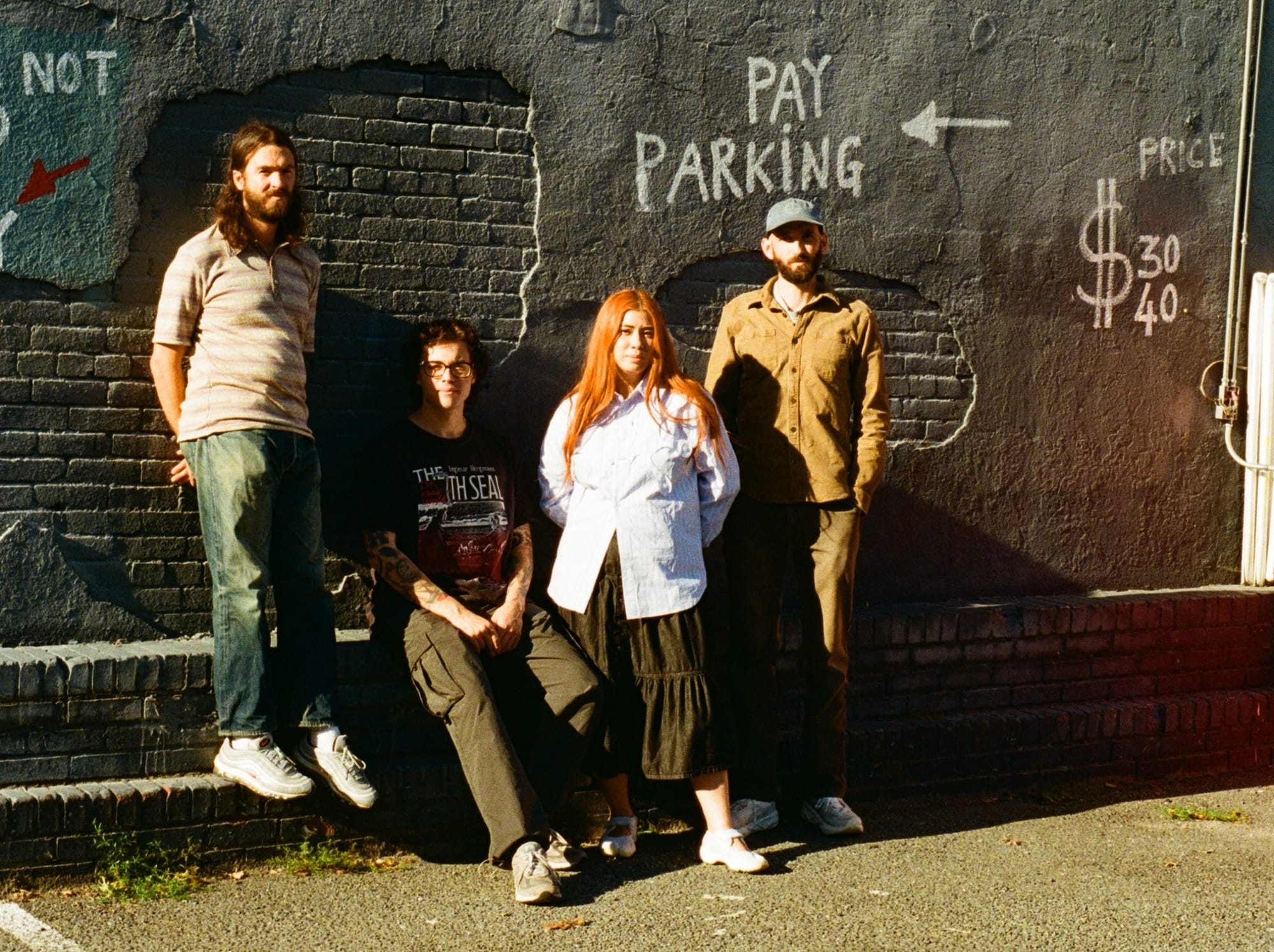
Do you think the sound of the band has been influenced at all, or even the themes of the band, by having other members?
Yeah, I think this record especially. We have two new people in the band on this record. We have Colin [Gorman] and then Robin [Zijlon], who I’ve both known for a very, very long time. Part of the great thing about playing music with people that you know is that you kind of understand their sensibilities. And so I think we have a great shared knowledge of things that we like and that we know each other like. We can make references, and it's not like these are deep cut references or anything, but we can reference a song or a record or a band, and know that the other people in the group will understand what we mean when we say those words. The kind of thing that we're trying to imply by that shit, which is really cool.
The thing with any band that I'm a part of is I don't want it to be very referential. Maybe I’m somewhat contradicting myself from what I just said. Like, sure, we’ll reference things, but I don't want to be like, "Okay, we are going to write our Pixies song now." Sure, we talked about the Pixies when we were writing the record. We play underground melodic music, it's kind of hard not to. But we are not trying to ape the Pixies. We're not trying to look at what they did and deconstruct it and steal little things to make our sound sound more like them. When we're writing, I just want to be like, “this feels right.”
Glitterer has been around for a while and you’ve made a number of records. What did you want to do with this new one that you feel like you hadn’t already done?
I don't know. Anytime that I've tried to set a goal for a new record, or when we start to write songs not knowing what it's going to be, it's never come to fruition. Just because I feel like things inevitably take shape the way that they're going to. And this is not to say it’s always going to work out the way that it should. I don't really believe in that. I'm just saying that things take their own shape, and you can't really control how the music is coming out of you. How you're feeling in that moment, what you're thinking about, and what's around you. And so those things, I think, influence the [writing process] more than anything. There was no really strict goal, and I think that's something that I really was just trying to let go of.
You were telling me when I saw you in Pittsburgh a couple months ago that the album is more influenced by current events than maybe previous Glitterer records were. What compelled you to wade into that subject matter here?
Lyrics are a weird thing in that I feel like you're always going to be misunderstood no matter what you say. And I feel like there are times in my life when I try to be extremely direct and blunt, and I don't think I got my point across. And there were times when I had a little bit more of guarded language, and I think people interpreted it in many different ways. And I don't know which one is better. What I said earlier about Glitterer trying to address the problems of the current moment and find some sort of solution. I think I did that before, in a, I don't want to say vague way, but in a way that was open to interpretation or something.
And I think one of the things that kind of started to pop out at me as I was beginning to write the record is that I wanted to write something that was looking for some sort of optimism, while acknowledging how difficult it is to exist in the current moment. And I think doing the record ourselves and taking that on and putting an emphasis on that community, made me think about things in a way where I was attempting to remove myself and find comfort in the communities that we exist in. And I think that was that was the project that I encountered, was attempting to find a way to address my problems with individualism and try to advocate for some sort of collectivism. Trying to figure out how we've become so focused on our individual selves, rather than the significance of everybody.
Do you feel like you’ve also personally succumbed to being so individually focused?
I think it's a huge Western problem. I think just being alive in Western society at large, we are taught to care about ourselves. We are taught that we are all unique and special and deserve all these special things. I think being in a band that had whatever amount of success, I think people maybe not treat me differently, but certainly talk to me like I was different at certain points. And I think that's gotten weirder and stranger for me as time has gone on, and that's out of my control. But you know, where everybody's kind of taught like we all deserve the best. And it's just funny, if you take one step back from that thought, it's like, if we all deserve the best, why don't we treat everyone like they deserve the best?
I think when you get that little rush of feeling like you're special, it's hard to deny that. It’s nice to feel good about yourself. I'm not going to deny that. At this point in my life, I’m not focused on that, I don't want to be focused on that. Because that's such a short-lived pleasure. It’s a false friend. Because what are we going to be doing? Chasing that feeling of uniqueness that drives our little ego for the rest of our lives? We should all be allowed to feel that feeling, but at what expense? I'm not immune to it. I'm not special in that regard. But I just don't want to make that the basis of my happiness, and I don't want to chase that as if that's the thing of value in my life.