Marisa Dabice on Mannequin Pussy's next album, AI backlash, burning out, and speaking up
"It was a sad realization, but I think it’s unfortunately true in this industry: at the end of the day, no one's looking out for you except for you."

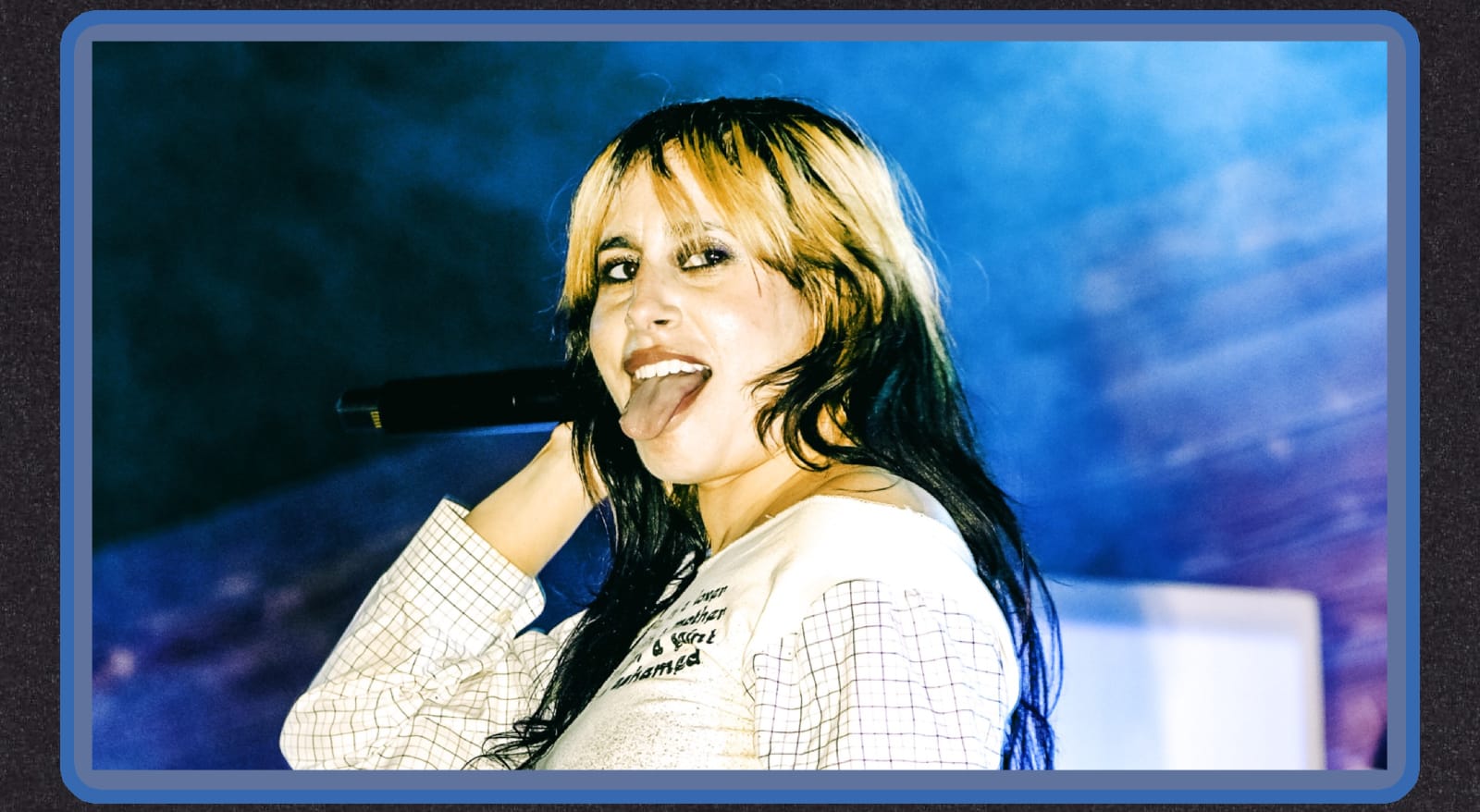
Mannequin Pussy are a band I've loved for a long time. Their rambunctious 2016 album, Romantic, was one of my favorites of that year, as was 2019's sleeker, more melodically graceful Patience. A formative post-college memory of mine is seeing Mannequin Pussy play to 20 half-interested people at a Pittsburgh DIY venue during the summer of 2017, and then seeing them pack the same place to capacity at the end of 2019, by which point they were one of the buzziest bands in indie-rock.
By the time their 2024 album, I Got Heaven, arrived, my taste had drifted away from the indie-punk milieu they initially inhabited, but Mannequin Pussy's sound was evolving in tandem with my changing interests. The moody subtleties, crisp hooks, and Pixies-ish dynamic pendulum swings of the record's first half are exactly how I wanted the band to sound. When I caught their tour that spring, the once-scrappy punk band had transformed into a rock 'n' roll powerhouse, and the crowd's visceral response to I Got Heaven's faster punk songs reversed my initially lukewarm impression of the album's hardcore side-B.
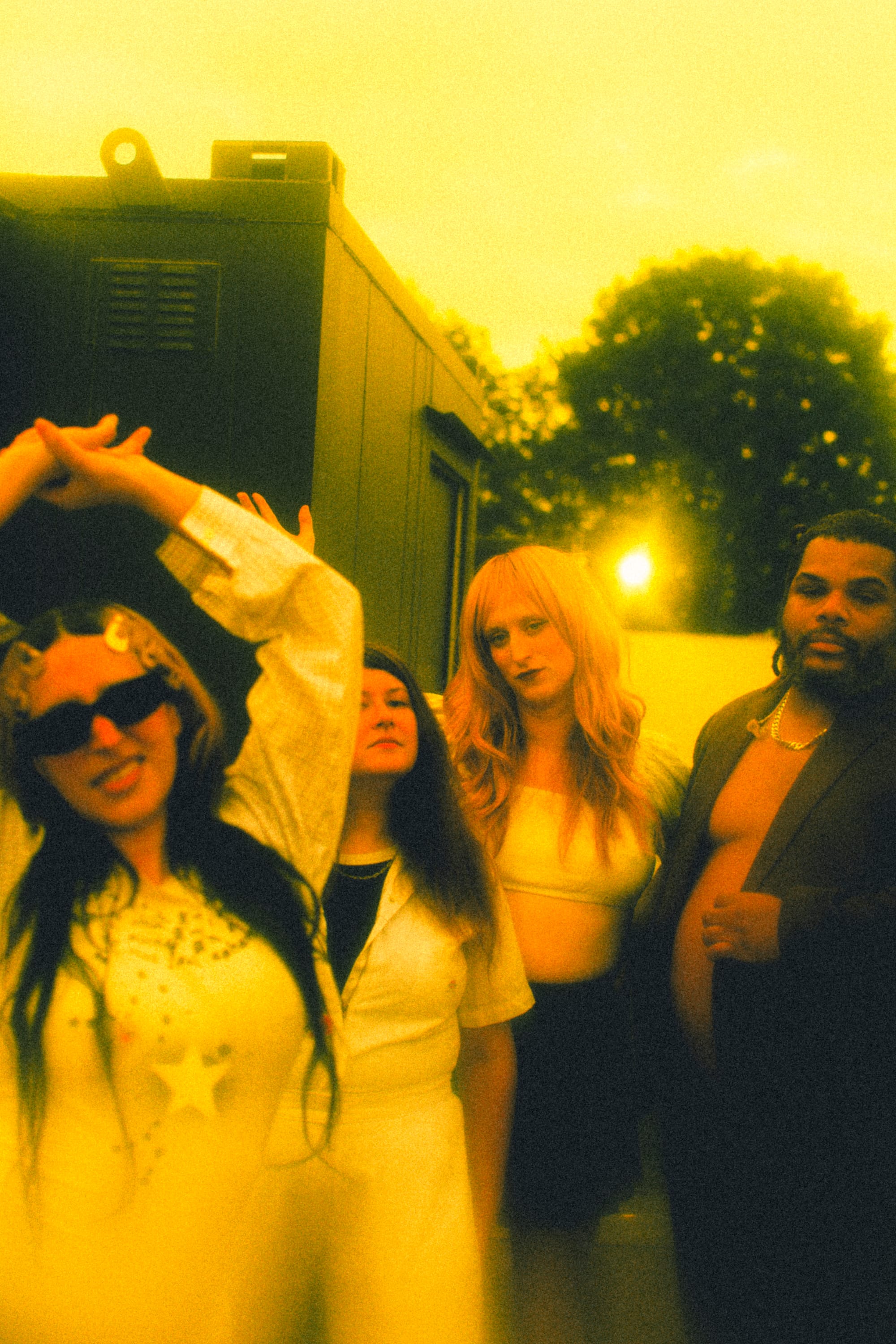
Over the next two years, Mannequin Pussy toured virtually nonstop, including a run opening for Turnstile in the fall of 2025 that put them in front of their biggest crowds yet. The rooms will only grow in size throughout 2026, when Mannequin Pussy open for Florence and the Machine in the spring and then the fucking Foo Fighters over the summer. The prospect of Mannequin Pussy becoming the new vanguards of provocative indie-rock might've seemed like critical wish-casting in 2019, but following the success of I Got Heaven, the band now have a real shot at scaling up to the rarefied airspace where few modern indie bands, save for ones named Turnstile and Geese, have ascended to.
Right now, Mannequin Pussy have been off the road since October, and I had an inkling that they were using the long-awaited downtime to restart the writing process and reset mentally. I convinced frontwoman Marisa "Missy" Dabice to abandon her temporary press hiatus for a reflective interview during this liminal period between tour and album cycles.
Over a Zoom call in January, we talked about all the highs and lows of the last two years, from brutal industry lessons learned and bouncing back from a minor AI-related controversy, to dramatically positive changes that Dabice has made in her personal and professional life. We also talked about Mannequin Pussy's next record, their fearlessness to speak out about the Genocide in Gaza, fighting back against censorship, 10 years of Romantic, the "last golden era" of DIY, the early years of Mannequin Pussy, and much, much more.
I want to begin by referencing something you told me in an interview in 2019 where you were describing the thematic arc of Patience, and you were saying that it was reflective of the previous decade of your life. “I find myself in that time where I think that all hope is lost and I’ll never feel happy again and I’ll never not be depressed, and then all of a sudden I start believing in life again.” When was the last time you felt so hopeless and lost? Or is that a vestige of your 20s at this point?
You know, I think this is where the difference between the macro and the micro comes into play, which is something I've also talked about. I don't think there's ever been a point in my life where I have felt so hopeless and powerless as to the current political conditions and systems under which we are living. The same sort of intense feelings I've been having in my body for decades now is only something that is continuing to grow. But what has changed in my life is my life. My ability to be a much more active participant in my own joy has changed tremendously since then. I still feel that suffocating depression. The Germans have a word for it, which of course they do. Are you familiar with “weltschmerz?”
No, I don’t think so.
That's like what I feel every single fucking day. It’s this German word that describes the depression one feels for the state of the world, and the kind of isolation that you feel in not being able to contribute to making the world better. There’s that everyday ache that I still feel. But in my creative life and in my personal life, I feel more able to experience joy than I think I ever did in my 20s, certainly. And I feel very grateful for that.
Why do you think it’s easier for you to experience joy now? What’s changed?
I think there's a multitude of things. It would be dishonest not to comment on the success that our band has been able to experience in the last couple years that has allowed us all an affordability for our lives that I think the four of us did not experience in the last decade. The uncertainty that you feel, sometimes, while paying your bills and what the next month is going to look like, and feeling like you're in a job that you hate, that brings you no joy, that doesn't even pay you as well as it should. But you know, you're holding on to this hobby, this creative life force.
And now that creative life force has become our career. And that has allowed me a lot more time and space to experience life in the way that I've been very hopeful to. When I'm not on tour, my day can look more like the way I want it to, rather than the way someone else needs me to show up for them so that they make money off of my labor.
What’s a day in the life of Missy these days when you’re not on tour?
A day in the life now is I probably get up around 10:30, and I meditate.
Is that new for you?
I started right after we recorded I Got Heaven, I got into [transcendental meditation]. So meditate, I go to the gym and take a class to workout. I've been weightlifting and trying to get stronger physically. I'm taking piano lessons, voice lessons, and guitar lessons. I'm starting sewing classes. And then I'll go to a market and pick up some things to make for dinner and just hang out with loved ones. Go see a movie. Like, trying to engage in cultural experiences while we're in the process of writing a record. So not a lot of listening to music, unless it's instrumental or classical. But watching films, reading books. It’s ideal and kind of heavenly, honestly.
So you’re taking lessons for three different instruments, basically. At this point you’re a professional musician, and you wouldn’t necessarily think that someone in your position would be humbling themselves to better learn instruments that they’ve already “mastered,” so to speak, given you’re touring in a full-time band. Why do you feel compelled to brush up on your craft in that way?
I mean, that's a kind thing to say, but no, I feel so far from mastery. But I feel like for the first time in my life, I have the space, time, and ability to afford attempting mastery, in terms of what it means to practice something and see it as a lifelong practice. I think for so long in my life, I was really colored by not thinking I would live very long. And so there was this passion and this intensity to like…I started playing guitar, and then the next day started a band. And then, like, two weeks later played my first show. There was this idea that I was going to run out of time to experience the things I wanted to.
Now, I feel like I might be around for some time. I might just be lucky to have my health and my my mind for a long time, and it would be a huge regret in my life if I didn't look at these instruments as a lifelong practice and relationship. I don't think I'm anywhere near the player I'd like to be 20 years from now. And also, musically, I think when you start to realize that you're plateauing in the way that you interact with your instrument, that's when it's time to humble yourself and be like, “You know what? I may be able to know how to play this, but there's still more to learn. So someone out there is going to be a guide for me.”
You’re off the road now but you were basically touring nonstop since I Got Heaven came out. How did it feel to be on the road for that long? Did you burn out?
Yeah, I burned out. I burned out really bad. I’ve learned a lot about the industry and the way that everyone is so keen to push you to do as much as possible. Because once you are at a professional level, you just have so many people chomping at the bit of your income, and you're supporting not only the livelihoods of – I think this is also why bands are so rare. Is because the idea that economically, you could make enough for four people to split something equally and have that be enough to live, the level of that has really changed over the years.
This isn't exactly what you asked, but I've been reflecting a lot about starting in DIY, and I sometimes feel like just by luck of the cosmos, when this band started, it was in the last golden era of what it meant to be a DIY musician, where you could afford to take the risk. And the way I've seen the world change since 2020, it kind of breaks my spirit a little bit when I think about bands that couldn't just live off of their part time job in a cheaper city.
Absolutely. And you’re someone who came from that world who’s now at a more professional level where you’re able to live somewhat comfortably. But you’re still probably not making as much money as some people would expect given how big Mannequin Pussy are now.
I mean, in my own way, I'm making more than I thought I ever would. But then you get there and you're like, “well, that doesn't even really seem like enough to play shows sometimes.” Because the industry is like, “Okay, well, this is what you can make if you play 100 shows a year." But what that's going to cost you is being on the road for nine months every year, or just away from your support systems and from any sense of a routine. Maybe if we had experienced this sort of success in our 20s, the burnout would have been further away. But the fact that we are all in our 30s, and three of us are in our late 30s, our road to burnout is a little bit shorter than maybe it would have been.
But yeah, there's just this pressure on you, because you realize, “If I don't show up, if I don't perform my best, if I'm not not able to be the version of myself that people paid to see 50 to 100 times in a year, it affects the livelihood of all these people behind me.” It's not just the band. It's the core four of us, then it's our crew, and a manager, and a business manager, and a lawyer, and a label, and an agent. But you have all these people that are dependent on this source of income. We’re the most dependent on it because all those other people have other artists that they work with. But there's still that pressure to provide for people and to make them feel like the the risk they took on you was worth it, maybe.
But yeah, we fucking burned out really badly on that first run. In retrospect, it was so wild that we agreed to it, and it was wild that anyone thought that the human body could do that. I ended up having a pretty serious, just full-on nervous breakdown in Europe after four months of straight touring. I really hit a wall, and the idea of anybody looking at me – I was having panic attacks before every show. And I've never had stage fright before. In the past, maybe I should have had a little bit more humility before getting up there and screeching. But I never really gave a shit what anyone thought. And then, you feel a little bit like you’re pouring out a lot, but then you’re this empty vessel, and you have no idea how to fill yourself up.
So I did what I think is really cliché, where I was like, “I just gotta drink to get through this. I got to drink, I'll be comfortable, and I can play a show.” Which is also so unlike me. The combination of having panic attacks and having to drink before a show, I was like, “this is crazy, this is so unlike me.” So I canceled the tour, started therapy and exercise and voice lessons. I was just like, "I'm losing my mind and my body's falling apart." And it was a sad realization, but I think it’s unfortunately true in this industry: at the end of the day, no one's looking out for you except for you.
Everyone's gonna be so quick to be like, “you can do it. Yeah, it'll suck. It’ll be hard, but we can do it. We can go get that paycheck. Just go get that paycheck.” But there's a certain point where you're like, no one's gonna look at me and be like, “I know that you're suffering, and you should take a break.” So if you're not the one to be like, “hey, I need a break.” No one will ever offer that as a suggestion.
There’s just no guardrails built into the industry for that.
No. If you miss a show, you don't get paid. And so I think that the pressures that I felt to be so on top of my game for everyone else, just slowly wore me out. But it was an important lesson, I think, to experience pretty soon into the I Got Heaven album cycle. Like, experiencing the burnout and the crash that can happen if you stop paying attention to your needs or you expect someone else to recognize them in you.
You were saying not too many career rock bands exist these days, but one giant one that does is Turnstile, who you guys just played with. What was that tour like for you guys?
Those shows were amazing. It was so much fun to be part of a moment in rock music. People talk about rock music still, as like “it’s having a moment” or “the moment’s over” or “it’s having a moment again.” We're constantly in the ebb and flow of, “do people care about musicians?" and "do people care about artists who are actively creating their music?” It was just so inspiring to see what they've done and the community that they've been able to cultivate around them. And yeah, it was really exciting, and it felt very validating, I think, to be invited to be part of that tour. Because it felt like this recognition of what we also have been contributing to those spaces and as a rock band in a modern era.
And I think it especially feels good to see a band that has been around for 15 years, or however long now, continuing to reach new highs for themselves and to connect to new people with every album. Every album is an opportunity to say something new and to connect with new people. On the flip side of that, though, playing for a more mainstream rock crowd…I feel like there were a lot of people in the audience who knew our songs. A lot of the audience didn't know our songs and then were writing us messages like, “I loved you. I discovered you for the first time at Turnstile.” And then the last percentage are men who saw us who fucking hated us. Hated what we were doing. They hated what we had to say about politics in the world, and they wanted us to know just what trash they thought we were.
In the comments? Where were you getting this reception?
Emails, sometimes. Long emails or DMs. I've really kind of checked offline over the last two years. Like, I hired someone to start doing social media because it's just…talk to any artist, and they're like, “Man, that's a minefield.” And also, you have to be focusing on other things to keep yourself together. But you know, every now and then, if someone sees something that's particularly…you say it's funny, but it's actually just very cruel. It reminds you how cruel people can be. Maybe [because I’m] a woman in that space, but I don't always know where that pit of rage comes from. But at a Turnstile show it seems so crazy because they're so arms wide open about everything. That's what they really preach and stand for, and I think are truly good on their word about. But not everyone in the audience is going to be a reflection of the people onstage. But most are.
Is that making you guys prepare for how you’re going to approach the Foo Fighters tour later this year?
[Laughs]. I want to say they're gonna hate us. But we only have 30 minutes to play. And I think a lot of old-heads actually really do like us. I don’t know, that is such a different world than I have ever experienced playing a show. In terms of stadiums and mega-stardom rock bands. So I do not know how I will be feeling after those shows. I have talked to friends of mine who have done that same opening slot, and they're like, “you might sell, like, 10 t-shirts.” Opening for the Foo Fighters, someone is not going to discover new music. They're going to hear “Everlong.” They're going for that specific experience.
My friends who have done that same opening slot are like, “The stadium’s maybe like a fifth of the way full by the time you start playing.” I don't know what it will be like. But I am managing my expectations and keeping them reasonable, so that there's no emotional damage. I don't think I'll be emotionally damaged by it, I hope.
On the flip side of that you’ll be playing to Florence and the Machine fans this year, too, which is a different type of mainstream audience. How are you planning to tackle that crowd who probably aren’t accustomed to seeing a loud punk band like Mannequin Pussy?
Yeah, I definitely think they will be different sets. I don't think we’ll be playing the same set for Foo Fighters as we would Florence and the Machine. It's kind of exciting because we haven't opened for anyone, really, besides the two and a half weeks on the Turnstile tour, for two years at this point. This year is heavy on opening for these more mainstream artists. And so I would like to approach it in a more deliberate way. Like, “Okay, if I was a fan of of this artist, what are the songs I think that would connect with them?” Not thinking too entirely of the audience, but appreciating the fact that they're there, and not just wanting to freak them out for the sake of freaking them out. I stand by our songs and I believe in our songs, and our most popular songs are not necessarily our most aggressive songs.
Clearly you’re getting some giant opportunities thrown your way. Were there other huge opening slots you had to turn down to prevent the burnout you’re talking about?
Yeah, we did turn down some things that I think 5-10 years ago we would be like, “I cannot believe we just turned that down.” But you also start to learn the things that you have to do to protect yourself and your energy, and also be able to have space for your creative energy. Bear and Kaleen are still on the East Coast, and myself and Maxine are on the West Coast right now, but Bear and Kaleen came out here last week, they were here for a week. And we spent a week in the studio just writing. So we’re actively working on the new album, and we were talking to John Congleton – we're gonna work with him again. We loved working with John, and it was a very almost rushed experience.
Usually, I like the idea of working with different producers, because there's new new things to learn and new creative conversations to have. There’s so much to be learned from these different players who have so much experience with producing albums. But John's a really special person, and I think we really understood each other, and he's given us a really wonderful space to work on music and start to develop ideas. So we went to his studio in LA to just start writing, and he kind of sat us down, too, and he was like, “You guys are doing too much. You have to make sure that you protect your time and energy to make a record.”
We were talking about, “are we performers now? Or are we musicians? Are we artists?” It's been a long time since we've gotten to feel like artists. We've been on the performing gerbil wheel for two years now, and going into a third. We had definitely realized that and had conversations about that before he said that, but an outsider recognizing the same kind of trouble that you run into when suddenly every legacy band, or these huge bands, are like, “come out with us.” You've proved your salt, or whatever that expression is. And at a certain point you have to be like, "No, I, if I don't make time to make sure that we can be artists then what the fuck is this for?”
So you said you’re in LA now. What precipitated you moving there and what’s it been like to live there?
Well, a couple years prior to last year, I just found myself having to go out to LA for work almost like once a month. And it really got to the point where I was like, “Oh, I'm busier on a day to day basis in Los Angeles than I am in Philadelphia.” And we had come out to make the record here, and then we were on tour for two years. But I had just had my 10th year anniversary in Philadelphia, and I was feeling like if I didn't roll the dice, if I didn't take a little bit of a risk to put myself in a new environment…and I've never lived on the West Coast before. I was getting tired of having to travel for working on a record and things like that. And Bear and Kaleen are going to be out here every month for the next six months, because this is where a lot of the people that we work with are, and our label is here.
I was just excited by the idea of waking up and seeing something new that I hadn't seen for the last 10 years, and meeting people. I think an artist definitely craves new experiences and to put themselves in places where they might be uncomfortable or lonely or have to find their way or a community. And I don't think this is where I would like to live forever. I think something I’ve known about myself for a long time is I want to live in the mountains, and I want to have a garden and a very normal, more rural life. I think that's more what my soul is aligned with. But to get to that place means I have to do a lot of work now so that I can afford the isolation.
Do you think living in LA has influenced the way you’re writing this record in any way?
No, I don't think so. But I think it has definitely influenced my feelings of really wanting to just simply get better at what it is that we do. I think it’s influencing my desire to experience some sort of flirtation with mastery. I’m flirting with getting even better at things, because a lot of the people I meet here are really inspiring, talented people who work really hard and have a vision for where they want to go. And I find that energy really intoxicating. If I want to get better, that means I need to sit down and play my instrument for a couple hours a day.
And the irony is when we were just in the studio, I think I maybe presented three or four songs out of like 18 on the guitar. But Maxine is just my ideal song partner, and she has been for 10 years now in my life, even though only the last four years of that have been with her in the band. She's a treasure trove of just riffs and ideas that I can arrange into songs. And so we have really complimentary working styles. But while that's also happening, I'm spending time in the background just plugging away at discovering new skill sets.
How do you think you’ve grown as bandmates over the last few years? Specifically since the lineup switch in 2021. How have your personal relationships evolved since then?
I think it's all been for the best. It’s all been really exciting changes, necessary changes, changes that were ultimately really good for us, personally and creatively. Like I said, Maxine is someone I've known for almost 10 years now, and from the day that we met, we just started writing songs together – but never finished a song, never really put out a song. We would just hang out, smoke weed, and be creative, but not with the pressure of, “Okay, we gotta finish this.” And then inviting her into the MP world was kind of exactly what she needed in this way, where she's so talented, and there's [now] a pressure to finish something. There's a pressure to make an album, contractually, which I think has also been a huge difference in my life, too.
This is the first time going into making a record where it feels almost less hobbyist and more professional. John Congleton and I were talking about this. There's a lot of bands where when you become professional, you start loving the smell of your own shit, and you just think you can't make anything bad and you also don't care if you make anything bad, because you're like, “whatever, I did it last time, I don't need to do it again. Doesn't matter if this record sucks, there's other ones that they love.” And that is not the attitude with which I think we are operating. We're like, “Damn, we were delivered this fucking crazy gift.”
Why does this feel less hobbyist than I Got Heaven? You were in contract for that one, too, and that was a huge record for you guys.
In the lead up to making I Got Heaven, we all had our other part time jobs, and we were coming out of COVID and this slowdown of life. It felt like this…not gamble. I don’t know, just because life was different then. But maybe it felt a little bit more like a big roll of the dice. I Got Heaven was either going to be this thing that really solidified that this was a career for us, or we were going to continue to enjoy the float of what it had been. And it ended up being something that really solidified the fact that we have careers in music. And that's a tide’s game, that’s with the moon. That's ebbs and flows in your life. So almost putting too many eggs in the basket of certainty, [assuming] that that's going to be there forever, seems dangerous to me.
So do you almost feel more pressure now, in a way? Where you have to maintain this thing you have now that you didn’t previously have.
Yeah, I think I would be lying and would be someone who enjoys the smell of my own shit if I said I wasn't scared. If I wasn't kind of nervous to make a follow-up to something that I also really loved. Ultimately, we're making albums because we love making albums, and we love writing songs, and I'm trying to impress my bandmates when I write. I'm trying to impress myself when I write. I'm trying to impress John. I want everyone to feel really excited about what we're doing, because we're all kind of judgmental of our own work, and that's why we work really well together. We're always really trying to push each other to do the most interesting thing, or the thing that really serves the song. So, yeah, there's definitely a pressure to maintain. I really like having this life, even though it's…
Causing panic attacks sometimes.
[Laughs] Yeah. That I have under control now. But you get alarms that go off where you’re like, “Hey, are you actually okay with this? Are you okay with the way things are going?” It’s weird for people to know who you are and to know things about you before you’re able to share them. Even though you have shared them. It’ll always be a little strange.
What freaks you out the most in that way?
I would say traumas I’ve been through or intense things I've experienced. This is a pretty common theme with artists I've seen of not wanting to do a mutual trauma dump when you meet someone. Or hear about how sharing your thing inspired them to go through healing for their thing. So you end up having a lot of very intense, emotional conversations with strangers. But I feel like I've always been the type of person who could talk to anyone. I could talk to a tree for an hour, and listen. I think there's something to be learned from every person I meet and every creature around me. So I do enjoy getting to connect to people in that way. But I think if the first place we're going is the darkest place that either of us have been, I’m not always emotionally prepared for that.
You obviously weren’t expecting when you wrote some of those lyrics on Patience to have as many people listening and relating as you do now. There’s some pretty heavy shit on that record, as you know.
Yeah. I Got Heaven feels less heavy to me and more existential, which I think made it an easier album to perform. There’s a palpable anger in it in all these different sectors, but I think it’s an anger that a lot of us are feeling and are tapped into.
So a couple years ago you guys received a little bit of criticism for having some AI involved with the “Nothing Like” video. You released a statement about that at the time, but I’m wondering if in the years since, has your perspective on AI in music and art changed?
How much time you got?